Mexico’s new UNO unit forms an elite cartel task force, using intelligence and U.S. cooperation to hunt top crime bosses nationwide.
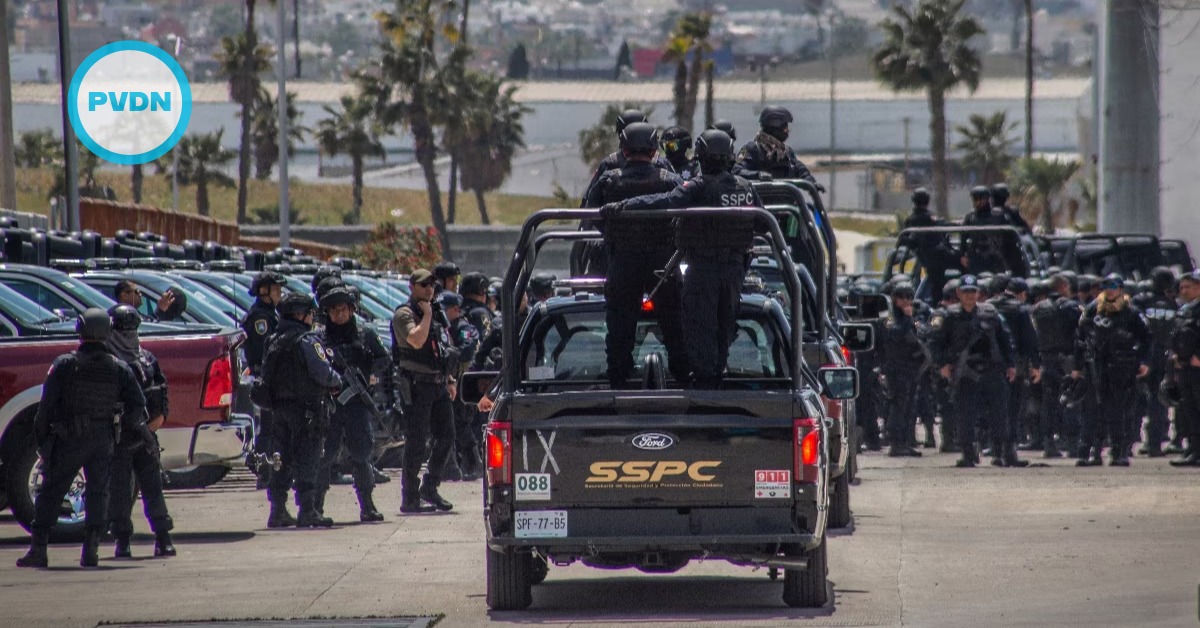
Mexico’s federal government has put a new piece on the security chessboard. The National Operations Unit, known by its Spanish initials UNO, is now formally in charge of a specialized corps of agents tasked with using intelligence to track and capture high-value crime bosses and “generators of violence.” A decree published in the federal gazette sets out the unit’s mandate, confirming that it will lead strategic operations for the Security and Citizen Protection Ministry and focus on high-impact criminal structures rather than street-level arrests.
According to that legal framework, UNO sits under the Subsecretariat for Intelligence and Police Investigation. Its job is to plan and execute intelligence-driven operations, respond to high-risk incidents, protect officials under threat, and coordinate with other security bodies in Mexico and abroad. The unit formally begins operating as part of a broader push to reinforce federal presence in conflict states such as Michoacán and Sinaloa, while tightening day-to-day cooperation with United States authorities in cases tied to drug trafficking and extraditions.
Inside the elite cartel task force
Behind the bureaucratic language is a clear political bet: Mexico is trying to rebuild a civilian, national-level special operations capability after years of relying heavily on the armed forces. UNO is described as a body of specialized agents whose work centers on intelligence analysis, investigations, tactical operations and advanced technology. Rather than large convoys patrolling highways, the priority is to identify specific targets, build cases, and move in once prosecutors and judges have issued the necessary orders.
Over the past year, federal officials have quietly recruited personnel for UNO and related teams, drawing heavily on veterans of the old Federal Police and previous special operations groups. Reporting on the unit’s early stages describes a force that aims to reach several hundred members, divided into regional branches with a smaller “high-impact” team reserved for the most sensitive missions. Many of its members have previously trained with security forces from countries such as the United States, Colombia, Spain and France, giving the new unit a skill set that had largely been scattered or absorbed into the military.
The creation of UNO also formalizes a role the unit has already begun to play. Earlier this year, Mexican authorities coordinated the transfer of 29 high-profile cartel defendants from prisons across the country to the United States in a single, tightly controlled operation. Security officials have pointed to that episode as proof that a small, vetted civilian team can carry out complex, binational missions without leaks or bloodshed. The new decree now gives that role a clear chain of command and a name the public can hold to account.
For President Claudia Sheinbaum and Security Minister Omar García Harfuch, UNO is meant to signal a shift away from a security model built almost entirely around the army and National Guard. It also sends a message to Washington after years of tension over cooperation, rules for foreign agents and the handling of fentanyl trafficking. By placing an elite cartel task force inside a civilian ministry, with a mandate to share and act on intelligence, the government is trying to show that Mexico can take on top crime bosses without handing all the leverage to the military or to foreign agencies.
Risks, expectations and what comes next
The experiment, however, carries heavy baggage. Mexico has created elite units before, often with foreign training and high expectations. Some achieved notable arrests, but many later faced accusations of human rights abuses or were infiltrated by organized crime. An earlier anti-narcotics investigations unit that worked closely with the U.S. Drug Enforcement Administration was quietly shut down several years ago after its former chief was convicted in the United States of collaborating with traffickers. That closure badly damaged trust between both governments and left a gap UNO is now expected to fill.
Officials insist that new screening and internal controls will prevent a repeat of those failures, highlighting stricter background checks, more exhaustive vetting and better pay for agents. UNO is also supposed to work in closer coordination with state-level special operations teams, sharing training and tactics rather than running separate, competing efforts. On paper, the design aims to keep operations coordinated, civilian-led and more accountable than ad-hoc military deployments that have dominated the “war on drugs” for almost two decades.
Whether that promise holds will be measured on several fronts. One is violence in places like Michoacán and Sinaloa, where cartels remain deeply embedded in local economies and politics and where communities live with extortion, displacement and open clashes. Another is the quality of cases that reach court: arrests that collapse for lack of evidence, or that rely on coerced testimony, would quickly undercut the idea that intelligence and investigation are now driving operations. A third test will be transparency. Mexicans have watched many “elite” forces rise and fall in secrecy; they will want to see whether UNO is subject to real oversight or simply becomes another opaque actor in a long, costly conflict.
For now, UNO embodies both hope and uncertainty. It offers a path back to civilian, intelligence-driven policing at the national level and a chance to rebuild strained ties with U.S. agencies around shared cases, extraditions and the pursuit of major traffickers. At the same time, it sits within a security landscape still marked by militarization, mistrust and the painful memory of past units that promised clean operations and ended up accused of corruption or abuse. How this new force performs in its first operations against top cartel figures will determine whether Mexicans see it as a genuine step forward or just the latest label on an old strategy.