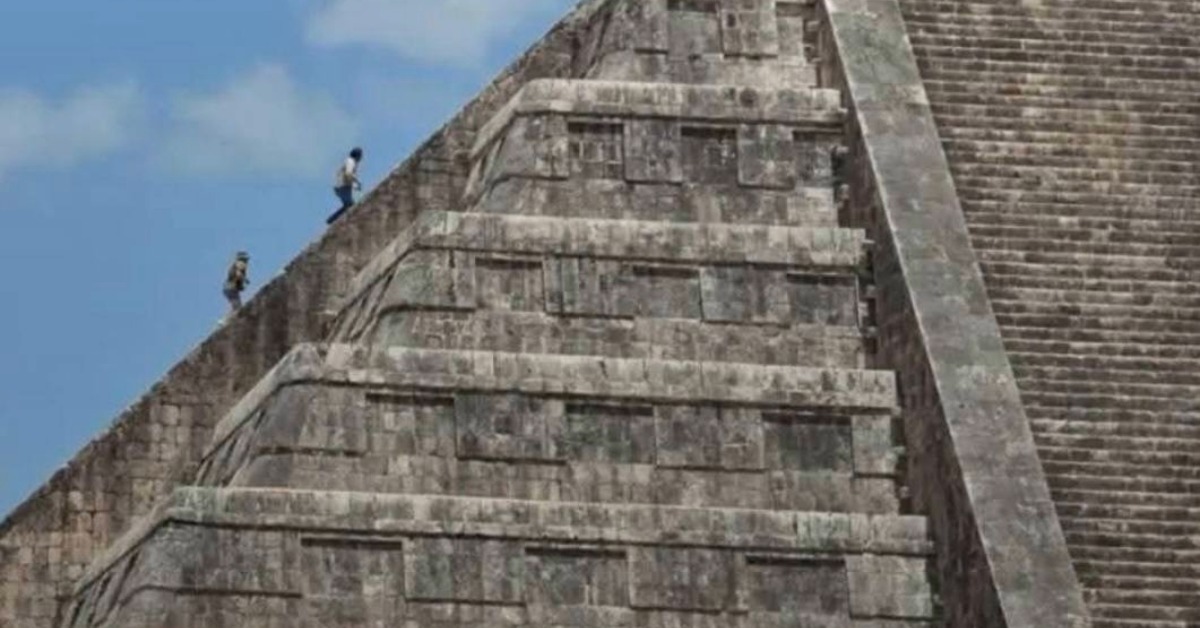
Access at Chichén Itzá was already unsettled when two foreign tourists crossed into a restricted area and climbed El Castillo, the Pyramid of Kukulcán. The incident came during a dispute between local artisans, tourism service providers, and authorities over how visitors enter the archaeological zone. Protesters had taken control of access and allowed visitors in without charge. That left parts of the site with little normal monitoring before the tourists were stopped.
Tourists detained after climbing El Castillo
Two foreign tourists were detained after climbing El Castillo, the Pyramid of Kukulcán, at Chichén Itzá, amid an access dispute at the archaeological site.
The incident occurred on Tuesday while local protesters were controlling access to the site. Visitors had been allowed to enter without charge after the normal entrance operation was disrupted.
The two tourists crossed the restricted area around the pyramid and climbed the structure. Climbing El Castillo is prohibited. The tourists were brought down and placed in the custody of the authorities.
Their names and nationalities were not officially confirmed in the available reports.
Access was being controlled by protesters
The incident happened during a dispute involving local artisans, tourism service providers, INAH, and Yucatán state authorities.
The disagreement centers on the use of the new Centro de Atención a Visitantes, known as Catvi, and the old tourist parador used by local service providers.
Local representatives have opposed making Catvi the main access point if that reduces activity at the older parador. They say the older access point supports families who depend on tourism-related work near the site.
During the dispute, protesters allowed visitors to enter Chichén Itzá without paying the normal access fees. Reports said about 1,000 tourists entered during the period when protesters controlled access.
Dispute followed closure of the old access area
Tensions grew after barriers were placed at the old access area while talks were underway between community representatives and authorities.
Local representatives said the move affected the dialogue process and prompted the protest. INAH and Yucatán authorities announced a temporary closure of Chichén Itzá, citing operational and coordination work.
The Yucatán government later announced a permanent dialogue table with community representatives. The stated goal was to continue talks over issues tied to the archaeological zone.
Restricted areas remain off limits
The incident adds to recurring concerns over visitors entering restricted areas at major archaeological sites.
For residents and travelers in Mexico, the practical point is simple. Roped-off areas, closed stairs, and restricted structures remain off limits, even when access conditions at a site are confusing or disrupted.
Chichén Itzá is one of Mexico’s most visited archaeological zones. El Castillo is one of its main structures and is protected as part of the site’s heritage.