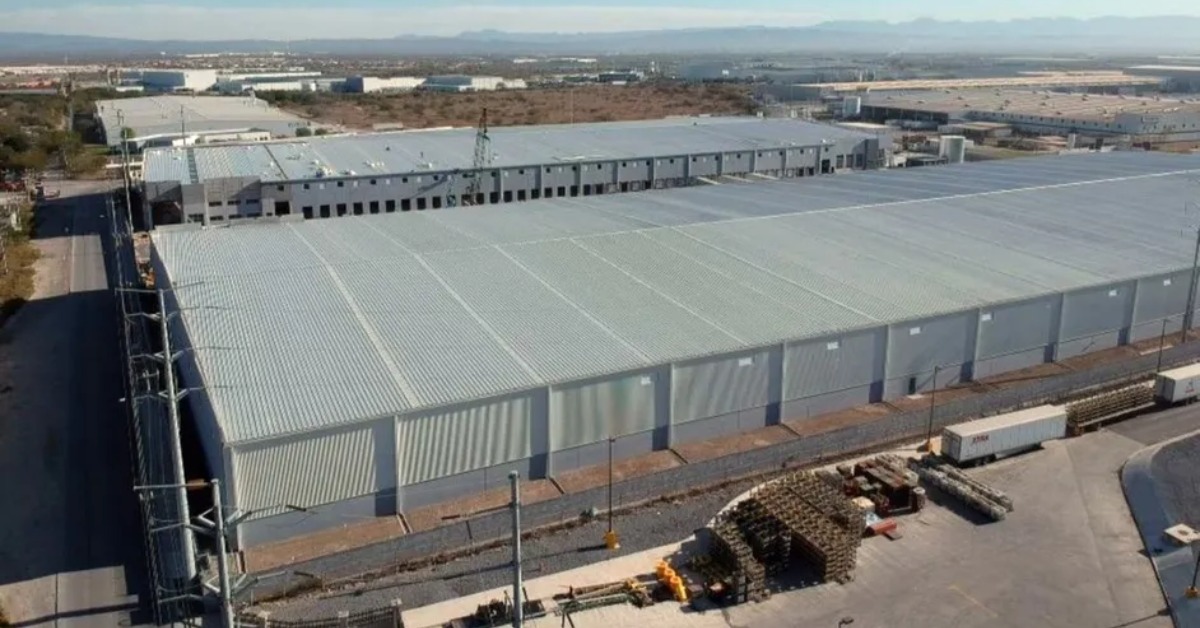
Monterrey is still Mexico’s largest industrial warehouse market, but the easy-growth phase may be ending. New CBRE figures show more inventory, higher vacancy, and a market no longer moving at the same pace as during the peak of nearshoring excitement. Demand has not disappeared, but companies are taking longer to decide, landlords are competing harder, and large projects now face a more careful test.
Monterrey remains Mexico’s industrial leader, but the pace is changing
Monterrey’s industrial warehouse market is entering a more measured phase after several years of rapid growth driven by nearshoring.
At the end of the first quarter of 2026, Monterrey had 17.9 million square meters of industrial inventory, according to CBRE’s MarketView report for the city. That kept Monterrey as the largest industrial real estate market in Mexico.
The total represented annual growth of 9.31%, up from 16.4 million square meters at the start of 2025. That growth shows the city is still expanding, but the market is no longer moving with the same urgency seen between 2022 and 2024.
During that earlier period, companies looking to move production closer to the United States helped drive demand for factories, logistics buildings, and modern warehouse space across northern Mexico.
The market is still active but more selective.
CBRE reported 212,000 square meters of net absorption in the first quarter of 2026. That was above the 131,000 square meters recorded in the same period of 2025. However, much of the activity came from pre-leased buildings and built-to-suit projects, rather than a rush into available speculative space.
That difference matters. It means companies are still taking space, but many are doing so through planned projects rather than quickly leasing whatever is available.
What “normalization” means for Monterrey
The word normalization does not mean Monterrey’s industrial market is collapsing. It means the market is moving away from the unusually tight conditions created during the first wave of nearshoring demand.
A few years ago, available industrial space in Monterrey was limited. Developers responded by building quickly. Some projects were pre-leased before completion, while others were built on a speculative basis, meaning they were constructed before a tenant had signed.
That strategy can work during a hot market. But it also creates risk when companies slow their decision-making.
CBRE reported that Monterrey’s vacancy rate rose to 6.9%, equal to about 1.2 million square meters of available space. That was up from 5.1% in 2025. The increase was mainly linked to new speculative supply entering the market.
For tenants, this can create more options and more room to negotiate. For developers and landlords, it can mean more competition, longer leasing periods, and greater pressure to offer flexible terms.
Average asking rents remained relatively stable at about $7 per square meter per month. That suggests the market has not entered a broad pricing decline, but landlords may need to compete more on incentives, timing, and building specifications.
Apodaca and Santa Catarina remain key corridors
The Monterrey market is not evenly spread across the metro area. Apodaca remains the largest industrial submarket, with about 6.99 million square meters of inventory. That represents roughly 39% of Monterrey’s total industrial stock.
Apodaca also has the largest amount of vacant space. CBRE placed its availability at about 598,000 square meters, with a vacancy rate near 8.6%.
That does not necessarily make Apodaca weak. It remains one of the most important industrial corridors in Mexico because of its location, transport access, and established manufacturing base. But it does show where new supply has been concentrated.
Santa Catarina and Apodaca together accounted for most of Monterrey’s recent leasing activity. CBRE reported that the two submarkets represented 94% of gross absorption during the quarter, with each taking about 63,000 square meters.
For international companies, these areas remain important because they offer access to suppliers, highways, labor, and existing industrial ecosystems. That is especially relevant for manufacturers tied to automotive, logistics, electronics, appliances, and advanced manufacturing.
Nearshoring is still alive, but it is no longer automatic
The new data point to a shift in the nearshoring story. Mexico still benefits from its location next to the United States, its manufacturing base, and its role in North American supply chains.
But nearshoring is no longer just a headline that guarantees fast leasing.
Companies are paying closer attention to costs, electricity, water, labor, transportation, security, and trade rules. They are also watching the 2026 review of the USMCA trade agreement, which could influence long-term investment decisions.
This means demand is becoming more disciplined. Companies that once moved quickly may now take more time to compare sites, negotiate terms, and confirm that infrastructure can support their operations.
That is especially true for large-format industrial projects, where the stakes are higher. A large facility requires more capital, more utility capacity, and a longer commitment. In a more uncertain environment, those decisions move more slowly.
The shift is not limited to Monterrey. Across Mexico, industrial developers are adjusting after a period of fast construction. More available space has appeared in several markets, while tenants are choosing more carefully.
What this signals for Mexico’s economy
Monterrey’s industrial market is often treated as a signal for the wider Mexican economy. The city is one of the country’s main business and manufacturing centers, and Nuevo León has been one of the leading states for foreign investment.
The latest figures show that the region’s industrial base remains strong. Inventory is growing, absorption is positive, and the market continues to attract users.
But the story is more complicated than “nearshoring boom continues.”
The market is becoming more mature. Developers now face a stronger test: build the right product, in the right location, with the right infrastructure. Tenants have more choices, but they are also demanding more from each site.
For expats and foreign residents who follow Mexico’s economy, the takeaway is that nearshoring is moving from promise to execution. The easy narrative was that companies would leave Asia, move to Mexico, and quickly fill new industrial parks. The current reality is more practical.
Companies still want proximity to the U.S. market. They still see Mexico as a key manufacturing platform. But they are also weighing risk, infrastructure, costs, and policy before signing major leases.
Monterrey remains at the center of that process. Its warehouse market is the largest in Mexico, and its industrial ecosystem remains one of the country’s strongest.
The next phase may be less dramatic than the boom years. It may also be healthier. A more balanced market can give tenants better options, slow speculative overbuilding, and force developers to focus on quality rather than speed.