Flying in Mexico could become more expensive this year, and the reason starts before passengers board the plane. The cost of jet fuel at Mexico City’s main airport doubled in March, putting pressure on airlines already managing tight margins, busy routes, and changing travel demand. Volaris has warned of fare increases and fewer frequencies, while the federal government weighs how much support, if any, should be offered to keep air travel from becoming harder to afford.
[adinserter block=”3″]
Jet fuel price doubles at AICM as airlines warn of fare hikes
The price of jet fuel at Mexico City International Airport doubled in March, creating a new cost shock for airlines and raising the chances of higher fares for passengers in Mexico.
The increase affects turbosina, the aviation fuel used by commercial aircraft. At the Aeropuerto Internacional de la Ciudad de México, better known as AICM, the fuel sold for 23.70 pesos per liter in March. That was up from 11.66 pesos in February and about 13 pesos in March 2025.
That type of jump is not a routine monthly change. It is a sharp increase in one of the largest costs airlines face. For travelers, the impact may not appear as one simple line item on a ticket. It can show up through higher base fares, fewer cheap seats, schedule changes, and reduced flight frequencies on routes that become harder to operate profitably.
Volaris has already warned that it expects double-digit fare increases in some markets. The airline also said it would make tactical reductions in flight frequencies, without necessarily abandoning routes.
That distinction matters. Airlines can keep serving a city while cutting how often they fly there. A route that once had several daily options could move to fewer flights. A seasonal route could pause. A less profitable route could be trimmed until costs stabilize.
For residents, frequent travelers, and retirees who rely on domestic flights in Mexico, the issue is practical. A higher fuel bill can make it harder to find affordable flights between major cities, resort areas, and cross-border destinations.
What changed at Mexico City’s main airport
The AICM fuel price data indicate a sudden, steep increase. The March price of 23.70 pesos per liter was more than double the February price. It was also far above the level seen during the same month last year.
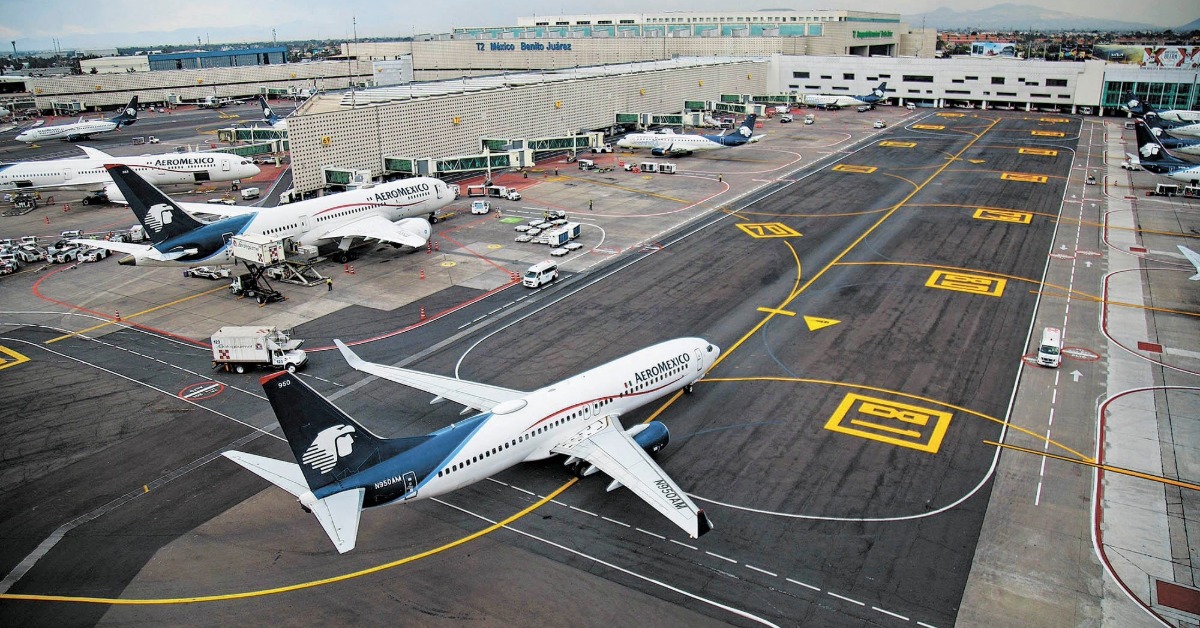
AICM is not just another airport in Mexico. It remains the country’s busiest passenger airport and a major base for domestic and international air travel. What happens there can influence pricing and operations across the wider airline system.
Airlines do not buy fuel in the same way a driver fills a car. Aviation fuel prices are tied to global energy markets, airport supply systems, contracts, taxes, logistics, and local distribution costs. A jump at a major hub can quickly become a serious planning problem.
The timing also creates pressure. Mexico is moving toward a busy travel period, with summer travel, business demand, and preparations tied to the 2026 World Cup. Airlines had already been managing route decisions after years of shifting airport policies, passenger demand, aircraft availability, and competition from low-cost carriers.
The latest fuel shock adds another layer to that picture.
[adinserter block=”3″]
Why turbosina is so important to ticket prices
Fuel is one of the most important costs in aviation. It is also one of the hardest for airlines to control.
An airline can adjust staffing, schedules, fees, aircraft use, and route planning. But it cannot fly without fuel, and aircraft burn large amounts of it on every trip. When fuel prices rise quickly, airlines have limited time to respond.
That is different from a slow increase spread over several months. A gradual rise gives airlines more room to adjust fares, revise schedules, and make operational changes. A rapid increase creates a gap between the cost to operate flights and what passengers have already paid.
Many tickets are sold weeks or months before travel. If fuel costs rise after those seats are sold, the airline absorbs part of the increase. That can weaken margins, especially on cheaper tickets.
This is why fare increases often follow fuel shocks. Airlines try to recover part of the added cost through pricing. They may also reduce capacity, making cheap fares harder to find.
The impact is often uneven. Popular routes with strong demand may keep most of their service, even if prices rise. Weaker routes may see cuts. Leisure routes can be more vulnerable because travelers are more likely to delay or change plans when fares climb.
Volaris faces pressure from higher fuel costs
Volaris is at the center of the current story because of its large role in Mexico’s domestic market.
The airline carried millions of passengers in the first quarter of 2026 and remains one of the most important carriers for price-sensitive travelers. Its model depends on keeping base fares competitive while earning additional revenue from optional services.
That model works best when costs are predictable. A sudden fuel spike puts pressure on low-cost airlines because they often operate with tight margins. They can respond quickly, but they cannot ignore a major increase in fuel prices.
In its first-quarter results, Volaris reported higher operating revenue, but also a net loss. Its average economic fuel cost increased, and its fuel expense rose compared with the same period last year. The company also withdrew its full-year guidance due to geopolitical uncertainty and fuel price volatility.
That is an important signal. When an airline pulls guidance, it is telling investors that conditions are too unstable for a reliable forecast. In simple terms, management does not have enough visibility to say with confidence how the year will unfold.
For passengers, the clearest message is that Volaris fares are likely to move higher in some markets. The airline has also said it will reduce some frequencies to protect profitability.
This does not mean Volaris is leaving key routes. It means the airline is adjusting supply to match a higher-cost environment.
[adinserter block=”3″]
Aeroméxico and other carriers are not immune
The fuel issue is not limited to Volaris. Full-service airlines face the same basic cost pressures, even if their business models differ.
Aeroméxico also reported higher fuel-related pressure in the first quarter. The airline has more premium and international revenue than low-cost carriers, which can help it absorb costs differently. But fuel still affects margins, schedules, and pricing.
A full-service carrier may have more tools to manage the shock. It can lean on business travel, loyalty programs, premium cabins, international connections, and corporate contracts. But those tools do not erase the fuel bill.
Airlines worldwide are facing similar problems as energy markets react to geopolitical instability. Mexico’s situation is part of that broader pattern. The local issue is that AICM is a central airport in a market where many passengers are price-sensitive.
In Mexico, air travel is not only for vacations. Many people fly to visit family, reach medical appointments, travel for work, or connect between cities where bus travel takes many hours. Higher fares can therefore affect both tourism and daily life.
What passengers may notice first
Passengers may not see a clear “fuel increase” fee on every ticket. Instead, the effects may appear in several smaller ways.
The first sign is likely to be fewer low fares. Airlines use dynamic pricing, which means ticket prices change based on demand, timing, seat availability, and route conditions. If fuel costs rise, airlines may offer fewer deeply discounted seats.
The second sign may be fewer flight options. An airline may reduce one daily flight on a route rather than cancel the route entirely. That can make travel less convenient, especially for people who need same-day connections.
The third sign may be higher prices on peak travel dates. Holidays, weekends, and popular vacation periods are usually the first places where fare pressure becomes visible.
Travelers may also notice more schedule changes. Airlines adjust aircraft placement when costs change. A plane assigned to one route can be moved to another route with stronger demand or better revenue.
For travelers in Puerto Vallarta and other resort areas, the issue is especially relevant. Air connectivity is central to tourism, real estate, family visits, and seasonal travel. If fuel prices stay high, airlines may become more selective about leisure routes.
[adinserter block=”3″]
Domestic routes could feel the pressure
Mexico’s domestic air market has changed over the past two decades. Low-cost airlines helped make flying more accessible for many travelers. Routes between Mexico City, Guadalajara, Monterrey, Cancún, Tijuana, Puerto Vallarta, and other cities became part of ordinary travel planning.
Higher fuel costs can test that model.
Domestic routes often compete against buses and private cars. If airfares rise too much, some travelers may switch to ground transportation. That is more likely on shorter routes, where the time saved by flying is smaller.
Longer routes are different. A traveler going from Mexico City to Tijuana, Cancún, or Puerto Vallarta may still choose to fly because ground travel takes too long. On those routes, airlines may have more room to raise fares without losing as many passengers.
Still, price matters. Many domestic travelers book based on cost. A jump in fares can reduce demand, especially for non-urgent trips.
Airlines then face a difficult choice. They can raise fares and risk losing some passengers. Or they can keep fares lower and absorb more of the fuel cost. Neither option is easy when fuel prices rise quickly.
International routes may also shift
The fuel shock also affects international service.
Flights between Mexico and the United States are especially important. They serve tourists, families, business travelers, and foreign residents living in Mexico. Many expats depend on those routes to visit relatives, handle paperwork, or return for medical care.
When fuel rises, airlines examine international routes carefully. Longer routes burn more fuel. If demand softens, those flights can become less attractive.
Some U.S. airlines have already adjusted capacity on Mexico routes as fuel costs and leisure demand change. That does not mean air service is collapsing. It means airlines are being more selective.
For passengers, fewer nonstop flights can be as important as higher fares. A route that shifts from nonstop to one-stop travel may add hours to a trip. It can also make travel harder for older passengers or people carrying more luggage.
Tourism destinations depend heavily on air access. If airlines cut frequencies, hotels, restaurants, tour operators, and local workers can feel the effects.
[adinserter block=”3″]
Government support remains uncertain
The federal government has discussed possible support for airlines, but the direction has not been fully settled.
Tourism officials have signaled that measures or incentives could be considered because of high fuel costs. The goal would be to reduce pressure on airlines and prevent sharp fare increases from hurting travel demand.
At the same time, finance officials have been cautious about direct fiscal support for jet fuel. That caution is not surprising. Fuel subsidies can be expensive, and the government must weigh airlines against other priorities.
There is also a political issue. Subsidizing aviation fuel could be difficult to justify when many households are also facing higher living costs. Air travel is important, but not every Mexican household flies.
The government could look at other measures instead. These might involve airport costs, storage charges, operating fees, or coordination with the private sector. Such measures may help at the margins, but they may not fully offset a global energy price shock.
For now, airlines appear to be planning as if they must carry much of the burden themselves.
The fuel price is not the only problem
Jet fuel is the headline issue, but it is not the only factor affecting Mexican aviation.
Airlines are also dealing with aircraft availability, maintenance costs, labor costs, currency movements, airport capacity, and shifting demand. Some carriers are still managing the long-term effects of engine inspections that affected global aircraft fleets.
A stronger Mexican peso can also have mixed effects. Some costs are paid in pesos, while many aviation costs are tied to dollars. Airlines must manage both currencies, which can affect financial results.
AICM itself has been part of a wider debate over airport capacity. Mexico City’s airport system has changed since the opening of Felipe Ángeles International Airport. Cargo operations were moved out of AICM, and passenger flight limits have shifted over time.
Those policy changes influence how airlines plan their networks. A sudden fuel shock makes planning harder.
This is why passengers should view the fare issue as part of a broader aviation adjustment, not a single isolated price increase.
[adinserter block=”3″]
What this means for travel planning
Travelers do not need to panic, but they should plan with more care.
The best protection against fare pressure is time. Booking earlier can help, especially for peak dates. Waiting until the last minute may become more expensive if airlines reduce capacity.
Travelers should also compare nearby airports when possible. For some routes, flying from Guadalajara, Mexico City, Querétaro, or other airports may produce different results. This is not practical for everyone, but it can matter for people with flexible plans.
Flexible tickets may also be worth considering. If airlines make schedule changes, having more flexible terms can reduce stress. This is especially useful for international travelers and retirees planning longer trips.
Travelers should also watch airline emails after booking. Schedule changes can happen quietly. A departure time may shift, a connection may get longer, or a nonstop flight may become less convenient.
For people flying for medical appointments, legal paperwork, or family obligations, extra planning time is important. A cheaper fare is not always better if the schedule becomes fragile.
Tourism destinations will be watching closely
Tourism cities in Mexico will be watching fuel prices and airline schedules through the rest of the year.
Puerto Vallarta, Cancún, Los Cabos, Mérida, Guadalajara, and Mexico City all depend on strong air service. In some destinations, foreign visitors account for a large share of spending. For others, domestic travelers are just as important.
If fares rise too much, some travelers may shorten trips or choose destinations closer to home. Others may travel anyway but spend less after arrival.
That can affect local economies. Airlines are only one part of the chain. Higher flight costs can ripple into hotels, restaurants, taxis, tours, shops, and seasonal employment.
The pressure may be strongest on destinations that rely on price-sensitive travelers. Higher-end tourism markets may absorb fare increases more easily. Budget travelers may change plans faster.
This could create uneven effects across Mexico’s tourism map.
[adinserter block=”3″]
A costly year for airlines and passengers
The March fuel price at AICM is a warning sign for Mexico’s air travel market.
Aviation depends on thin calculations. Airlines must fill seats, control costs, maintain schedules, and protect margins. When turbosina doubles at a major airport, those calculations change quickly.
Passengers may not see the full impact immediately. Some fares were sold before the price jump. Some airlines may absorb part of the cost for a while. Others may move faster to raise prices or trim schedules.
The clearest takeaway is that air travel in Mexico is entering a more expensive period. The size and duration of that pressure will depend on global energy prices, government policy, airline strategy, and passenger demand.
For now, travelers should expect less certainty. Cheap seats may be harder to find. Some schedules may change. Routes may remain in place, but with fewer options.
The planes are still flying. The question is how much passengers will pay, and how many flights airlines can justify, if fuel stays this expensive.