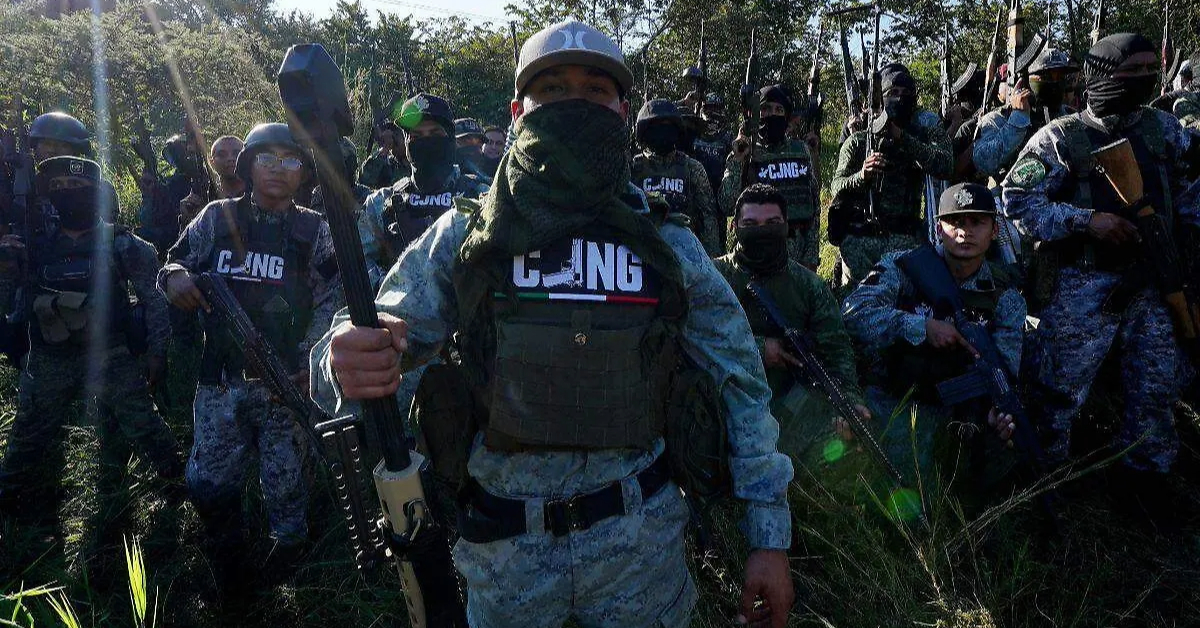
Mexico’s security strategy against the CJNG has entered a new phase after the death of El Mencho and the arrest of El Jardinero. Federal officials are now focused on two men with different claims to influence inside the cartel. One has family ties to the old leadership. The other is tied to armed cells, recruitment, and regional control. Their cases show how the CJNG may try to survive without its founder at the center.
[adinserter block=”3″]
Mexico’s CJNG faces a leadership test after major blows
Mexican federal security officials have identified two alleged senior figures of the Cartel Jalisco Nueva Generación as priority targets in the fight over the cartel’s future. The names now drawing the most attention are Juan Carlos Valencia González, known as “El 03” or “El R-3,” and Gonzalo Mendoza Gaytán, known as “El Sapo” or “El 90.”
The shift comes after two events that changed the cartel’s leadership picture. The first was the death of Nemesio Rubén Oseguera Cervantes, known as “El Mencho,” during a federal operation in Tapalpa, Jalisco, in February 2026. The second was the arrest of Audias Flores Silva, known as “El Jardinero,” in Nayarit in late April.
For years, El Mencho was treated as the central figure behind the rise of CJNG. His death did not end the organization. Instead, it opened a harder question for authorities: who can hold together a cartel built on regional bosses, armed cells, money networks, and family ties?
That question now points toward El 03 and El Sapo. They represent different sides of the same criminal structure. One is linked to El Mencho’s family network. The other is tied to alleged armed operations, recruitment, and territorial control.
Who is El 03?
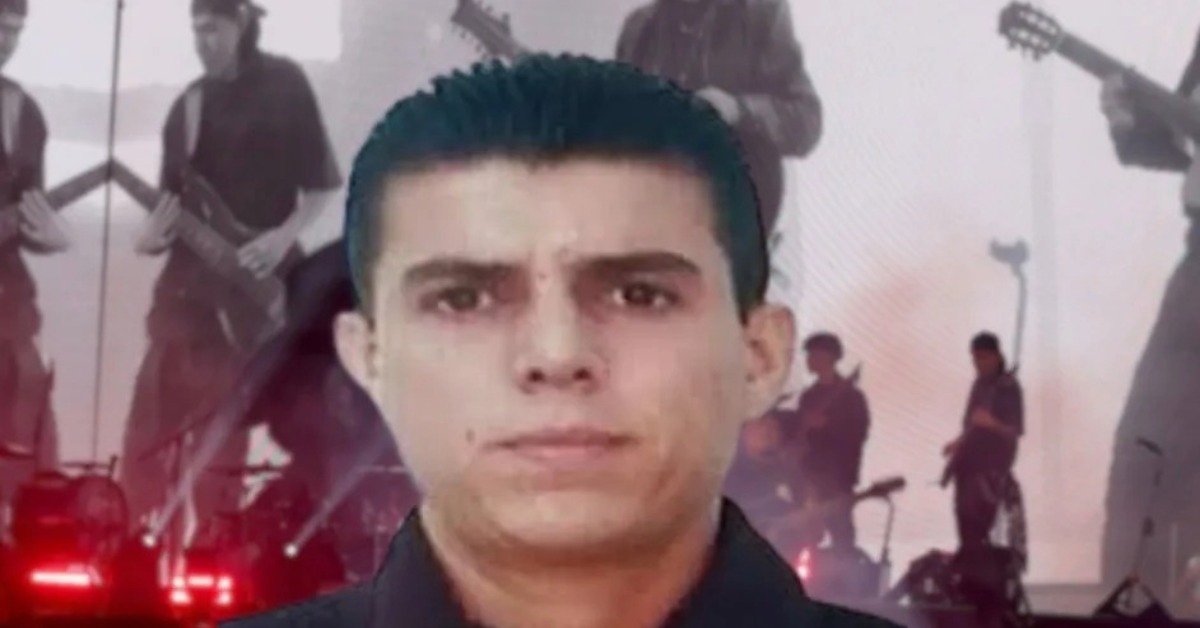
Juan Carlos Valencia González is one of the names most often raised in discussions about CJNG succession. His importance begins with family. He is the son of Rosalinda González Valencia, who was married to El Mencho. That makes him El Mencho’s stepson and places him inside one of the cartel’s most important family circles.
That family connection matters because the CJNG has never been only a street-level criminal group. It has long been linked to the González Valencia clan, also associated with Los Cuinis, a network described by U.S. authorities as a key financial support structure for the cartel.
El 03 is also wanted in the United States. U.S. authorities have said he was indicted in the District of Columbia on drug trafficking and firearms-related allegations. The indictment accused him of conspiring to move cocaine and methamphetamine into the United States. It also alleged firearm use connected to drug trafficking.
Those charges remain allegations unless proven in court. But they show that U.S. investigators have viewed him as more than a family member. They have treated him as an alleged participant in international trafficking.
His possible role in the CJNG’s future rests on two factors. The first is lineage. The second is alleged operational standing. In cartel politics, family can provide legitimacy. But family alone does not guarantee control. A successor also needs armed loyalty, access to money, and recognition from regional operators.
That is where the picture becomes more uncertain. El 03 may have the family claim. But the CJNG is not a normal chain-of-command organization. It works through semi-autonomous regional structures. Those groups may follow a central figure when it benefits them, but they also protect their own interests.
Who is El Sapo?
Gonzalo Mendoza Gaytán, known as El Sapo, represents another kind of power inside the CJNG. He has been described by U.S. authorities as a senior CJNG member and by Mexican security sources as one of the group’s most violent alleged operators.
His importance is tied to territory and armed capacity. U.S. Treasury officials previously described him as the CJNG plaza boss for Puerto Vallarta, Jalisco. They also accused him and his subordinates of responsibility for kidnappings and killings.
More recent sanctions language from U.S. authorities also linked him to recruitment. Officials alleged that he used recruitment strategies to increase the cartel’s foot soldiers. They also tied him to the Izaguirre ranch case in Teuchitlán, Jalisco, where authorities discovered a suspected CJNG training and recruitment site.
Mexican security officials have also described him as linked to armed groups and training centers. In that frame, El Sapo is not just a regional figure. He is viewed as someone connected to the machinery that allows the cartel to keep fighting, expanding, and replacing personnel.
That makes him important even if he does not have the same family claim as El 03. In an organization like CJNG, a man who can command armed groups may become as important as someone with bloodline access.
This is the tension now facing the cartel. El 03 may represent inheritance. El Sapo may represent force. The next phase could depend on whether those interests align, compete, or fracture.
[adinserter block=”3″]
Why El Jardinero’s arrest changed the equation
The arrest of Audias Flores Silva, known as El Jardinero, removed another major name from the succession discussion. He had been described as one of the CJNG’s high-ranking regional commanders and a possible successor after El Mencho’s death.
Mexican forces arrested him in Nayarit after a long intelligence operation. Authorities said he was found near a protected area near Puerto Vallarta. The operation was described as precise and completed without gunfire.
El Jardinero was not just another alleged cartel figure. U.S. and Mexican officials linked him to drug laboratories, trafficking routes, and armed networks along Mexico’s Pacific coast. U.S. authorities had also offered a reward for information leading to his arrest or conviction.
His capture narrowed the field. It also showed that federal forces are targeting the cartel’s leadership layer rather than only local cells. That matters because CJNG’s strength has come from its ability to replace local operators. Removing higher-level figures can create more serious pressure.
Still, arrests do not always weaken a cartel in a straight line. They can also trigger internal disputes. A captured leader leaves territory, money routes, and armed groups exposed. Other figures may try to absorb those assets before rivals do.
That is why the attention on El 03 and El Sapo matters now. Their names are emerging at a time when the cartel may be reorganizing under pressure.
The CJNG after El Mencho
The death of El Mencho marked one of the most important blows against organized crime in Mexico in years. He had been one of the country’s most wanted criminal figures and was also wanted by the United States.
Federal authorities said he died after a military operation in Tapalpa, Jalisco. The operation led to clashes, deaths, arrests, and the seizure of weapons and equipment. It also triggered violence in several areas, including roadblocks and fires in parts of Jalisco and nearby regions.
For readers outside Mexico, it is important to understand that changes in cartel leadership can affect public security even when most people are not directly involved. Violence can appear as roadblocks, burned vehicles, attacks on stores, transport disruption, or sudden police and military deployments.
The violence is often less about controlling the public and more about sending a signal. Criminal groups use disruption to slow security forces, show capacity, and create fear. In tourist areas, even rumors can spread quickly and damage daily life.
After El Mencho’s death, the CJNG did not disappear. That was never likely. Large cartels are not held together by a single person. They survive through money managers, armed wings, transport networks, corrupt protection, local alliances, and fear.
The real question is whether the organization remains coordinated or becomes more fragmented. A more fragmented CJNG could mean internal fights, local power struggles, and unpredictable violence. A more coordinated CJNG could mean continued operations under a new central figure or a small leadership circle.
A cartel built like a network
The CJNG is often described as one of Mexico’s most powerful criminal organizations. But calling it a cartel can make it sound more centralized than it may be in practice.
The organization has operated with a mix of hierarchy and franchise-style relationships. Regional operators control local plazas, trafficking corridors, extortion rackets, and enforcement groups. Some may report to senior leadership. Others may operate with more independence as long as they keep money flowing and maintain loyalty.
This structure helps explain why succession is complicated. A single new leader may not simply step into El Mencho’s role. Instead, the cartel may operate through a balance among family members, regional commanders, armed leaders, and financial operators.
That also explains the focus on both El 03 and El Sapo. They are not identical figures. They would not bring the same kind of authority. El 03’s alleged value is tied to family legitimacy and the old leadership circle. El Sapo’s alleged value is tied to armed control and recruitment.
A stable transition would require those centers of power to avoid open conflict. A failed transition could create space for rivals, including the Sinaloa Cartel or local groups in western and central Mexico.
[adinserter block=”3″]
The Puerto Vallarta connection
The name El Sapo carries particular weight in Puerto Vallarta because U.S. authorities previously described him as the CJNG plaza boss there. That does not mean ordinary residents or visitors see cartel activity in everyday life. It does mean authorities have viewed the area as strategically important to the organization.
Puerto Vallarta sits in a sensitive corridor. It is a major tourism destination, located near Nayarit and connected to broader coastal routes. For criminal groups, such places can matter for logistics, money movement, extortion, and fraud schemes.
U.S. Treasury actions have also tied CJNG-linked networks in the Puerto Vallarta and Bahía de Banderas area to timeshare fraud. Those schemes often target older U.S. citizens and English-speaking victims. That is one reason the story may feel closer to that of foreign residents than to a typical cartel leadership story.
The alleged criminal economy is not only drugs. Authorities have linked CJNG to extortion, fuel theft, money laundering, kidnapping, illegal mining, migrant smuggling, and fraud. This wide revenue base makes the organization harder to dismantle.
For expats and frequent visitors, the practical takeaway is not to panic. It is awareness. Cartel leadership changes can produce temporary security operations, road closures, rumors, and visible patrols. Official local updates are usually more useful than viral social media posts.
Recruitment is now part of the story
One of the most troubling parts of the current investigation is the focus on recruitment. Authorities have accused CJNG-linked figures of using training sites and coercive methods to build armed groups.
The Izaguirre ranch case has become part of that wider concern. U.S. officials alleged that the site was connected to recruitment and training, and that people who defied instructions were killed. Mexican security officials have also linked El Sapo to alleged armed groups and training operations.
Recruitment is central to cartel survival. Leaders can be arrested or killed. Weapons can be seized. But if a cartel can keep recruiting, it can rebuild local cells.
That makes recruiters and trainers as important as traffickers. They help turn money into force. They also allow criminal groups to expand into contested areas or replace losses after federal operations.
This is another reason El Sapo is being treated as significant. His alleged influence is not limited to one location. It is tied to the cartel’s ability to keep generating manpower.
[adinserter block=”3″]
What Mexico and the United States are targeting
The current pressure on CJNG reflects both Mexican and U.S. priorities. Mexico is targeting public security threats, armed cells, and figures accused of generating violence. The United States is focused heavily on drug trafficking, fentanyl, money laundering, sanctions, and cross-border criminal networks.
The two governments do not always speak about organized crime in the same way. But in this case, their actions have overlapped. U.S. agencies have sanctioned CJNG-linked people and businesses. U.S. prosecutors have pursued indictments. Mexican forces have carried out major operations against alleged leaders.
The United States’ designation of CJNG as a foreign terrorist organization added another legal layer. It expanded the language and tools Washington used against cartel-linked networks. It also increased the stakes for businesses, financial institutions, and people who may come into contact with sanctioned entities.
For Mexico, the challenge is different. Security operations can remove leaders, but the state must also prevent local cells from filling the gap. That requires intelligence, financial investigations, court cases, and protection for communities affected by criminal control.
A leadership strike can be dramatic. A financial investigation is slower. But both matter. The CJNG has survived because it can earn, move, and hide money across different sectors.
Succession does not mean stability
The word succession can suggest an orderly transfer. That may not apply here. In organized crime, succession can mean negotiation, intimidation, temporary alliances, or violence.
El 03 and El Sapo may not be the only relevant figures. Other CJNG-linked operators still matter, including those tied to ports, finances, enforcement, and regional plazas. The group’s future may depend on a broader circle rather than on a single new boss.
The port of Manzanillo, for example, remains important because of its role in maritime trade and chemical imports. Control over routes in Jalisco, Colima, Nayarit, Michoacán, Zacatecas, and other states also remains central to the cartel’s power.
If El 03 emerges as a symbolic or family-backed figure, he would still need the cooperation of men who control territory. If El Sapo gains more influence through armed groups, he would still need access to money networks and protection.
This is why authorities are watching both. Their importance is not only personal. Each one points to a different pillar of CJNG power.
[adinserter block=”3″]
What readers should watch next
The next signs may come from court filings, new sanctions, arrests of financial operators, or violence in contested territories. Leadership changes often become visible first at the edges of the organization.
If regional cells begin fighting, that may suggest fragmentation. If operations continue with little disruption, that may suggest a managed transition. If authorities capture more financial or logistics figures, that could weaken the cartel’s ability to regroup.
For residents in Mexico, the most immediate concern is local security, not cartel titles. Leadership stories can feel distant until they manifest as roadblocks, convoy rumors, business extortion, or transport disruptions.
For foreign residents and retirees, the CJNG’s alleged role in fraud schemes is also important. Timeshare and real estate-related scams have become part of the broader organized crime picture. Not every scam is cartel-linked. But official warnings show that some fraud networks have been treated as part of cartel revenue systems.
The safest response is practical. Verify investment offers. Be cautious with unsolicited calls. Follow official emergency channels during security incidents. Avoid sharing unverified videos or voice notes that can intensify public fear.
The larger meaning of the El 03 and El Sapo cases
The attention on El 03 and El Sapo shows how the CJNG is being studied after El Mencho. Authorities are no longer looking only at the founder. They are looking at the people who could keep the organization alive.
That means family, money, violence, recruitment, ports, fraud, and local control are all part of the same story. The cartel’s strength came from combining those pieces. The government’s challenge is to break them apart.
El Mencho’s death was a major moment. El Jardinero’s arrest was another. But neither event ended the CJNG. The organization’s next phase may be shaped by figures who can claim loyalty, command gunmen, move money, and protect routes.
For now, El 03 and El Sapo appear to sit near the center of that question. One is tied to the old family structure. The other is tied to alleged armed capacity and recruitment. Together, they show that the CJNG’s future may not depend on a single successor.
It may depend on whether the cartel can keep its network from turning against itself.
[adinserter block=”3″]