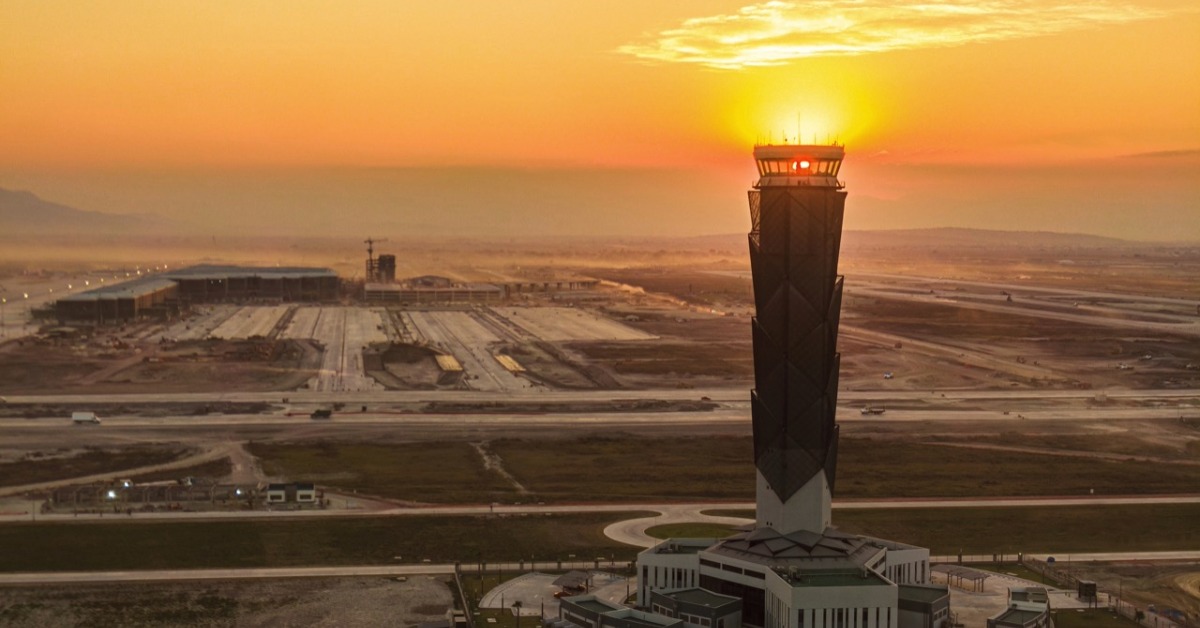
Mexico City now needs two airports to move barely more passengers than one airport handled before the pandemic. The combined traffic at AICM and AIFA reached 51.7 million passengers in 2025, just above the 50.3 million passengers handled by AICM alone in 2019. The numbers show a slower-than-expected recovery for the capital’s airport system, even after major changes meant to relieve congestion, shift cargo, and push more flights toward the newer Felipe Ángeles airport.
Mexico City’s two airports barely clear 2019 passenger traffic
Mexico City’s two main airports handled 51.7 million passengers in 2025, barely above the pre-pandemic peak reached by the old system.
In 2019, the Mexico City International Airport, known as AICM or Benito Juárez, moved 50.3 million passengers on its own. Six years later, AICM and the newer Felipe Ángeles International Airport, known as AIFA, together moved only about 2.8% more passengers.
That comparison has renewed questions about whether Mexico City’s airport strategy is producing real growth or mainly spreading the same passenger base across more infrastructure.
AICM remains Mexico’s most important airport for passenger travel. It handled about 44.6 million passengers in 2025, while AIFA handled just over 7 million passengers. Together, they exceeded the 2019 benchmark, but not by much.
For travelers, the figures help explain a familiar contradiction. AICM often still feels crowded, while AIFA has more space but fewer flights. The result is a system that has expanded on paper, but has not yet delivered the level of connectivity many passengers expected.
How Mexico City ended up with a split airport system
The current system grew out of years of debate over how to solve AICM’s congestion.
AICM sits in a densely populated part of Mexico City and has limited room to grow. Its two runways are close together, which limits simultaneous operations. For years, aviation planners warned that the airport was reaching its practical limit.
Mexico had planned a new airport in Texcoco, east of the capital, but that project was canceled under former President Andrés Manuel López Obrador. The government instead converted the Santa Lucía military air base in Zumpango, State of Mexico, into AIFA, which opened in March 2022.
The official idea was to create a broader metropolitan airport system. AICM would keep much of the capital’s established traffic, while AIFA would take pressure off the old airport. Toluca Airport was also expected to play a supporting role.
In practice, that shift has been slower than planned. Many airlines and passengers continue to favor AICM because it is closer to central Mexico City and has more established routes.
Slot cuts changed the numbers at AICM
Part of the slower growth is tied to limits placed on AICM operations.
The airport previously operated at up to 61 takeoffs and landings per hour. That limit was later reduced to 52 and then to 43, with authorities citing congestion and safety concerns. The cap was later raised to 44 operations per hour.
Those reductions helped create room for a policy push toward AIFA. They also reduced AICM’s ability to recover its 2019 passenger volume.
Aviation specialists argue that the old airport still has demand. The problem is that demand cannot fully translate into more flights while hourly operations remain limited.
That is the heart of the current debate. Mexico City has more airport infrastructure than it had in 2019, but the old airport has less operating room than it once did.
AIFA is growing, but access remains a challenge
AIFA’s passenger numbers have increased since its opening. The airport handled fewer than 1 million passengers in 2022, then rose to more than 2.6 million in 2023, more than 6.3 million in 2024, and just over 7 million in 2025.
That growth is real, but it remains below the airport’s long-term potential. AIFA was built to absorb far more traffic than it currently handles.
The main problem has been connectivity. AIFA is located north of Mexico City, in Zumpango, and reaching it has often required a long drive, a taxi, a shuttle, or a private car. For many travelers staying in central neighborhoods, AICM remains easier to reach.
That may begin to change. The new Tren Felipe Ángeles, connecting Buenavista with AIFA, opened in late April 2026. The rail link gives passengers a public transit option between central Mexico City and the airport.
The train could help AIFA over time. But it opened four years after the airport began operating, meaning the airport spent its early years without the transit link many passengers needed.
Cargo policy gave AIFA a boost, but passenger demand is different
AIFA has had more success with cargo than passenger traffic.
In 2023, the federal government closed AICM to dedicated cargo operations. Cargo airlines were required to relocate from the old airport, with AIFA becoming the main beneficiary.
That policy helped AIFA become more important for freight. It did not have the same effect on passenger travel.
Passengers make choices differently from cargo operators. They care about flight frequency, direct routes, ground transportation, price, schedule, and how easy it is to reach the terminal. A newer terminal is not enough on its own.
For international travelers, AICM still has a stronger route network. It remains the main gateway for long-haul and connecting flights into Mexico City.
U.S. aviation tensions added another complication
The airport strategy has also become part of a wider dispute between Mexico and the United States.
U.S. authorities objected to Mexico’s slot reductions at AICM and the forced shift of cargo operations to AIFA. In October 2025, the U.S. Department of Transportation revoked approval for 13 current or planned Mexican airline routes to the United States and restricted some growth by Mexican carriers.
That dispute matters because U.S. routes are central to Mexico’s international aviation market. Any uncertainty over route approvals, slots, or cargo rights can affect airlines’ willingness to expand.
In May 2026, Mexico and the United States announced steps toward resolving some of those concerns. The measures include work on fairer access to airport infrastructure and a bilateral working group to monitor commitments.
For now, the issue remains part of the broader airport story. Mexico wants AIFA recognized as part of the capital’s airport system, while airlines and regulators are still focused on access, competition, and operating conditions.
What would unlock more passenger growth
The passenger figures point to a simple problem. Mexico City does not just need airport buildings. It needs a system that works smoothly for airlines and travelers.
That means better inter-airport connectivity, stronger public transit to AIFA, clear incentives for airlines, and enough operating capacity at AICM to meet demand. It also means giving passengers a practical reason to choose AIFA beyond government policy.
AIFA could become more attractive if it gains more direct routes, reliable ground access, and competitive fares. Low-cost carriers could help build that market, especially for domestic travel.
AICM, meanwhile, still needs investment. The airport is aging, crowded, and operationally constrained. Remodeling helps, but it does not solve the long-term capacity question.
The broader challenge is coordination. A multi-airport system can work, but only when each airport has a clear role. London, Paris, New York, and other major cities split traffic across several airports. Those systems rely on route planning, transit connections, and market positioning.
Mexico City is still trying to define that balance.
What travelers should expect next
For now, AICM remains the default airport for many travelers flying to or from Mexico City. It has more routes, stronger international service, and easier access from many central neighborhoods.
AIFA may become more useful for some passengers, especially those living north of the city or near the new rail link. It may also appeal to travelers who find cheaper fares or direct domestic routes from the newer airport.
The question is whether AIFA can grow beyond a supporting role. The 2025 numbers show progress, but not a major breakout.
Mexico City’s airport system has technically surpassed its pre-pandemic passenger peak. But the margin is small. The real test is whether the system can grow from here without making travel more complicated for the people using it.