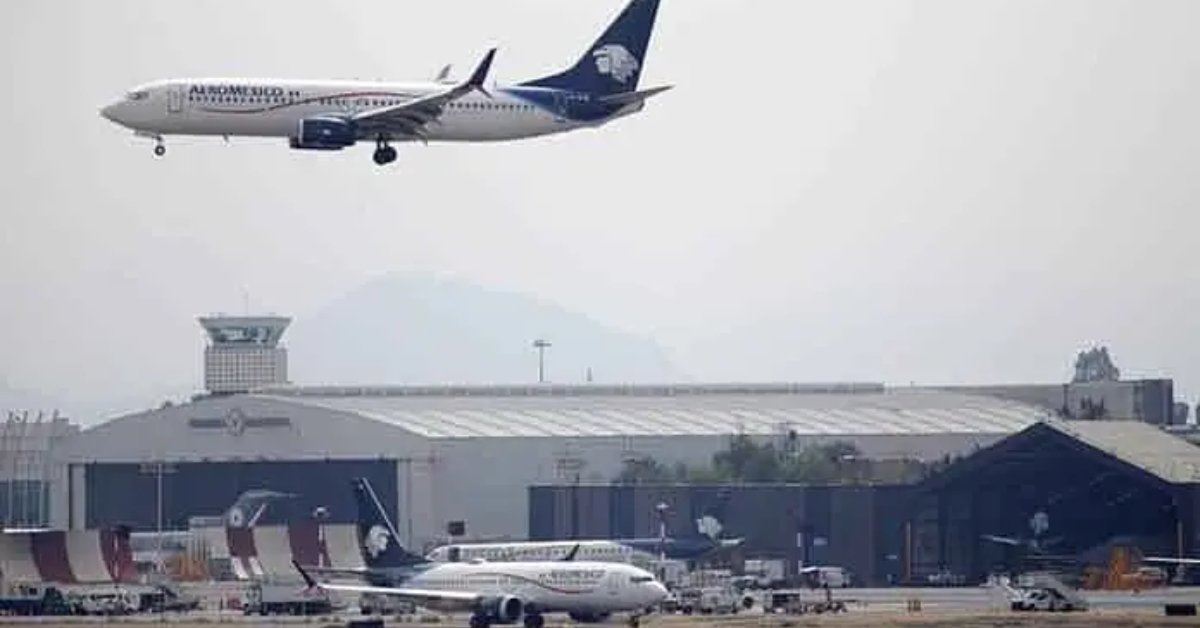
In a response to recent communications from the United States Department of Transportation (DOT), the Government of Mexico has reaffirmed its commitment to a safer, more efficient, and competitive aviation system by implementing wide-ranging improvements to the airport network in the Valley of Mexico. Through its Ministry of Infrastructure, Communications and Transportation, the government outlined results from its strategy to relieve congestion at Mexico City International Airport (AICM) and enhance the role of Felipe Ángeles International Airport (AIFA).
Mexico City Airport overhauled for efficiency and safety
A comprehensive Capacity Study by AICM in 2023, which cited risks related to overcrowding and violations of international service standards, prompted significant reforms. Guided by the International Air Transport Association (IATA) benchmarks, Mexico implemented measures to reduce operations at the AICM while prioritizing safety and efficiency.
The reforms have already produced clear outcomes:
- Runway occupancy time was cut by 22%, thanks to better airspace coordination and fewer simultaneous operations.
- Immigration processing times plummeted by 83%, dropping from an average of 45 minutes to just 8.
- Security checks became 69% more efficient, with wait times falling from 22 minutes to 7.
- AICM now ranks third worldwide in punctuality, a dramatic improvement linked to reduced congestion and improved logistics.
- 8 billion pesos have been invested in rehabilitating and maintaining runways, taxiways, and terminals to support safer operations.
These changes reflect the government’s strategy to upgrade service levels at one of the busiest airports in Latin America without compromising passenger safety or international standards.
AIFA emerges as a regional cargo hub
Key to the success of the broader airport strategy has been the promotion of Felipe Ángeles International Airport (AIFA) as a critical part of the regional airport system. Since 2023, cargo operations have shifted from the overburdened AICM to the newly constructed AIFA, which offers modern facilities and expansive operational capacity.
According to the government’s update:
- Cargo airline operations have jumped 161%, growing from 18 at AICM to 47 now operating at AIFA.
- More than 843,000 tons of cargo were transported via AIFA between February 2023 and July 2025—well above the 250,000 tons annually previously managed by AICM.
- AIFA provides full slot availability with no time restrictions, streamlining air freight logistics for both domestic and international operators.
- The airport boasts specialized infrastructure and direct access to major industrial corridors in central Mexico, strengthening its role as a strategic logistics node.
- Security and access routes have been reinforced through multi-level government coordination, improving reliability for commercial operations.
The AIFA facility itself is notable for its record-breaking construction timeline and design tailored to modern air safety requirements—features that the government says have addressed structural deficiencies and chronic congestion at AICM.
Toward sustainable aviation growth
The Government of Mexico emphasized that its aviation modernization strategy is not just about solving short-term congestion issues, but also about future-proofing the country’s air transportation system. It views AIFA as essential in strengthening Mexico’s competitiveness in global logistics while improving the traveler experience.
In its statement, the government pledged continued collaboration with domestic airlines, foreign regulatory bodies, and international aviation organizations to ensure that reforms remain aligned with global standards.
“These efforts reflect our dedication to a safer, more efficient, and internationally connected aviation system,” the ministry noted, adding that the current path sets the groundwork for sustainable growth and more resilient infrastructure in the face of rising air travel demand.
With increasing passenger numbers and cargo demand forecast across Latin America, Mexico’s focus on modernizing its air hubs appears poised to reshape the region’s aviation map—placing AICM and AIFA at the center of a newly optimized metropolitan air corridor.
Mexico aviation, AICM, AIFA, airport modernization, DOT, air safety, Felipe Ángeles Airport, airport congestion, Mexico infrastructure