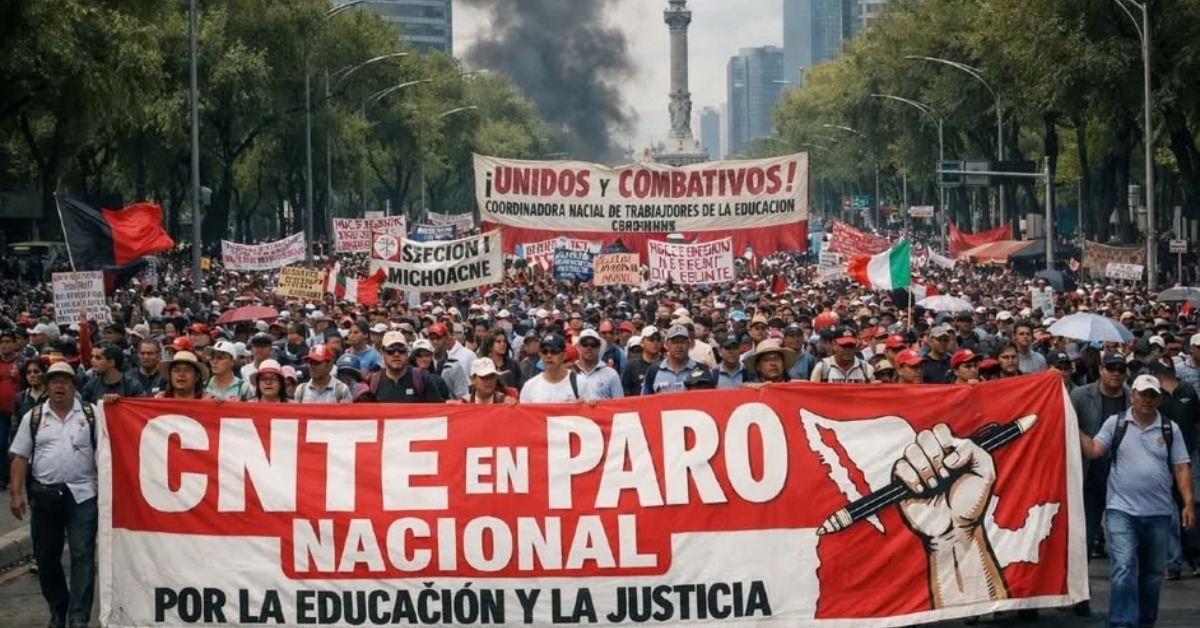
Mexico’s World Cup preparations now include a labor dispute that could affect more than schools. Teacher unions have warned of strikes and protests if demands over pay and pensions are not resolved before the tournament begins. For foreign residents and travelers, the concern is practical: road closures, demonstrations, airport access, and movement through host cities during one of the country’s busiest international events of the year.
Government seeks to contain strike threats before kickoff
Mexico’s government is trying to keep teacher-union tensions from disrupting the World Cup as union groups warn of strikes or protests ahead of the tournament.
President Claudia Sheinbaum has said the government will address the issue before the World Cup begins on June 11. Her comments came after the CNTE warned it could begin a national strike on June 1 if its demands are not resolved. A branch of the SNTE has separately indicated it could suspend activities beginning May 25.
For foreign residents and travelers, the issue is practical. The likely effects would not be limited to schools. Protests could affect traffic, demonstrations, airport access, and movement in Mexico City, Guadalajara, and Monterrey, the Mexican host cities for the tournament.
Pension and pay demands remain unresolved
The dispute centers on pay, pensions, and the 2007 ISSSTE law. The government has announced a 9 percent increase for teachers, including salary and benefits. CNTE leaders have rejected that offer as insufficient, saying only part of the increase goes to base salary.
Teachers have also pushed for the repeal of the 2007 ISSSTE law. Union leaders argue that the pension system has changed in ways that hurt retirement conditions. That demand has been part of earlier CNTE mobilizations and remains a main point of pressure on the federal government.
The World Cup gives the dispute a wider audience. That does not mean matches will be canceled or travelers should change plans. It means host cities may need to manage a labor conflict while also managing security, transport, and visitor movement.
School calendar dispute added pressure
Labor tensions grew after federal education officials considered ending the school year on June 5 rather than July 15. The idea was tied to World Cup logistics and high temperatures.
The SEP later said the 2025-2026 calendar would remain in its original terms. The school year is still set to end on July 15, while authorities have left room for local adjustments under extraordinary conditions.
That decision removed one flashpoint, but it did not settle the labor demands. Unions are still pressing the government over pensions and wages. The dates announced by union groups now put the dispute close to the start of the World Cup.
What travelers and residents should watch
The most immediate concern is movement through large cities. Mexico City has hosted teacher marches and sit-ins before, often affecting the historic center and major roads. During a World Cup week, disruptions could matter more because many visitors will also be moving between airports, hotels, fan areas, and stadium routes.
Guadalajara and Monterrey may also face pressure if national labor actions expand beyond the capital. For now, the strongest signals are centered on federal negotiations and planned union action before June 11.
Foreign residents with flights, medical appointments, consular visits, or intercity bus trips in host cities should watch local transport notices. The risk is not a single event. It is the possibility of rolling closures or sudden demonstrations if talks fail.