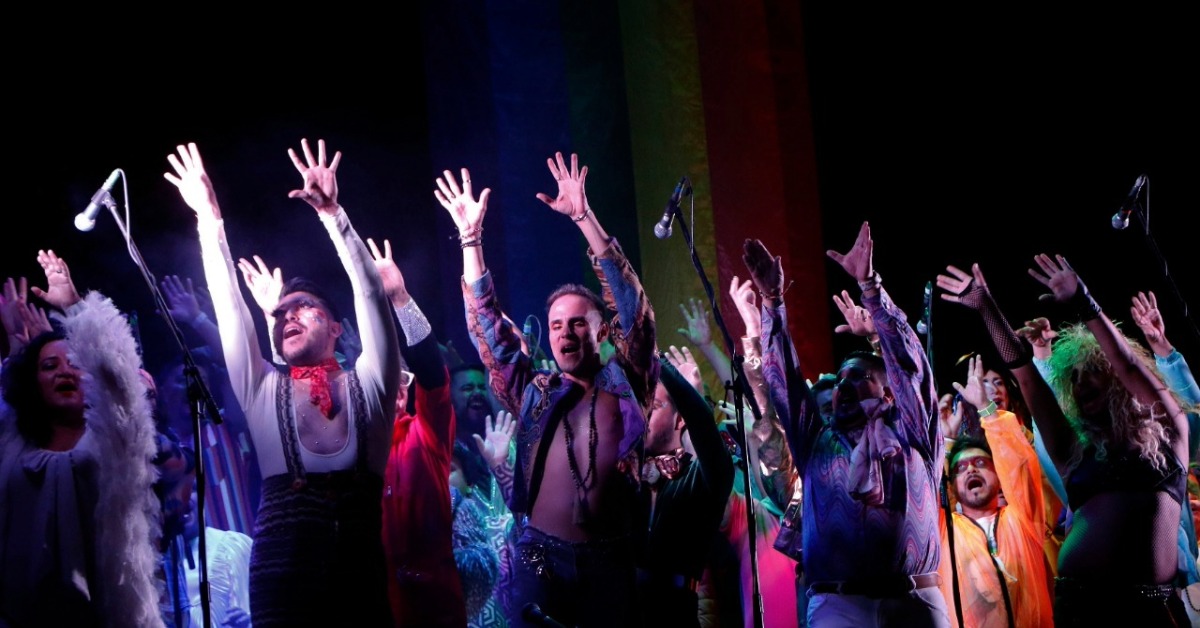
At first glance, the anniversary of México de Colores can look like a cultural milestone with a clear date and venue. The company turns 15 this year and is preparing an anniversary production, Quinceañere, for June 21 at the Teatro de la Ciudad Esperanza Iris in Mexico City. But the story goes beyond a single performance. For international readers, it helps explain how cultural visibility often works in Mexico. It is not always driven by institutions or laws first. Sometimes it is built slowly, city by city, audience by audience, through artists who place themselves in public view and stay there.
Founded in 2011 by Carlos Antúnez, México de Colores is an independent company run by men from the LGBT+ community. Its work draws on traditional Mexican dance but also blends cabaret, theater, humor, and contemporary stage language. That combination matters. The troupe does not present itself as separate from Mexican culture. It argues, through performance, that queer lives belong inside it. That makes the company legible to broad audiences, including people who may not arrive looking for an explicitly political show.
More than a dance anniversary
That helps explain why the group’s 15th anniversary matters beyond the arts page. Over the years, México de Colores has framed performance as a way to lower defenses rather than harden them. The company’s public language has often centered on empathy, recognition, and non-discrimination. Its premise is simple. A stage can do something an argument often cannot. It can let people laugh, feel discomfort, recognize a familiar rhythm or costume, and then notice that the people carrying that tradition are also expanding who gets represented inside it.
That idea is especially relevant in Mexico, where acceptance has never progressed at the same pace across the country. The capital has long offered more visible space for LGBT+ cultural expression than many other parts of the country. Even so, the gap between legal recognition and daily experience remains wide. Touring companies often confront that divide directly. In this case, the company’s own history includes performances in places that were once seen as hostile, only to return later to audiences that had become more open. That does not mean prejudice disappears. It means repeated visibility can change the terms of contact.
Mexico’s progress and its gaps
For readers outside Mexico, this is the broader context. The country has made major legal gains for LGBT+ people over the past decade, including nationwide marriage equality in 2022. But legal change has not erased regional and social differences. Mexico City is often the easiest place to read the country’s progress because institutions, venues, and public language are more visible there. Step outside the capital, or even into its outer edges, and the picture can change fast. Access, safety, and daily treatment still depend heavily on local culture, family context, and class.
Official data helps explain why a company like México de Colores still matters. INEGI estimated in its national survey that about five million people age 15 and older in Mexico identify as part of the LGBTI+ population. The same survey found higher levels of unequal treatment at work for LGBTI+ people than for non-LGBTI+ respondents. It also found much higher levels of suicidal thoughts or attempts. Those numbers do not turn a dance company into a social service. But they do show why public representation is not just symbolic. Visibility affects who feels recognized, who feels isolated, and who believes there is room for them in public life.
What the 15th year says about Mexico now
The most useful way to read this anniversary is not as a side story about culture. It is a story about how culture and public life meet. México de Colores uses recognizable Mexican forms, from folklore to the language of the quinceañera itself, and reworks them without asking permission to exist. That is a cultural statement in a very specific sense. It does not reject tradition. It claims a place within it. For foreign residents in Mexico, that is an important distinction. Many of the country’s biggest social debates are not fought only through formal politics. They also unfold through festivals, theaters, schools, and local rituals.
The company’s next step also shows its reach. After the anniversary performance in Mexico City, more presentations are planned in places including Puerto Vallarta, Guanajuato, Nayarit, and Guerrero. That matters because it pushes the anniversary beyond a capital-city audience. Fifteen years in, México de Colores is still making the same basic argument, but with more evidence behind it: that art can make room where social acceptance is incomplete, and that a dance company can become a public measure of how much a society is willing to see.