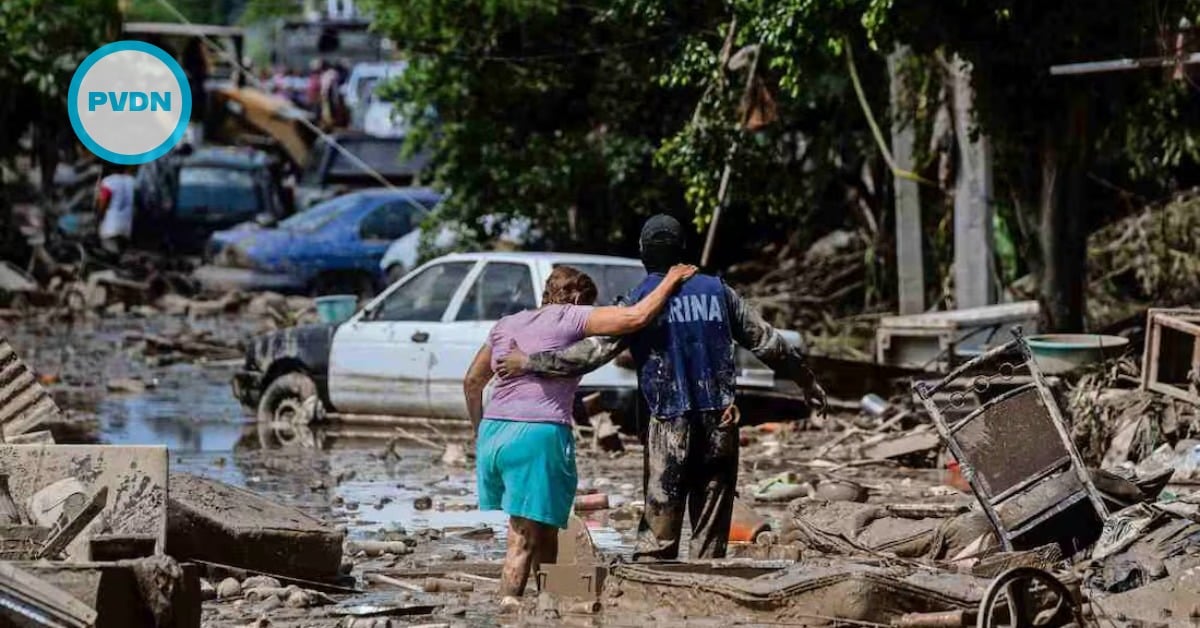
Mexico’s government raised the Mexico flood death toll to 70 on Thursday and said 72 people are still missing after days of destructive rain across five states. Veracruz and Hidalgo are bearing the heaviest losses, as crews battle through mud and broken roads to reach stranded towns. Officials say 108 municipalities have reported damage and 160 communities remain cut off, though power is gradually coming back. Families wait for word as rescue teams move door to door and river to river, hoping the list of the missing starts to shrink.
The Mexican government said the Mexico flood death toll has climbed to 70, with 72 people still unaccounted for after a week of punishing rain and flash floods that swamped neighborhoods, toppled bridges, and severed roads across five states. Veracruz and Hidalgo bore the worst of it. Puebla also recorded heavy losses, while Querétaro confirmed one death and San Luis Potosí reported none. Officials cautioned that the figures could change as access improves and rescue teams reach isolated communities.
In a morning briefing on Thursday, authorities detailed the scope: 108 municipalities reporting damage and 160 communities still cut off by collapsed spans, blocked highways, or washed-out rural tracks. Crews are cutting new routes and laying temporary crossings to push relief deeper into the hills and river valleys. The presidency later published a transcript noting progress since Wednesday but underscoring just how much terrain remains unreachable.
Power, roads and access still fragile
The lights are coming back on. Mexico’s state utility said electricity service is 93% restored across the five impacted states, including the hardest-hit zones of Veracruz, Hidalgo, and Puebla. Repair brigades are swapping damaged equipment, re-stringing lines across ravines, and walking in gear where trucks can’t pass. Even as restoration advances, nearly 200,000 customers still awaited reconnection on Thursday afternoon.
Road access remains the choke point. The Infrastructure Ministry’s update listed 108 municipalities with road damage and 160 communities still without a land route. The government said almost a thousand pieces of heavy machinery are working on the backlog, from mudslides in the Sierra to riverbed gashes on lowlands, a tally echoed in independent and wire reports that tracked the day’s progress.
Families are waiting in school gymnasiums, churches, and makeshift shelters. In Poza Rica and Álamo, floodwaters carried timber and vehicles through streets layered with silt. In Hidalgo’s canyons, rescuers are moving on foot and by helicopter to reach hamlets where calls dropped out days ago. Federal forces, civil protection units, and volunteers have fanned out with food, water, and medical kits, a federal deployment that reporters on the ground estimated in the thousands.
Tracking the Mexico flood death toll
Officials gave a more precise breakdown today: 30 deaths in Veracruz, 21 in Hidalgo, and 18 in Puebla, plus one in Querétaro. Another 72 people are listed as not yet located, most of them in Hidalgo and Veracruz. The government emphasized that “no figure is final” while access remains limited and registries are reconciled. Those tallies, delivered publicly this morning and carried by multiple national outlets, now set the baseline for the recovery phase.
Meteorologists tie the disaster to days of exceptional rainfall linked to late-season tropical systems. Earlier in the week, international wires reported torrential rains tied to Tropical Storm Raymond and Tropical Storm Priscilla, which soaked already saturated watersheds and primed hillsides for collapse. The back-to-back storms, combined with local topography, turned swollen rivers into churning channels that overwhelmed drainage and levees.
Electric crews, soldiers, and municipal workers are now moving block by block. As of Thursday, the utility’s public bulletin reiterated the 93% restoration figure, listing hundreds of thousands of customers re-energized since the weekend. Additionally, SIM cards were distributed to keep isolated towns communicating as lines come back. That communication bridge matters for missing-person tracing, where cell coverage can flip “unreachable” into “safe.”
What’s next is the long work: reopening roads, pumping out homes, and getting families back to their neighborhoods safely. Health teams are monitoring for waterborne illnesses but have not reported any outbreaks; their priority is ensuring clean water and removing debris before the next round of rain. The government has promised resources for reconstruction and called on residents to avoid riverbanks and unstable slopes while inspections continue. Those calls will carry more weight as access improves and the list of missing individuals is revised with each door knock.