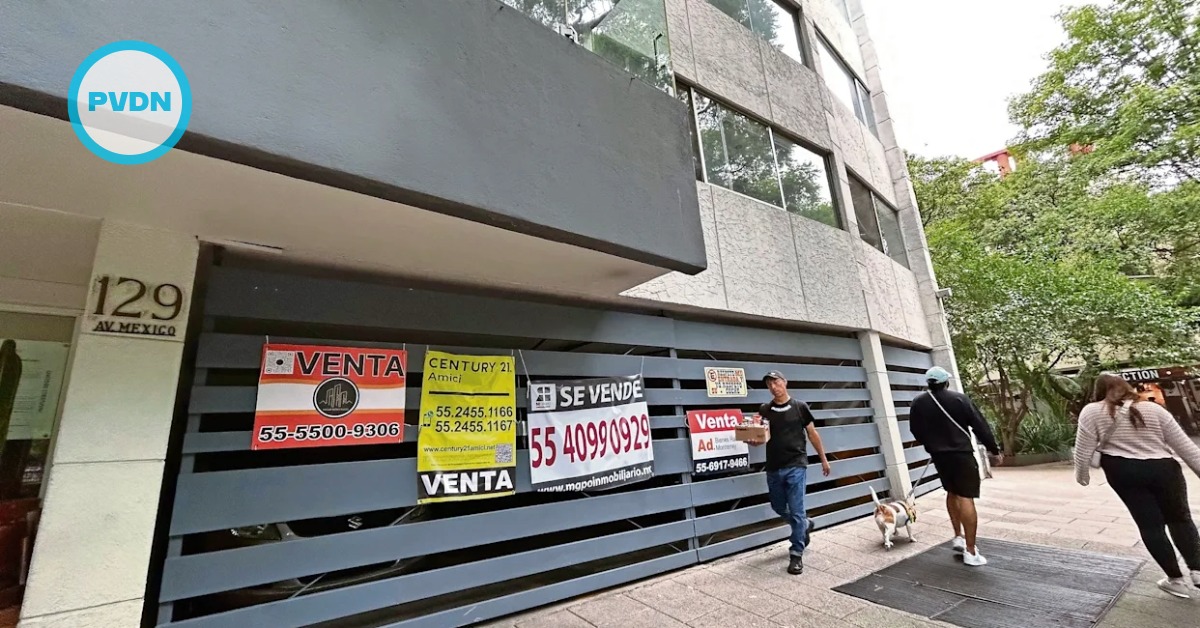
Banorte’s index shows Mexico home values up 4.4 percent in 2025 and 4.9 percent in November, driven by higher wages and strong urban demand.
Mexico’s housing market is ending 2025 with prices still heading upward, even if the pace is no longer explosive. The latest reading of Banorte’s Indicador de Precios de Vivienda shows that national home values are 4.4 percent higher between January and November than a year earlier, while the November data alone points to a 4.9 percent annual increase. Behind those percentages are thousands of families trying to secure a home in markets where demand has stayed stubbornly strong.
Unlike older indices that arrive with a long delay, Banorte’s housing indicator is built with big data scraped from real estate portals in 60 cities across 15 states, capturing more than 180,000 listings each month. That gives a close-to-real-time view of asking prices in the main urban and metropolitan areas, where most buyers now search for homes and apartments. The bank has positioned the index as a kind of early warning system for shifts in the property market, from slowdowns to possible overheating.
How Mexico housing prices are measured
The recent figures come after several months of gradual increases. In September, the index showed a 4.4 percent annual rise in prices, with the average square meter of housing at just over 31,000 pesos and a 0.4 percent gain compared with August. By October and November, the annual variation settled around 4.9 percent, and the national average climbed to roughly 31,330 pesos per square meter, reflecting a 0.6 percent monthly increase.
The national average hides deep regional gaps. Mexico City remains the most expensive state, with prices around 57,800 pesos per square meter, nearly double the national level. In contrast, Tamaulipas sits at the bottom of the table, with homes averaging close to 18,200 pesos per square meter even after posting one of the fastest annual increases in October. States such as Nuevo León and Jalisco, with strong manufacturing corridors and expanding metropolitan areas, also rank among the priciest markets per square meter.
At the same time, the official housing price index published by Sociedad Hipotecaria Federal reported annual increases above 8 percent in the first half of the year and an average home value of about 1.86 million pesos, with a median around 1.2 million pesos. That broader index relies on mortgage records rather than listing prices and covers the entire country, but it arrives with a longer lag. Taken together, both indicators suggest that 2025 began with very fast appreciation and is closing with more moderate, but still firm, growth.
For households, even a single-digit increase matters. Consumer inflation has stayed mostly in the 3 to 4 percent range this year, which means housing is rising slightly faster than the general cost of living. Over time, that gap can push ownership further out of reach for workers whose wages grow more slowly than home prices, especially in the largest cities where land and construction costs are already high.
What higher prices mean for buyers in 2026
Banorte links the current increase in part to the “evolution of workers’ incomes” and strong demand in urban and metropolitan segments. Labor data helps explain why. Mexico has set repeated records in formal employment this year, with more than 22.8 million workers affiliated to the Social Security system by the end of November and over half a million new formal jobs created between January and October. Average wages for those workers have also risen, with some estimates pointing to nominal increases above 7 percent in 2025.
Those gains give more households the income needed to qualify for a mortgage or improve their purchasing power in the rental market. They also create a pool of potential buyers who are eager to move quickly, either before interest rates fall and competition intensifies, or because they expect rents to keep drifting higher. In large metropolitan areas, that demand collides with limited supply of well-located homes and apartments, pushing prices further up for smaller units and older housing stock.
At the same time, the new housing indicator suggests a market that is adjusting rather than boiling over. Monthly changes in the index have stayed below one percent, and some states have already seen price growth slow or even turn slightly negative in certain months. Yucatán, for example, has posted mild declines on a monthly basis despite strong recent attention from investors and migrants. That mix of cool-downs and hotspots points to a patchwork of local conditions rather than a single national story.
Still, for many renters and would-be buyers, the headline numbers translate into hard choices: longer commutes in exchange for cheaper housing, downsizing to smaller spaces, or delaying the move from rental to ownership. A 4 or 5 percent annual increase in prices may sound modest on paper, but layered on top of several years of appreciation, it deepens the affordability challenge, especially in cities where salaries have not kept up with the cost of living.
Policymakers are beginning to respond. In Mexico City, for instance, the local housing institute is rolling out programs that combine interest-free loans and non-refundable support to help lower-income households access formal housing and to counter the pressure from speculation and gentrification. Nationally, the federal housing bank and social housing funds are revising their products in an attempt to close the gap for workers who earn several times the minimum wage yet still struggle to afford a mortgage.
For now, the latest readings from Banorte’s index confirm that Mexico housing prices will enter 2026 at a higher level once again. The growth is slower than earlier in the year and far from a runaway bubble, but it continues to outpace general inflation and keep pressure on families in the country’s most dynamic metros. The key question for the coming year is whether wage gains and new housing supply can finally catch up with the price of a place to live.