Mexico moved quickly after the arrests of two alleged CJNG figures, sending a large security message across the country. The operation was framed as a strike against both the cartel’s command structure and its money network. But the deployment also shows the concern federal officials still have about possible roadblocks, attacks, and local reprisals after major cartel captures.
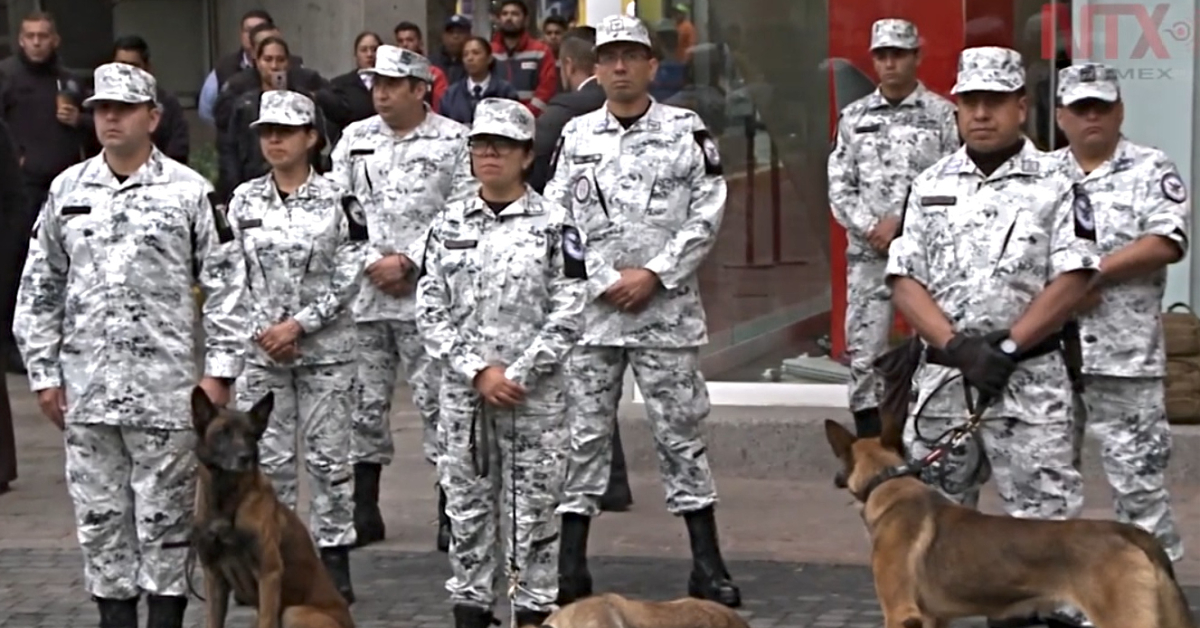
Mexico deployed 132,000 Armed Forces and National Guard personnel after the arrests of two alleged figures tied to the Jalisco New Generation Cartel, known as the CJNG.
Federal officials said the deployment was meant to prevent violent reactions after the arrests of Audias Flores Silva, known as “El Jardinero,” and César Alejandro “N,” known as “El Güero Conta.”
The arrests were presented as two linked blows against the cartel. One targeted an alleged senior operational figure. The other targeted an alleged financial operator accused of helping move and hide money for the group.
For readers outside Mexico, the scale of the response matters. Large cartel arrests in Mexico can sometimes be followed by roadblocks, burned vehicles, attacks on businesses, and pressure on local communities. Authorities said the new deployment was intended to reduce that risk before violence could spread.
What federal authorities announced
Federal security officials said personnel from the Army, Navy, and National Guard were placed in prevention and containment roles after the arrests.
The deployment included personnel already operating across the country, with a greater focus on areas considered higher risk. Officials specifically pointed to Jalisco, the border corridor with Nayarit, and areas near Puerto Vallarta, Magdalena, and San Marcos.
Authorities said nearly 4,000 federal, state, and municipal personnel were used in Jalisco as part of the immediate containment plan. The Navy also reported a nationwide deployment of more than 25,000 personnel to prevent violence from organized crime.
Defense officials said the Army and National Guard had 107,000 personnel deployed nationwide. Together, officials framed the figure as part of a broad security shield after the CJNG arrests.
Who is El Jardinero
Audias Flores Silva, known as El Jardinero, has long been described by Mexican and U.S. authorities as a major figure in CJNG.
Federal officials said he helped build a regional criminal structure over more than two decades. They linked him to drug production, trafficking routes, clandestine laboratories, aircraft, landing strips, and logistics used to move narcotics outside Mexico.
He was arrested in Nayarit after a long intelligence operation. Authorities said the operation followed months of surveillance and was carried out by Mexican forces, with information exchange from U.S. agencies.
Officials said the arrest happened without a firefight. That detail is important because the suspect was described as having armed protection around him.
The arrest also came at a sensitive moment for the CJNG. After the death of Nemesio Oseguera Cervantes, known as El Mencho, the cartel has been under pressure from federal operations and internal succession questions.
Why El Güero Conta matters
The second arrest focused on El Güero Conta, who authorities identified as an alleged financial operator for El Jardinero.
He was arrested in Zapopan, Jalisco, in an operation involving Mexican Army special forces and the National Guard.
Officials accused him of laundering money through companies and front men. They also said illicit funds were used to buy aircraft, boats, homes, ranches, and other properties. Authorities also pointed to investments tied to tequila production.
That part of the case matters because modern cartels are not only armed groups. They also depend on financial networks, legal businesses, property holdings, and people who help convert criminal profits into assets.
For Mexico, disrupting the money side of cartel operations can be as important as arresting armed leaders. It can limit a group’s ability to buy weapons, pay cells, bribe officials, and rebuild after leadership losses.
Why the troop deployment was so large
The federal response reflects a pattern seen after major cartel captures. When a senior figure is arrested, criminal groups may try to show strength through visible disruption.
That can include burning vehicles, blocking roads, or attacking businesses. These actions are often designed to slow security forces, intimidate communities, and pressure authorities.
In this case, officials said the deployment was preventive. The goal was to stop violence from expanding and to protect strategic roads, communities, and urban areas.
For expats and travelers, this does not mean every area of Mexico faces the same risk. Security conditions can change quickly by state, road, and municipality. The main practical concern after cartel operations is usually regional disruption, not a national travel shutdown.
Still, the deployment shows federal officials were taking the risk of reprisals seriously, especially in areas tied to CJNG operations.
The broader CJNG context
The CJNG is one of Mexico’s most powerful criminal organizations. It has been linked to drug trafficking, extortion, weapons networks, money laundering, and territorial disputes in multiple states.
Its influence is not limited to Jalisco. Authorities and security analysts have tied the group to activity along the Pacific coast and in states including Nayarit, Zacatecas, and others.
That is why the arrest of El Jardinero drew national attention. He was not presented as a local operator only. Federal officials described him as a figure with regional reach and operational value.
The arrest of an alleged financial operator also suggests the government is targeting more than one layer of the cartel. The stated strategy is to weaken command, logistics, and finances simultaneously.
Whether that reduces violence will depend on what happens next. Cartels can fragment, reorganize, or shift leadership after major arrests. In some cases, that can reduce capacity. In others, it can trigger new disputes.
What residents should watch next
The most important signals in the coming days will be road conditions, transportation suspensions, business closures, and official alerts in affected areas.
Residents in Jalisco and Nayarit should pay attention to state and municipal security updates, especially if traveling by highway. People in Puerto Vallarta and nearby areas should also watch for changes in local transport, school operations, or road access.
Federal officials have framed the arrests as major blows to the CJNG. But the large deployment also shows that the government knows these operations can pose short-term risks to communities.
For now, the story is not only about who was arrested. It is about whether authorities can prevent the arrests from turning into wider disruption.