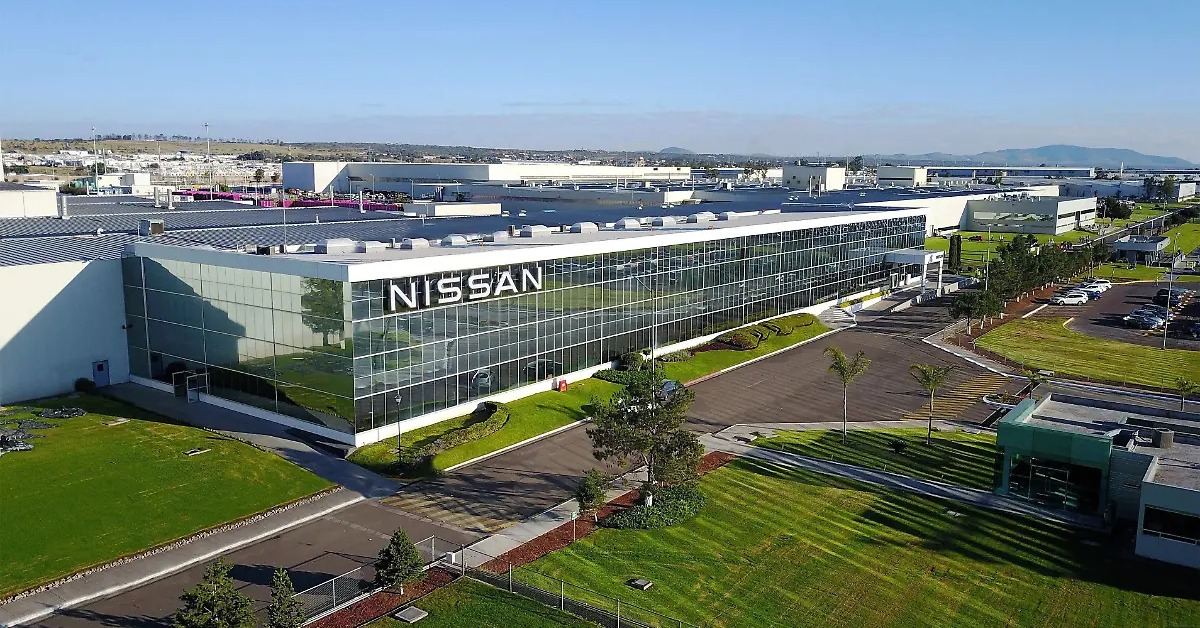
Nissan Mexicana says U.S. Section 232 tariffs are no longer just a policy problem. The company now describes them as an operational risk that could soon affect staffing at its Aguascalientes plants. According to the company, pressure on production and exports has reached a point where one manufacturing shift could be cut in the coming months if conditions do not improve.
That matters because this is not a small adjustment inside a single business unit. Nissan says each manufacturing shift supports roughly 1,800 to 2,000 jobs, before accounting for the wider supplier chain. The company also says it is working with the Mexican government on support measures to help protect production capacity and the roughly 19,000 jobs it generates in the country. The warning comes at a sensitive moment, as North America moves deeper into the 2026 T-MEC review cycle.
Why the tariff issue has become so difficult
The current U.S. tariff structure has been in place for a year. Under the White House order, imported automobiles became subject to a 25% tariff on April 3, 2025. For vehicles that qualify under USMCA/T-MEC, the duty can still apply to the vehicle’s non-U.S. content. In plain terms, the trade agreement softens the blow for some vehicles, but it does not erase the extra cost.
That distinction is central to Nissan’s problem. The company builds affordable, high-volume models in Mexico that are hard to reproduce in the United States at the same cost. Nissan has argued in recent weeks that lower-priced vehicles made in Mexico play a key role in the U.S. market precisely because they can be produced more cheaply here. Once a tariff is added, that cost advantage narrows quickly. The result is a familiar chain reaction: exports become harder to price, production plans get tighter, and management starts looking at shifts, routes, and volumes instead of growth.
Why Aguascalientes matters beyond Nissan
This story is about one automaker, but it also says something larger about Mexico’s manufacturing model. Aguascalientes is one of the country’s best-known auto hubs, and Nissan remains one of the biggest names in Mexican vehicle production. On its own Mexico site, the company highlights Aguascalientes as the base for key vehicles in its portfolio and says it has more than 16,000 employees in manufacturing and logistics operations at its plants.
The broader data show why the warning deserves attention. INEGI reported that Mexico exported 795,631 light vehicles in the first quarter of 2026, up 2.5% from the first quarter of 2025. That looks healthy at first glance. But the same report shows that 75.8% of those exports still went to the United States. Mexico’s auto industry may be diversified in models and brands, yet its export geography remains heavily concentrated. When Washington changes tariff rules, the effect can travel quickly from customs policy to factory scheduling in central Mexico.
What Nissan wants from Mexico
Nissan is not asking Mexico to cancel U.S. tariffs, because that is beyond the reach of Mexican officials. Instead, the company says it is looking for domestic support tools to help offset some of the pressure. It has pointed to possible measures tied to deductibility and labor-related mechanisms. The goal appears to be narrower than a full rescue. Nissan’s message is that it needs enough relief to keep operating room while trade rules are contested and reviewed.
That request also highlights an imbalance in the U.S. policy design. A separate White House amendment created an offset mechanism on some auto parts tariffs for manufacturers that assemble vehicles in the United States. That relief is tied to U.S. final assembly, not Mexican production. It also becomes less generous starting May 1, 2026. For companies that depend on Mexico-based output to serve the U.S. market, the policy does little to solve the core problem. It may even reinforce pressure to shift more activity north of the border over time.
What this means for readers in Mexico
For many readers, this may sound like a factory story from another state. It is larger than that. The auto industry is one of Mexico’s most important links to the U.S. economy. When a major automaker starts warning about shift reductions, the first effect is local. Workers, suppliers, transport companies, and service businesses feel it first. But the second effect is national. It shapes investment decisions, wage confidence, tax collections, and the tone of the wider T-MEC review.
It is also a reminder that trade certainty matters as much as trade access. Mexico can remain a competitive production base and still lose ground if tariff rules become too unstable to plan around. Nissan’s warning does not mean mass layoffs are already underway. It does mean a large manufacturer now sees the risk as immediate enough to say publicly that one shift could go. That moves the story out of abstract trade debate and into the daily math of jobs, exports, and industrial policy.