A viral video revived fears that dolphins were left behind at a closed Cancún attraction. Mexico’s environmental authority says that is not what happened. The agency says nine dolphins at Ventura Park have stayed in place since 2025 because moving them too soon could put them at risk. The dispute matters beyond one park. It also raises larger questions about Mexico’s new rules for marine mammals, the pace of enforcement, and what happens after a dolphin facility is shut down.
Profepa pushes back after viral footage
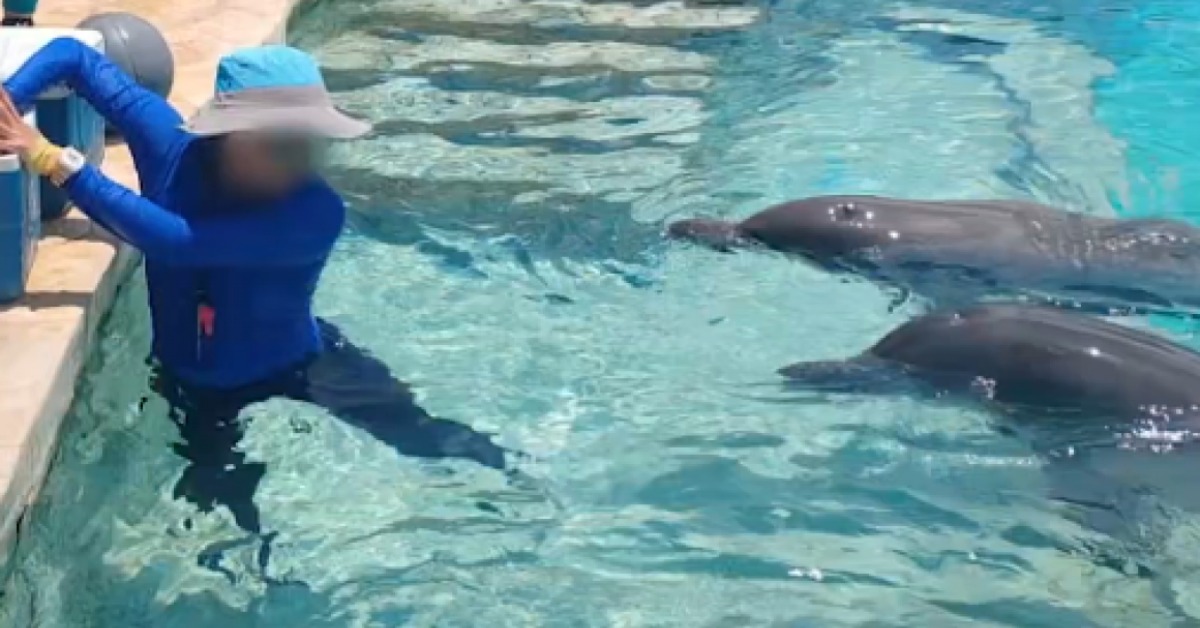
Mexico’s federal environmental enforcement agency, Profepa, says the nine dolphins at Ventura Park in Cancún were not abandoned, despite new online claims that spread following the circulation of drone footage on social media. The agency says the animals have remained under official custody since October 2025, when authorities shut the facility and secured the dolphins as part of an ongoing administrative case.
That distinction matters because the images create one impression, while the government presents another. From the outside, the dolphins are still in a closed tourist facility. To many viewers, that looked like neglect. Profepa’s response is that the animals are still being cared for in place under a controlled arrangement because their health conditions make an immediate transfer risky. In practical terms, the agency says the dolphins are not free to be displayed, used for tourist contact, or simply left on their own. They remain under supervision while the legal and veterinary process continues.
What the government says is happening on site
According to Profepa, the dolphins are receiving daily veterinary care and remain under the watch of trained staff. The agency also says the water quality at the site is being monitored continuously. It has been added that some of the animals were already sick before the 2025 intervention, and that several had serious health problems when authorities stepped in.
That point is central to the official explanation. Profepa says the dolphins have not yet been relocated because transport itself can be dangerous for marine mammals in fragile condition. Under Mexico’s wildlife rules, the agency says any transfer must follow protocols designed to protect the animals’ health and physical integrity. In other words, the government’s position is that leaving the dolphins in the current facility for now is not evidence of abandonment. It is, instead, part of a medically cautious holding period while officials decide when and where a safe relocation can happen.
Why the dolphins are still at Ventura Park
For readers outside Mexico, this part of the story can seem counterintuitive. If a site is shut down, many people assume the animals should be moved immediately. In practice, wildlife cases often move more slowly. A facility can be closed to the public while animals remain on site under a different legal status. That is what Profepa says happened here.
Authorities have already signaled this before. In December 2025, environmental officials said the dolphins were still receiving care and that the site remained under restrictions while technical evaluations continued. At that stage, officials also said there could be no tourist access or direct interaction with the animals. The latest statement follows the same line but was issued in response to renewed public alarm. The difference now is that the debate has become larger, louder, and more visible because the footage spread widely and revived concerns about how captive dolphins are being handled after Mexico’s legal changes.
The case sits inside a bigger shift in Mexico
This story is not only about one park in Cancún. It sits within a broader shift in Mexico’s treatment of marine mammals in captivity. In July 2025, Mexico published reforms to the General Wildlife Law that prohibit the use of marine mammals in entertainment and sharply limit breeding and commercial exploitation. The reform became a turning point in the public debate over dolphinariums, especially in Quintana Roo, where such attractions became deeply tied to tourism over many years.
That legal change helps explain why this case is drawing more attention than it might have in the past. Once the law changed, the public stopped viewing these facilities solely as tourist businesses. They also became test cases for enforcement, relocation, and long-term animal welfare. The Cancún dispute shows how complicated that transition can be. Closing a facility is one step. Deciding what to do with the animals that remain is another. When the animals are sick, aging, or difficult to transport, the government can end up defending a temporary solution that looks troubling to the public, even while insisting it is medically necessary.
Why readers are still questioning the official version
Even with the government’s denial, public skepticism is unlikely to disappear quickly. The reason is simple. People saw a closed site and dolphins still inside it. For many, that alone raised doubts. The official explanation may address part of the concern, but it does not resolve the broader discomfort about keeping dolphins in artificial enclosures while legal proceedings drag on.
That is why this story continues to resonate. It combines three issues that tend to provoke strong reactions: animal welfare, tourism, and government enforcement. It also touches a broader reality in Mexico’s resort regions, where marine mammal attractions were long marketed as a normal part of the visitor economy. Now the law has changed, public tolerance has shifted, and officials are under more pressure to show that shutdowns are not only symbolic. In that environment, every image carries more weight, and every delay raises new questions.
What happens next
Profepa says an administrative sanction process remains open against the company tied to the facility. The agency’s stated plan is to move the dolphins progressively, but only when their condition allows it and only to places considered suitable for their care. That means the next important development will likely not be another denial, but a clearer answer to a harder question: when relocation becomes possible, where will these animals go?
Until then, the case remains in an uneasy middle stage. The dolphins are still in the same location that triggered public outrage, but the government says that does not mean they were left behind. For now, Profepa is asking the public to accept a distinction between visible confinement and official abandonment. Whether that distinction holds will depend on what authorities do next, how transparent they are about the animals’ health, and whether this prolonged temporary arrangement eventually leads to a verifiable transfer.