A cleanup at Punta Esmeralda removed nearly 60 kilograms of trash from a stretch of coast where a cenote, mangroves, and a public beach meet. On the surface, it was a routine municipal operation. But the waste pulled from the water and vegetation points to a bigger issue for Playa del Carmen: keeping one of its best-known natural spaces clean as visitor pressure, urban growth, and weak everyday habits continue to strain fragile ecosystems. The story is about more than litter. It is about how quickly neglect can damage a place people assume will always recover on its own.
Cleanup reaches the cenote and mangrove
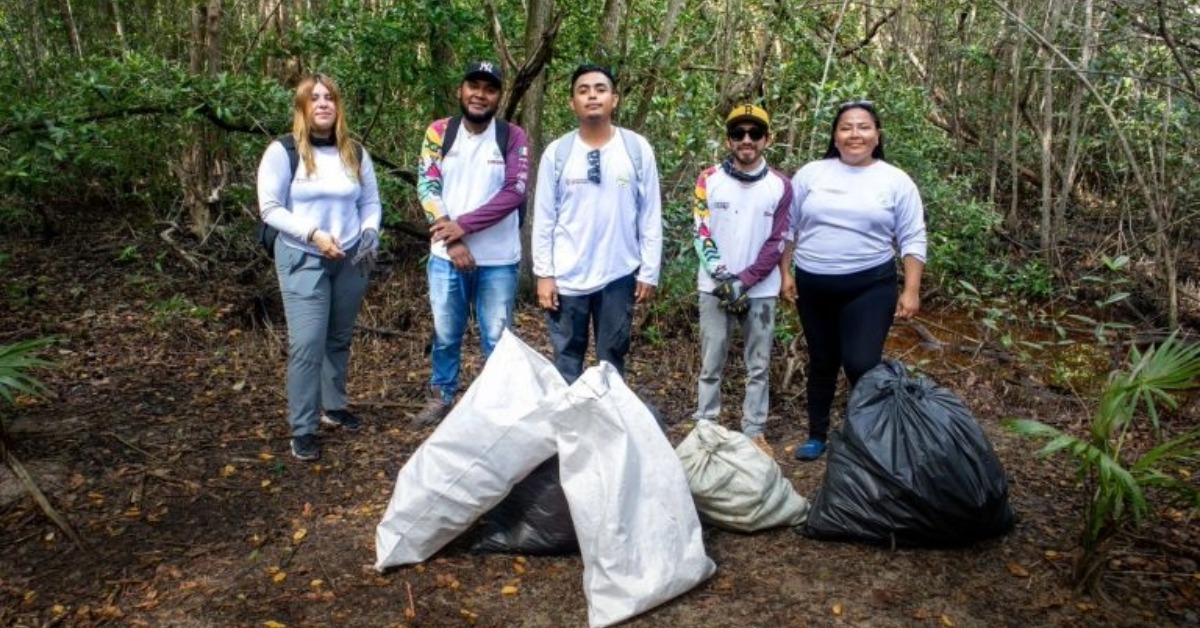
Municipal crews carried out an environmental cleanup at Punta Esmeralda on Tuesday, focusing on the beach’s cenote and nearby mangrove area. The work was led through Playa del Carmen’s environmental office, with support from the local ZOFEMAT team. Officials said the cleanup began at 8 a.m. and removed nearly 60 kilograms of waste, including general trash, glass, plastic bottles, aluminum, scrap, and broken glass. Much of that material was pulled from the cenote, while the rest came from the mangrove. The operation was presented as part of a broader effort to protect natural areas that are under constant pressure from daily use.
The amount removed was not enormous by the standards of a citywide cleanup. Even so, the location matters. Punta Esmeralda is not just another beach access point. It is one of the best-known public beaches in Playa del Carmen and one of the few places where fresh water from a cenote reaches the coastline. That gives the area a different ecological profile from a standard beach. It also makes it especially attractive to families, residents, and visitors looking for a more natural setting. When trash ends up in that mix of fresh water, coastal vegetation, and beach use, the impact spreads beyond what people can see from the sand.
Why Punta Esmeralda matters
For many people, Punta Esmeralda is a simple public beach. In practice, it serves as a meeting point for several sensitive systems. The cenote connects the area to the wider underground water network of the Yucatán Peninsula. The mangrove helps stabilize the shoreline and supports wildlife. The beach itself is also part of a heavily visited tourism zone. That combination means the site has to function as a recreation space and a protected habitat at the same time. Those goals can coexist, but only with constant maintenance and better visitor habits.
The beach also carries environmental credentials that local authorities regularly highlight. Punta Esmeralda appears on the Playa Platino registry, and municipal officials say it also holds Blue Flag status. Those labels matter because they are tied to standards for water quality, waste handling, environmental management, safety, and visitor information. They do not mean a beach is immune to damage. They mean the site is expected to meet and maintain higher standards. A cleanup like this shows how much routine work is needed to keep those standards credible.
The bigger issue is not one cleanup day
The larger story is not that crews found trash. Public beaches in fast-growing coastal cities almost always do. The more important point is what the trash says about the pressure on Playa del Carmen’s coastal ecosystems. Punta Esmeralda sits in a city that has expanded quickly and continues to absorb tourism, construction, traffic, and more everyday use of public space. In places like this, damage often comes in small daily increments. A bottle left behind, broken glass near roots, food containers in shallow water, and runoff from nearby activity do not always produce a visible crisis at once. Over time, they add up.
That matters even more in a place with mangroves. Mexico’s biodiversity authorities describe mangroves as a vulnerable ecosystem that helps protect coasts from storms and flooding, supports fisheries, and helps maintain water quality. Once those systems are fragmented or polluted, recovery is slow and uneven. Cleaning visible waste is necessary, but it is only the first step. The greater challenge is reducing waste before it reaches the water and vegetation in the first place. That requires enforcement, infrastructure, and public cooperation, not only occasional volunteer energy or municipal crews.
What international residents should understand
For international readers, the word cenote may suggest a swimming spot or tourist attraction. In Quintana Roo, cenotes are also part of a porous water system with very little natural filtration. What enters the ground, or nearby water, can move through connected systems more easily than many newcomers expect. That is one reason local environmental debates often focus on waste, sewage, runoff, and overbuilding. A cleanup at Punta Esmeralda fits into that wider pattern. It is a visible reminder that coastal beauty in the Mexican Caribbean depends on infrastructure and habits that often stay out of sight.
The same is true of mangroves. They can look like rough vegetation at the edge of a beach, but they serve as living coastal protection. They shelter species, reduce erosion, and help buffer extreme weather. In a state that depends heavily on tourism, those ecological services are not separate from the economy. They help sustain the beaches and landscapes that draw residents, investors, and visitors in the first place. That is why a relatively small cleanup can still be meaningful news. It offers a snapshot of the daily maintenance needed to keep a popular public beach from slipping into gradual decline.
What comes next
Municipal officials said they want residents and organized groups to join future cleanup and conservation days. That invitation matters, but the long-term test will be whether Punta Esmeralda stays cleaner between those events. If nearly 60 kilograms of trash can be removed in a single morning from a protected, widely used site, the problem is not only one of environmental management. It is also public behavior and the limits of enforcement. Keeping Punta Esmeralda healthy will depend on whether Playa del Carmen can match its environmental branding with steady on-the-ground results.
Deep Dive:
Blue Flag beaches in Playa del Carmen renewed for eight sites