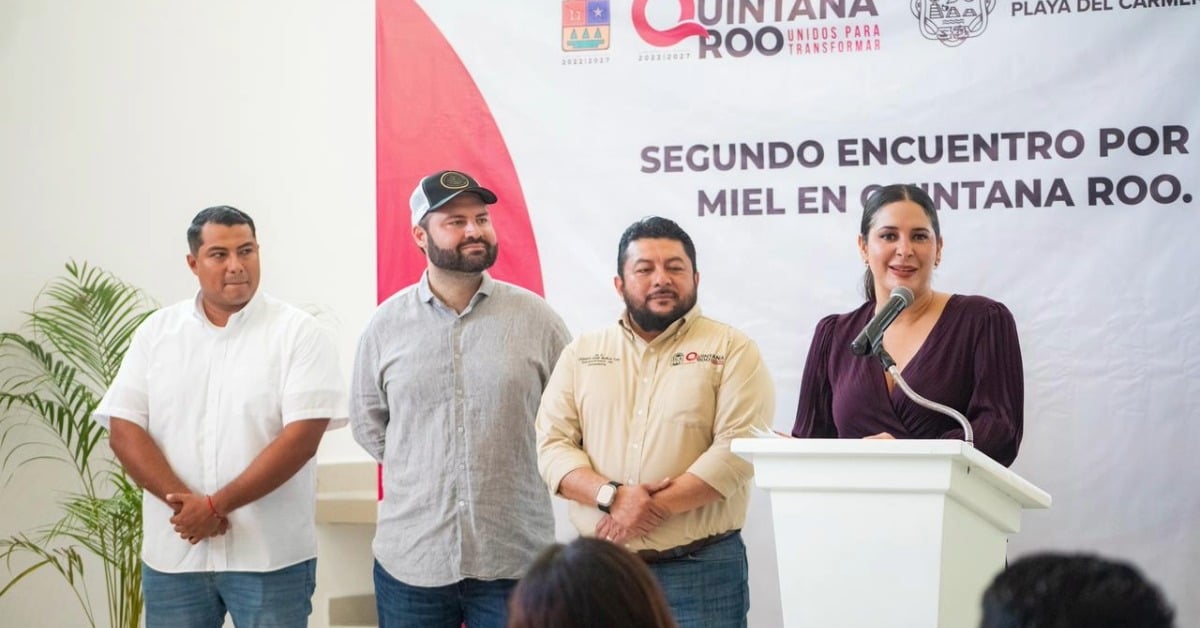
Playa del Carmen, QR – The buzz around sustainable honey production grew louder this weekend as Playa del Carmen hosted the Second Encuentro por la Miel de Quintana Roo, drawing more than 200 Mayan beekeepers, researchers, and food artisans from across the Yucatán Peninsula. The event put a spotlight on traditional and regenerative apiculture, with an emphasis on expanding value chains and dignifying the work of small-scale producers.
Governor Mara Lezama opened the encounter, underscoring the state’s commitment to the melipona, the native stingless bee that holds deep cultural and ecological importance in Mayan communities. Her remarks framed the forum as both economic opportunity and cultural recognition, especially for the roughly 1,800 beekeeping families from municipalities including Felipe Carrillo Puerto, José María Morelos, Bacalar, and Solidaridad who participated.
The downtown Playa del Carmen expo became a marketplace and classroom. Stalls displayed raw and artisanal honeys, wax-based crafts, and honey-infused beauty products, while expert-led talks addressed the challenges facing apiculture in a changing climate. Panel discussions focused on identifying the distinctive floral profiles of Yucatán-region honeys, forming cooperatives to ensure fair pricing, and marketing strategies that connect producers directly with consumers.
Demonstrations included a live melipona hive, offering attendees a rare close-up of a species that predates European bees in the region and plays a critical role in pollinating native plants. Culinary workshops showed chefs and food entrepreneurs how to incorporate honey into regional gastronomy, turning a traditional product into a modern selling point.
A key outcome was the signing of agreements with two eco-resorts to exclusively stock local honey, a move that organizers and advocates hailed as a model linking tourism with rural livelihoods. These commitments aim to guarantee a stable demand and premium channel for producers while giving visitors an authentic regional taste.
Apiculture advocates framed the encounter as a strategic pivot toward making the region a national reference for sustainable beekeeping and honey tourism. They praised Playa del Carmen for hosting the event outside of Mexico City, signaling a decentralization of agricultural development and platforming the voices of indigenous producers.
The theme of the event, “Bee Pride and Prosperity,” carried through both the programming and the rhetoric. Organizers made clear their objective: build new markets, strengthen cooperative structures, and elevate the economic status of beekeepers without eroding traditional knowledge. The emphasis on sustainable practices is an answer to environmental stressors—ranging from habitat loss to shifting flowering patterns—that threaten apiculture across the peninsula.
Local leaders, researchers, and participants stressed that measuring success goes beyond immediate sales. They pointed to capacity building, more transparent supply chains, and growing public awareness as durable gains. By showcasing honey’s cultural roots and linking it with eco-conscious tourism, the encounter positioned honey not merely as a commodity but as a signature of regional identity.
Looking ahead, organizers plan to leverage the momentum to formalize export-ready branding, increase the presence of melipona honey in health and wellness markets, and expand apprenticeship pathways for younger community members. The hope is that what began as a regional meet-up evolves into a sustained network that keeps profits and ownership with the Mayan families who have tended these bees for generations.
Sustainable beekeeping Playa del Carmen is fast becoming more than a slogan. It is shaping into a practical strategy: conserving native pollinators, preserving cultural heritage, and injecting income into rural households while giving eco-conscious tourists a meaningful local connection.