Quintana Roo’s governor took her pitch straight to more than 100 US investors in Mexico City, selling the state as a safe bet for growth. She highlighted a live pipeline of multi-billion-dollar projects and the state’s expanding logistics network. The vision leans on Cancún as a regional hub, new federal infrastructure, and a push to diversify beyond sun and sand. What exactly is on the table, where the money is going, and how risks stack up against rewards are the real questions investors ask behind closed doors.
Quintana Roo investment opportunities
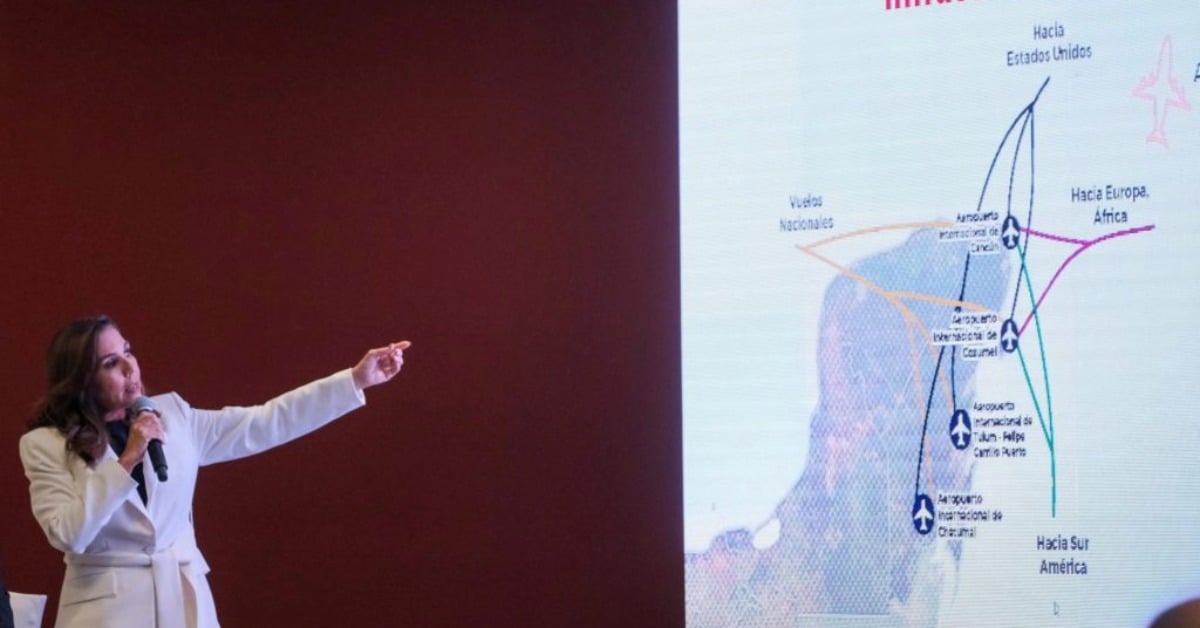
On August 27 in Mexico City, Governor Mara Lezama met with more than 100 US investors to outline why the Mexican Caribbean should be their next move. Her message was direct. Quintana Roo couples a global tourism draw with improving logistics, legal certainty, and an active project pipeline. The meeting formed part of the US-MX Summit activities.
State officials say the current portfolio tops US$2 billion. Examples include Royal Caribbean’s “Perfect Day Mexico” in Costa Maya, an expansion of Hotel Xcaret, a Ritz-Carlton development in Cancún, and real-estate bets in Mahahual. Cost estimates for the cruise project vary across outlets, but the company aims for a 2027 opening and anticipates creating thousands of jobs.
Infrastructure and connectivity
Lezama’s pitch leans on a stronger backbone. The Nichupté vehicular bridge in Cancún is nearing completion, with federal officials guiding year-end operations. That promises faster links between the hotel zone and the mainland. Four international airports—Cancún, Tulum, Cozumel, and Chetumal—consolidate the state’s role as a Caribbean air hub, while the Maya Train adds interior connectivity across the peninsula.
The state also flagged the Chetumal Polo de Desarrollo Económico para el Bienestar, a federally backed industrial park model designed for nearshoring in manufacturing, health, logistics, and technology. The program was announced this month with federal-state coordination.
What investors asked
According to participants and local coverage, questions centered on project timelines, legal certainty, and how tourism dollars spread inland. The governor emphasized legal stability, institutional backing, and “prosperity with shared benefits” as guiding principles.
Investors also probed the cruise-led model. Royal Caribbean touts jobs and year-round traffic at its Mahahual destination. Analysts note the flip side—self-contained attractions can siphon spending from nearby towns unless policy nudges keep money local. Recent reporting on new per-passenger port fees indicates that Mexico is pushing for a larger local share.
Nearshoring tailwinds and reality checks
The US remains Mexico’s top foreign investor, and nearshoring flows accelerated in 2024. Quintana Roo’s play is to capture more of that capital beyond hotels. Airports, highways, and rail strengthen the pitch; consistent permitting and environmental management will decide how much land is outside the coast.
For investors, the story is about risk and execution. Deadlines on the Nichupté bridge and the staged roll-out of Perfect Day Mexico are milestones to watch. Similarly, ground leases, community relations, and the state’s follow-through on diversifying its economy are also important considerations.