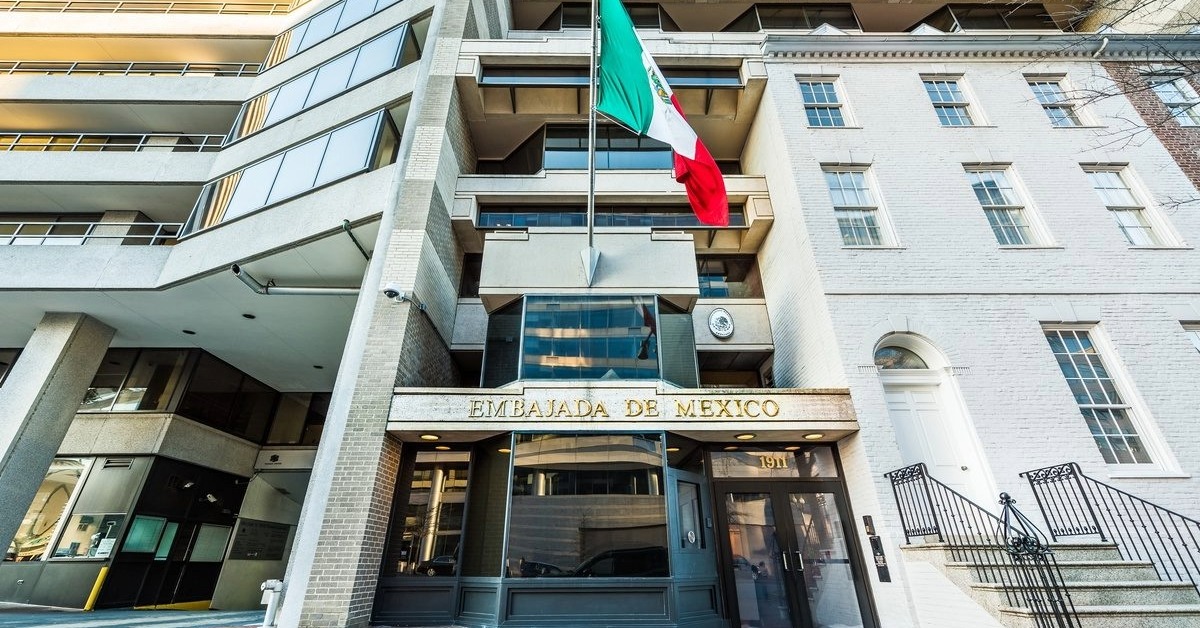
A U.S. review of Mexico’s consulates has moved from a diplomatic notice to a public concern. No closures have been announced, and Washington has not named any offices under consideration. Still, questions are spreading among people who rely on consular documents, legal guidance, and emergency help. Mexico says the offices are not political actors. Former diplomats and migration specialists see the review as another sign of strain in a relationship already under pressure from immigration enforcement, security disputes, and cartel cases.
Could U.S. Review Lead to Mexican Consulate Closures
A U.S. State Department review of Mexico’s 53 consulates in the United States has moved from a diplomatic process to public concern, with Mexican officials and migration specialists warning that any closure could cut off access to documents, legal guidance, and emergency support.
The review became public on May 8, when a U.S. official said the State Department was examining all Mexican consulates operating in the country. The same account said the review could allow Secretary of State Marco Rubio to consider closing some offices, although no closure order, target list, or timeline has been announced.
The department has given only a broad explanation. Dylan Johnson, assistant secretary of state for global public affairs, said the agency is “constantly reviewing all aspects of American foreign relations” to align policy with President Donald Trump’s agenda and U.S. interests.
That leaves a gap between procedure and effect. Mexico’s consular network handles passports, matrícula consular cards, birth registrations, legal referrals, and emergency contact for citizens in the United States. Its size reflects the scale of the population it serves. A Pew Research Center analysis estimated 37.2 million people of Mexican origin lived in the United States in 2021.
Mexico rejects political claims
President Claudia Sheinbaum rejected allegations that Mexican consulates are being used for political activity inside the United States. In her May 8 morning conference, she said the claim that the offices are “doing politics in the United States is completely false.”
Sheinbaum said the role of consulates is to protect citizens, just as U.S. consulates in Mexico assist Americans. Her government has also said Mexico’s foreign policy rests on respect for sovereignty and nonintervention, a point it has repeated during recent disputes with Washington.
The Secretaría de Relaciones Exteriores lists the Mexican consular network in the United States at 53 offices. The ministry has described consular protection as a central part of its work, including legal orientation, help with detained nationals, and services for people facing deportation or family separation.
An earlier May 8 overview of the review noted that U.S. officials had not released the scope of the review or the standards being used. The new concern is that even a limited closure would shift demand to nearby offices and lengthen travel, appointment, and response times.
Service access is the immediate pressure point
The Los Angeles consulate has become a clear example because it serves the country’s largest Mexican community in the United States. Recent interviews there showed that the review landed first as a service question, not as an abstract diplomatic dispute.
Azucena Aviles, who drove more than an hour to renew her Mexican passport and request one for her daughter, said it “wouldn’t be fair” to interfere with consular support systems. Another person asked about possible closures during a weekly public forum at the consulate.
Carlos González Gutiérrez, Mexico’s top diplomat in Los Angeles, told the audience there would be “no reason whatsoever” for the United States to close a Mexican consulate. He also denied the idea that Mexican offices are acting as political operators.
“We are neither activists nor spies,” González Gutiérrez said. He said Mexican consular staff work openly inside U.S. society.
The consulate’s work has expanded as immigration enforcement has intensified. González Gutiérrez said consular officials had interviewed 1,940 detained Mexicans since the Los Angeles immigration crackdown began last June. At a May 11 meeting, he said 46 percent had been deported, 35 percent had U.S.-born children, and 69 percent had entered through a port of entry.
Ariel Ruiz Soto, a senior policy analyst at the Migration Policy Institute, warned that closures would have “significant, devastating effects” on Mexican immigrants, especially in isolated areas. The concern is not only paperwork. Legal guidance can determine whether a detained person understands options before removal proceedings advance.
A diplomatic signal during a tense period
The review comes during a rough stretch in U.S.-Mexico relations. Security cooperation has been strained by disputes over U.S. personnel in Mexico, drug trafficking cases involving Mexican officials, and pressure from Washington over cartel enforcement. Immigration policy has also become more aggressive under Trump’s second term.
Former Mexican ambassador to the United States Arturo Sarukhan said a review of foreign consulates is usually a sign of a “very, very rocky moment” in a bilateral relationship. He called the current period one of the most difficult in decades.
The United States has previously ordered the closure of consulates in China and Russia during periods of confrontation. No comparable public accusation has been made against Mexico’s consulates in this review. That distinction is central to Mexico’s response, which treats the review as politically loaded unless Washington presents a clearer basis.
No Mexican consulate has been ordered closed. No U.S. agency has published a list of affected offices. Until that happens, the review remains an open diplomatic pressure point with immediate consequences for consular planning, staffing, and public trust.