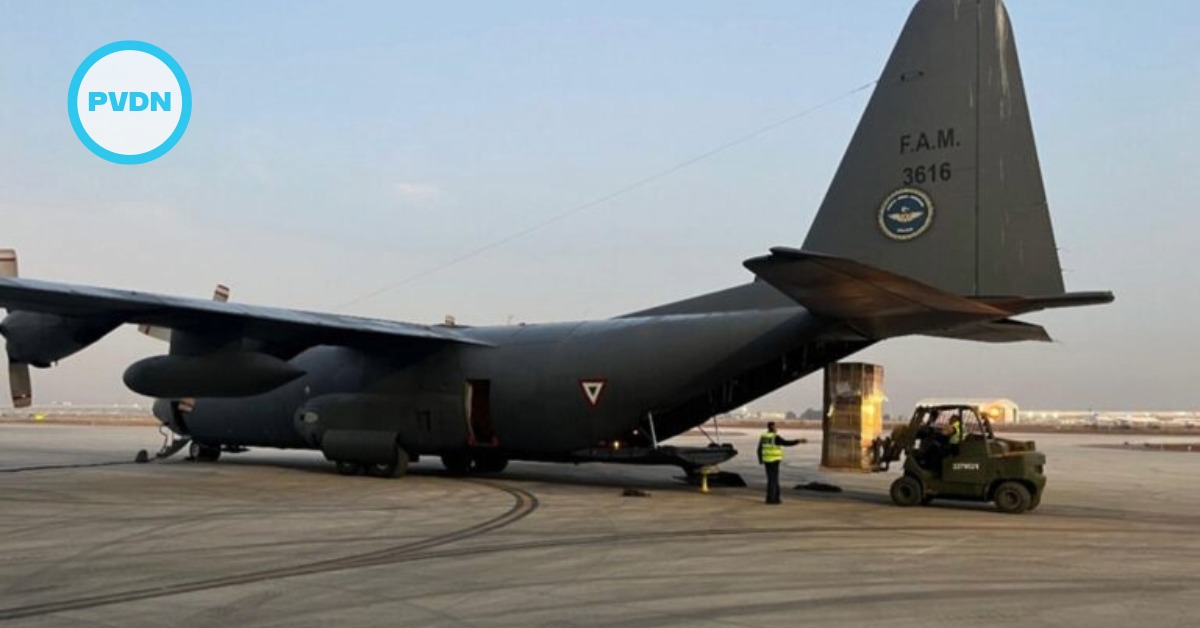
A gray U.S. military transport plane touched down at Toluca and, within hours, the photos were everywhere—right as Mexico’s security relationship with Washington is under a microscope. The government insists it wasn’t the start of anything bigger: no foreign troops, no mission on Mexican soil. Still, the choice of a civilian airport, the timing, and a fresh U.S. aviation alert about military activity near Mexico fed a familiar anxiety here: where does cooperation end and sovereignty begin?
A landing that raised eyebrows
The aircraft’s arrival at Toluca’s international airport set off a predictable wave of speculation: was the United States quietly moving personnel into Mexico, and if so, who authorized it? The questions landed in a politically charged moment, with security cooperation between the two countries under intense scrutiny and a long-running Mexican sensitivity around sovereignty and foreign military presence on national territory.
In Mexico, the optics matter. A military aircraft on the tarmac is never “just a plane,” especially when it appears in a civilian airport instead of a military base. That distinction helped turn a routine movement into a national talking point almost instantly.
What Sheinbaum says actually happened
President Claudia Sheinbaum’s government moved to shut down the rumor mill by framing the flight as administrative, not operational. The explanation: the U.S. aircraft was authorized by Mexican authorities as part of a prearranged training program and used to transport Mexican security personnel for instruction in the United States. The government’s line was blunt: no U.S. troops were deployed into Mexico, and the flight was tied to ongoing cooperation agreements and established protocols.
Sheinbaum also argued that this kind of cooperation is not new and that training exchanges work both ways. What made this episode feel different was the setting—Toluca—paired with the broader political moment. Sheinbaum acknowledged the sensitivity and emphasized that the authorization was granted in advance, with oversight on the Mexican side.
Why it became a sovereignty flashpoint
The controversy quickly spilled into a familiar legal and political argument: when does a foreign military presence require Senate approval? Critics pointed to Mexico’s constitutional guardrails around foreign troops and asked whether a U.S. military aircraft landing—even briefly—should trigger a higher level of disclosure.
Sheinbaum’s answer was that the threshold wasn’t met because the plane was not bringing U.S. forces to operate in Mexico. Instead, Mexican personnel were the ones traveling for training under an existing authorization. Even so, opposition voices pushed for clearer public explanations, especially about why a civilian airport was used and what the training covers.
The timing problem
The landing also collided with unrelated but unsettling aviation news. Days earlier, U.S. aviation authorities issued alerts advising U.S. operators to use caution over parts of the eastern Pacific near Mexico, citing potential “military activities” and possible navigation interference. Mexico’s government said it reviewed the alert through interagency channels and concluded it referred to areas outside Mexican territory, and Mexico’s transport authorities stressed it did not restrict Mexican airspace or affect Mexican aviation operations.
For many readers—especially foreigners living in Mexico—the overlap of these headlines created an easy, anxious storyline: U.S. military activity is expanding, and Mexico is being pulled closer. The government’s response has been to insist the two issues are being conflated, and that this particular aircraft movement was about training logistics, not escalation.