Washington has unleashed financial sanctions and bounties totaling $34 million against the alleged leaders of two Michoacán-based criminal groups, viewing them as urgent security threats. But step across the border, and you might not even hear these cartel names uttered by officials. Why is Mexico’s government so quiet about United Cartels and La Nueva Familia Michoacana, even as they reportedly hold sway over local industries and territory? This contrast underscores a widening rift in how the US and Mexico address organized crime.
The United States has escalated its fight against two lesser-known Mexican criminal groups. It is now labeling them as major threats and placing hefty bounties on their leaders. This marks a dramatic shift in Washington’s approach. U.S. officials are treating these cartels more like terrorist organizations than traditional drug gangs.
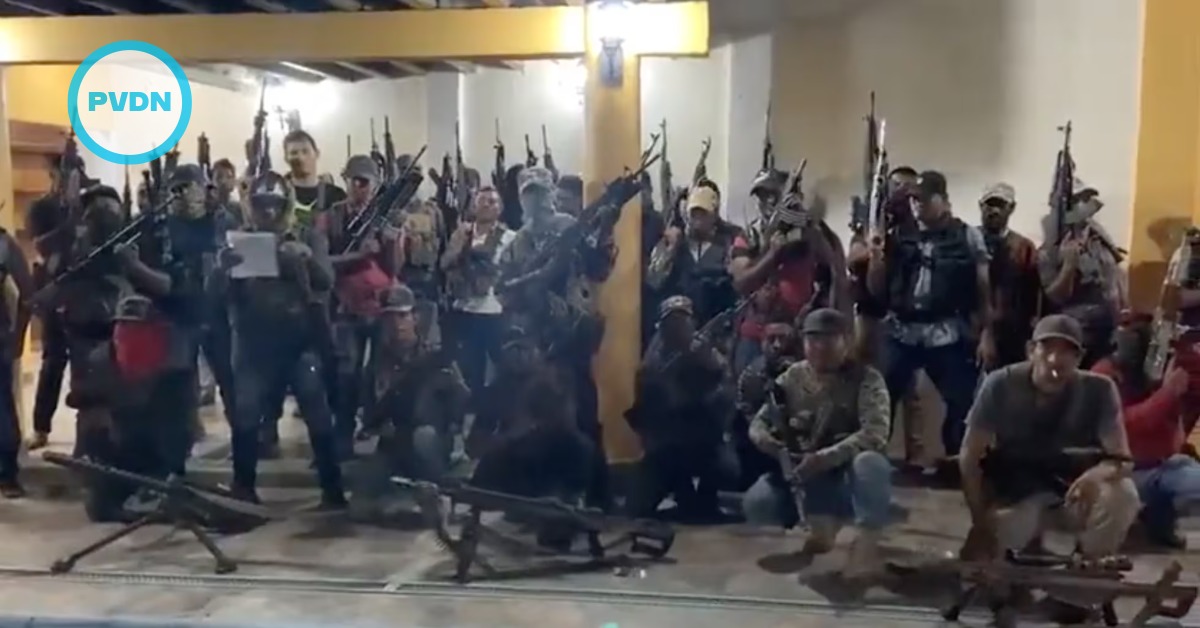
These organizations — commonly known as United Cartels (Cárteles Unidos) and the New Michoacán Family (La Nueva Familia Michoacana) — operate primarily in Mexico’s Michoacán state. Locals accuse them of running brutal extortion rackets in Michoacán’s avocado and lime industries. They also blame the cartels for violent turf wars that terrorize communities. U.S. authorities now openly call them national security risks. Yet south of the border, Mexico’s government rarely acknowledges these groups in public. That silence highlights a stark disconnect in how the two countries frame and fight organized crime.
US Designations and Sanctions
United Cartels and La Nueva Familia Michoacana were officially designated as Foreign Terrorist Organizations by the U.S. State Department in February 2025. This unprecedented step was taken on the first day of President Donald Trump’s second term. It marked the first time American authorities formally applied the terrorist label to Mexican drug cartels. By branding them FTOs, the U.S. signaled that it considers these cartels a direct threat to American lives, equating their tactics – like indiscriminate violence using explosives – with terrorism. The designation also opened the door to harsher measures. These include special sanctions and the potential for extraterritorial actions.
Following the terror designation, the U.S. Treasury’s Office of Foreign Assets Control (OFAC) moved to choke off the cartels’ finances. In April 2025, OFAC sanctioned four leading members of La Nueva Familia Michoacana. It froze their assets and barred any dealings with them. Among those blacklisted were the Hurtado Olascoaga brothers — Johnny, alias “El Pez,” and José Alfredo, alias “El Fresa” — who are alleged co-leaders of the group. Later that summer, Treasury officials expanded the crackdown to United Cartels. They sanctioned the alliance itself, along with an affiliated faction, Los Viagras, and seven individuals tied to its operations. These economic sanctions aim to isolate the cartels internationally and hinder their ability to launder drug profits.
Bounties on Michoacán Cartel Bosses
U.S. authorities have backed up these designations with eye-popping reward offers to help bring the cartel kingpins to justice. The State Department responded through its Narcotics Rewards Program. It posted a total of $34 million in bounties for top figures in United Cartels and La Nueva Familia Michoacana. The campaign began in April 2025. That month, Washington offered up to $5 million for information leading to the capture of Johnny “El Pez” Hurtado and up to $3 million for his brother José Alfredo “El Fresa” Hurtado. Both men remain fugitives. They are accused of running La Nueva Familia Michoacana’s drug empire, which stretches from clandestine meth labs to secret border crossings.
In August 2025, U.S. officials went further. They targeted five alleged bosses of United Cartels with rewards that dwarf those for many notorious criminals. Juan José “El Abuelo” Farías Álvarez is a veteran Michoacán crime lord reputed to lead the United Cartels alliance. He now has a $10 million bounty on his head. The State Department also allocated $5 million each to Alfonso “Poncho” Fernández Magallón and Nicolás “El Gordo” Sierra Santana. These two allegedly command key factions under the United Cartels umbrella. Rounding out the list are Luis Enrique “Wicho” Barragán Chávez and Edgar “El Kamoni” Orozco Cabadas, at $3 million apiece. They are accused of roles like extorting avocado growers and overseeing armed enforcers. By dangling such sums, U.S. agencies hope to incentivize informants. That could even include insiders within the cartels who are willing to turn in their leadership.
Who Are United Cartels and La Nueva Familia Michoacana?
United Cartels and La Nueva Familia Michoacana are not as internationally notorious as the Sinaloa Cartel or Jalisco New Generation Cartel. However, they hold sway over significant swaths of western Mexico. United Cartels (sometimes called “Cárteles Unidos”) is less a single cartel than a coalition of criminal groups in Michoacán. It coalesced around 2019 as smaller gangs joined forces to repel incursions by bigger rivals. Those rivals included the Knights Templar cartel and, more recently, the Jalisco New Generation Cartel (CJNG). Under figures such as Farías (El Abuelo), this alliance controls chunks of Michoacán’s lucrative drug-production heartland. U.S. prosecutors describe United Cartels as one of the world’s most prolific methamphetamine producers. The group is said to manufacture tons of meth and fentanyl that are smuggled into the United States. The group’s drug revenues are allegedly reinvested in military-grade weapons, armored vehicles, and payments to corrupt officials. These investments have made it a formidable local power.
La Nueva Familia Michoacana, on the other hand, represents the revival of an older cartel legacy. The original La Familia Michoacana was a quasi-religious narco-paramilitary group that terrorized Michoacán in the late 2000s before fragmenting. Its offshoot, the “New” Familia Michoacana, emerged in recent years under the leadership of the Hurtado Olascoaga brothers. La Nueva Familia Michoacana has expanded its presence beyond Michoacán into neighboring states such as Guerrero, Morelos, and the State of Mexico. Like its United Cartels allies, it makes money from a mix of drug trafficking, illegal mining, and local extortion rackets. In conflict, La Nueva Familia Michoacana has shown a penchant for extreme violence. It has been linked to the use of drones rigged with explosives against rivals and authorities. Such tactics are rarely seen elsewhere in Mexico’s cartel wars. U.S. officials argue this group’s brutality crosses into the realm of terrorism.
Mexico’s Quiet Stance
Despite the havoc these groups are accused of wreaking, Mexico’s federal government remains conspicuously quiet about United Cartels and La Nueva Familia Michoacana. Their names rarely appear in the country’s official public discourse. Neither group figures prominently in the daily security briefings or press conferences held by President Claudia Sheinbaum’s administration. In fact, one of the last times the name “Cárteles Unidos” was uttered by a Mexican official was back in April 2022. A security report that month reported the arrest of a suspect in Michoacán and noted his affiliation with the group. Since then, top Mexican officials have largely avoided naming these organizations.
There are several possible reasons for this silence. Security analysts note that Mexican authorities often refrain from using cartel names in public to avoid glamorizing them or acknowledging their influence. In the case of United Cartels and La Nueva Familia Michoacana, experts suggest the government may view them as fragmented “mini-cartels.” Officials may simply prefer not to broadcast their presence. Some analysts believe downplaying these names is also a political strategy. They see it as an attempt not to feed into the U.S. narrative that parts of Mexico are overrun by terrorist-like cartels.
Raúl Benítez Manaut, a specialist in national security and U.S.-Mexico relations, points out that Mexico lacks official public reports that track cartels the way U.S. agencies do. As a result, there is no formal Mexican assessment to either confirm or deny how powerful these groups have become. “The Mexican government is very reluctant to recognize the operation of these organizations,” Benítez observes. He notes that acknowledging them could pressure authorities to act more decisively.
Crucially, staying quiet about these cartels does not mean they have gone away. Observers in Michoacán report that both United Cartels and La Nueva Familia Michoacana continue to operate relatively unabated. Their main leaders remain at large in Mexico, and there have been no recent high-profile takedowns of these networks on Mexican soil. That enduring presence may be precisely why the U.S. is ramping up its own campaign now. It is effectively trying to force a breakthrough via sanctions and cash rewards, even if Mexico’s public strategy is muted.
For now, the divergent approaches highlight a delicate balance in U.S.-Mexico security cooperation. Washington is publicly pulling out all the stops — from legal designations to multi-million dollar bounties — to pressure the Michoacán cartels. Mexico’s leaders, at least in public, are keeping a low profile on the issue. Whether the U.S. rewards will lead to arrests, and how Mexico will respond if they do, could test the resolve and coordination between the two allies. One thing is clear. As far as the United States is concerned, these once obscure Michoacán cartels are now squarely in the crosshairs. Mexico, however, prefers to keep them out of the spotlight.
With information from Animal Político, Reuters, U.S. Department of Justice, U.S. Department of the Treasury