The 2026 USMCA review was supposed to give North America a decision point. Instead, it may open a longer cycle of annual checks if Mexico, the United States, and Canada cannot agree to extend the pact. Former trade negotiator Juan Carlos Baker says the treaty’s own review clause allows that path through 2036. Automakers and manufacturers are watching the calendar because rules of origin, tariffs, and supply chains are now at the center of the talks.
USMCA review may stretch into annual talks through 2036
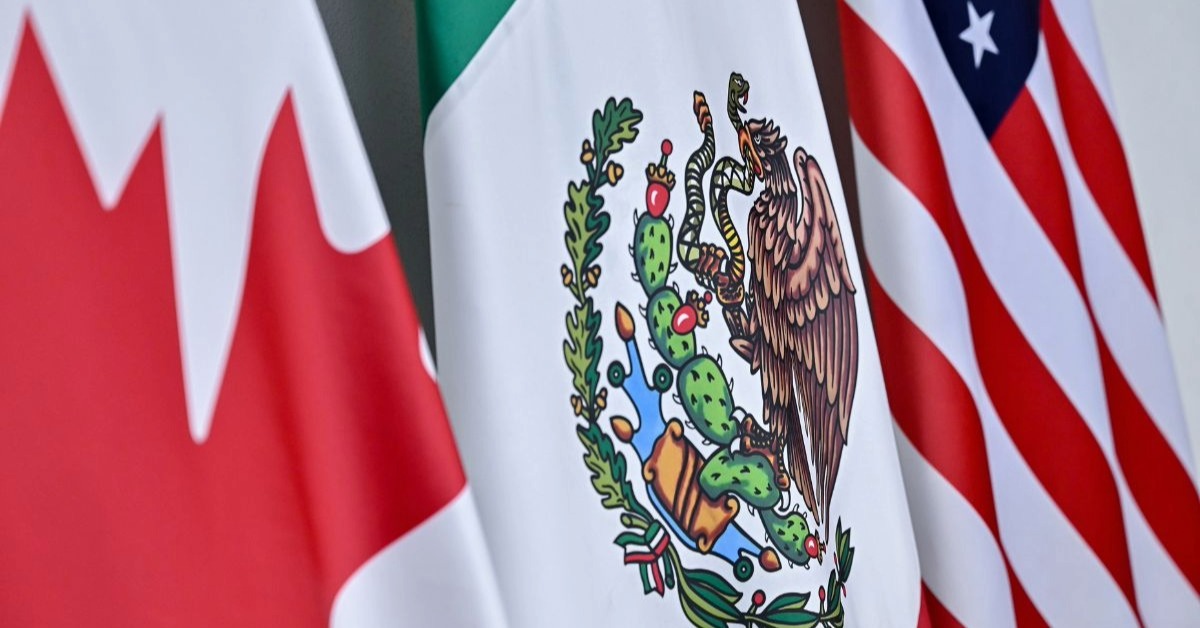
Mexico’s USMCA review may not end with a clean decision in 2026, raising the prospect of annual talks that could run until 2036 if the three governments fail to agree on a full extension of the trade pact.
Juan Carlos Baker, a former Mexican undersecretary of Foreign Trade and now director general of Ansley Consultores Internacionales, warned during a forum appearance that the treaty could move into a decade-long review cycle if Mexico, the United States, and Canada do not reach consensus during the 2026 process. The warning points to an outcome that would avoid immediate termination, while still leaving major rules unsettled. Automakers and manufacturers could face years of unresolved regulatory issues, tariff pressures, and investment hesitation.
Annual reviews are no longer a remote risk
The legal clock is set by USMCA Article 34.7, which requires a joint review six years after the agreement entered into force on July 1, 2020. The same clause states that the pact terminates after 16 years unless all three parties agree to another 16-year term. If one party does not confirm the extension during a six-year review, the Free Trade Commission must meet every year for the remainder of the term, while the governments still retain the option to extend the agreement before it expires.
Baker said the political debate has treated July 1, 2026, as a hard deadline for closing the process. The text of the treaty is looser than that. It requires the review to occur at the six-year mark, but it does not require that every dispute be settled that day.
Annual reviews would keep the pact alive. They would also keep pressure on rules of origin, the treatment of steel and aluminum, and the supply-chain rules that decide whether cars and industrial goods receive preferential treatment.
Autos and manufacturing sit at the center
That uncertainty is already visible in the negotiating calendar. The U.S. Trade Representative announced a series of bilateral negotiating rounds with Mexico, starting with a May 28- 29 session in Mexico City led by Deputy U.S. Trade Representative Jeff Goettman. The agenda included economic security and rules of origin for key industrial goods. A second round is scheduled in Washington on June 16 and 17, with agriculture and level-playing-field issues added to the discussions. A third round is planned in Mexico City during the week of July 20.
The current U.S.-Mexico calendar does not erase Canada’s role in the treaty. Any formal extension decision still depends on all three governments. But the bilateral pace shows where the strain is sharpest right now, especially in manufacturing and the auto sector.
Earlier technical talks between Jamieson Greer, the U.S. trade representative, and Marcelo Ebrard, Mexico’s economy secretary, focused on options to increase U.S. and Mexican production and manufacturing employment while limiting non-market inputs into North American supply chains. Their teams were told to keep meeting before the July 1 joint review.
The auto sector has become one of the clearest tests. A tougher interpretation of origin rules could push more content into North America. It could also raise costs if companies cannot adjust supply chains quickly. That is the same fight behind earlier T-MEC review talks in Washington and the broader industrial policy dispute over who gets to build the next generation of regional manufacturing.
Private sector says the channel remains open
Mexico’s private sector says it remains inside the conversation. Rogelio Garza Garza, executive president of the Mexican Automotive Industry Association, said the formal name of the business consultation mechanism has changed, but the channel remains open.
“It is working well,” Garza said in Spanish, adding that consultation continues with Ebrard and his team. “We work hand in hand with Secretary Ebrard and his team; we are very coordinated in everything, including when we go to Washington.”
Ebrard has also put tariffs on the table. During the current round, he said Mexico considers the U.S. steel and aluminum tariffs “unsustainable” and unjustified. On autos, he said the discussion should look at the tariff system as a whole, along with rules of origin.
Washington’s public line is narrower. USTR says the negotiations will focus on ensuring that USMCA benefits U.S. manufacturers, farmers, workers, service suppliers, and businesses of all sizes. That language gives Mexico little reason to assume the review will be limited to technical cleanup.
A 2026 failure to extend would not be the same as withdrawal. Article 34.6 allows a party to withdraw with six months’ written notice, but Article 34.7 establishes a separate annual review path when the governments cannot agree on renewal. One path is an exit. The other is a long negotiation under a treaty that remains in force.
For companies deciding where to build, source parts, or sign supply contracts, that distinction may not be enough. The treaty can survive while uncertainty grows. The annual review path would keep every unresolved item visible year after year, from auto content rules to tariff disputes to North American supply chain policy.