Oceana says Mexico ocean policy is missing, budgets are shrinking, and illegal fishing keeps growing, putting 350,000 families at risk.
It’s easy to treat the coast like a postcard. You book a beach weekend, complain about the sunburn, go home. If you’re an expat, you might even build a life around that idea of Mexico. Warm water, fresh seafood, a slower pace.
Now flip the perspective.
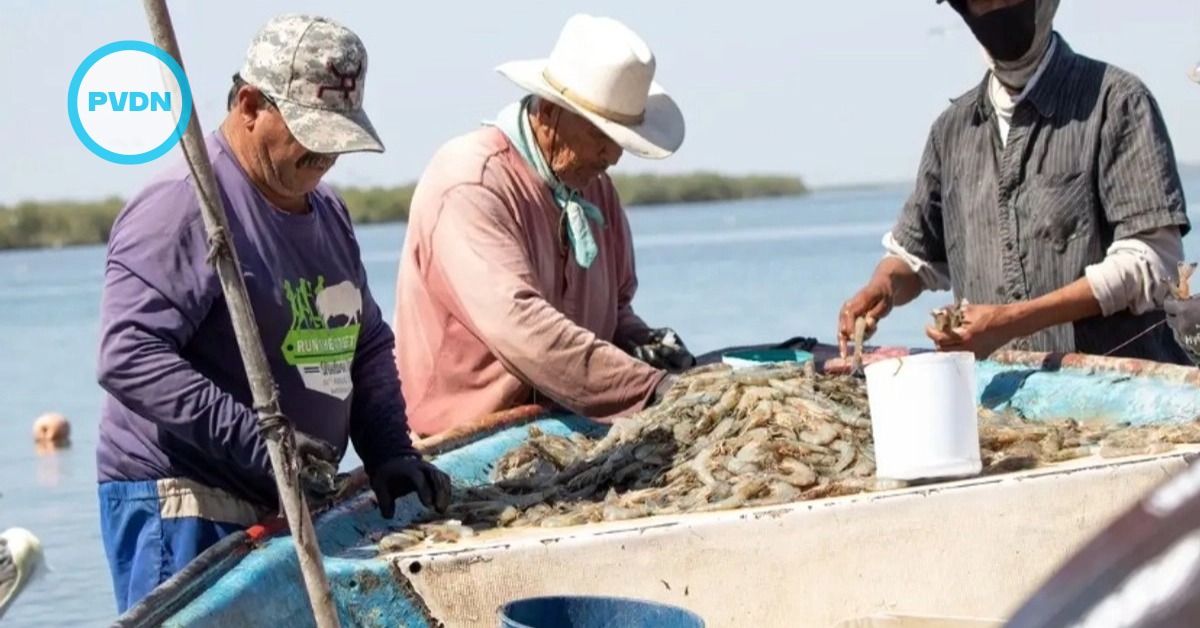
For many coastal communities, the ocean isn’t leisure. It’s work, tradition, and dinner. Oceana says at least 350,000 families depend on small-scale coastal fishing. And that number doesn’t even try to capture the full ripple effect, because fish isn’t just “caught.” It gets cleaned, iced, transported, sold, cooked, and served. Oceana points to estimates that roughly two million people depend on the broader fishing value chain.
That’s where the alarm starts. Oceana argues Mexico still doesn’t have a serious, coherent ocean policy. Not a real one that treats the ocean as a development engine, a food security pillar, and a public resource worth defending. In their view, the conversation gets trapped in a few familiar places, while huge stretches of coastline are left to fend for themselves.
They’ve also been blunt about geography. The ocean economy isn’t only the Gulf of California. Oceana says there’s a “brutal” neglect of the South Pacific and the Gulf of Mexico when it comes to building a strong, protected fishing future.
And if you’ve ever stood in a market staring at a pile of glistening huachinango or shrimp, here’s the uncomfortable question. How often do you ask where that fish came from, and what it cost the community that caught it?
Illegal fishing isn’t a victimless crime
When people hear “illegal fishing,” they sometimes picture a technical violation. The wrong net. The wrong season. The wrong paperwork. It can sound boring.
It isn’t.
Oceana points to a stark estimate: illegal fishing may represent about 40% of Mexico’s total catch, which they say is roughly double the global estimate. If that number is even close, it’s not a side problem. It’s the whole system bleeding.
What does that look like on the ground? It looks like a legal fisher coming home with less, not because the ocean suddenly went quiet, but because someone else took what they weren’t allowed to take. It looks like species caught during closed seasons, when they’re supposed to be reproducing. It looks like fishing inside protected areas, where ecosystems are supposed to recover. It looks like black-market pressure on high-value species.
And here’s the part that should bother anyone who eats seafood in Mexico, whether you’ve lived here two months or twenty years. A weak enforcement system doesn’t just hurt fishers. It distorts prices, encourages shortcuts, and makes it harder to trust what’s on your plate.
Oceana’s own analysis paints an enforcement picture that feels upside down. They argue that, compared with the scale of illegal fishing, the amount of product actually stopped is tiny. Their report says that from an estimated 40% illegal fishing level, less than 0.2% is retained, and under 1% of that retained product is ultimately seized. That’s not a slap on the wrist. That’s a signal to keep going.
You don’t need to be a policy expert to understand what happens next. If the odds of being caught are low, the incentive to cheat stays high. Honest fishers lose. Coastal ecosystems lose. Consumers lose.
Budgets tell the real story
When an organization says the government is “ignoring the ocean,” it can sound dramatic until you look at where the money goes.
Oceana has highlighted that the proposed federal budget for 2026 puts only a small slice of agriculture-sector spending toward fisheries. In the fishing space, the projected figures include about 2.18 billion pesos for CONAPESCA, the national fisheries authority, and roughly 442 million pesos for IMIPAS, the fisheries and aquaculture research institute.
On paper, those are big numbers. In practice, they’re tasked with a vast coastline, complicated fisheries, enforcement coordination, scientific research, and the messy reality of illegal activity that’s often organized, mobile, and well-funded.
Oceana says the budget trend is moving the wrong way. And they argue the neglect shows up not only in pesos, but also in status. They say fishing is often not treated as a primary economic activity, even though it holds entire communities together.
That gap is why Oceana targets the programs people tend to cite as proof that “something is being done.” One example is Bienpesca, which provides 7,500 pesos per year in direct support. Another is Sembrando Vida en el Mar, which focuses on creating fish refuge zones.
Oceana’s argument isn’t that support is bad. It’s that support without strict rules and real enforcement becomes a bandage on a wound that never closes. If illegal fishing stays rampant, a modest yearly payment doesn’t rebuild a fishery. It just helps a household survive the month.
If you’re an expat, this is where the story stops being “some coastal issue.” Because Mexico’s coasts don’t stay on the coasts, they feed cities. They feed tourism. They feed the markets you shop at and the restaurants you bring visiting friends to.
What a real ocean policy would feel like
A real policy wouldn’t feel like a slogan. You’d feel it in small, practical ways.
You’d see clearer enforcement presence, not as a threat to coastal communities, but as protection for the people following the rules. You’d see reliable data and transparent reporting, so the public isn’t guessing how bad illegal fishing really is. You’d see science treated like a foundation, not an afterthought. You’d see protected areas that aren’t protected in name only.
You’d also see the ocean treated as more than one industry. Oceana has pushed the idea that places like the Gulf of Mexico should be viewed not only through the lens of hydrocarbons, but also through biodiversity and long-term food production. It’s a simple point, but it lands: the Gulf isn’t just an energy zone. It’s a living system.
And maybe the most human piece of all is this. If 15 million people live in coastal areas, and tens of thousands fish for a living, then “ocean policy” isn’t abstract. It’s jobs. It’s culture. It’s whether a young person in a fishing town thinks they have a future that doesn’t require leaving.
So where do you fit into this, sitting inland or on the coast, Mexican or foreign, tourist or long-term resident?
You fit in the same way everyone does. You eat. You buy. You vote with attention, even if you can’t vote at the ballot box here. You decide whether the ocean is a backdrop or a shared responsibility.
Because if the ocean gets ignored long enough, it doesn’t stay quiet. It shows up as higher prices, emptier catches, angrier communities, and ecosystems that don’t bounce back.
And then the question becomes painfully simple. When the sea stops providing, who gets blamed first, and who pays first?