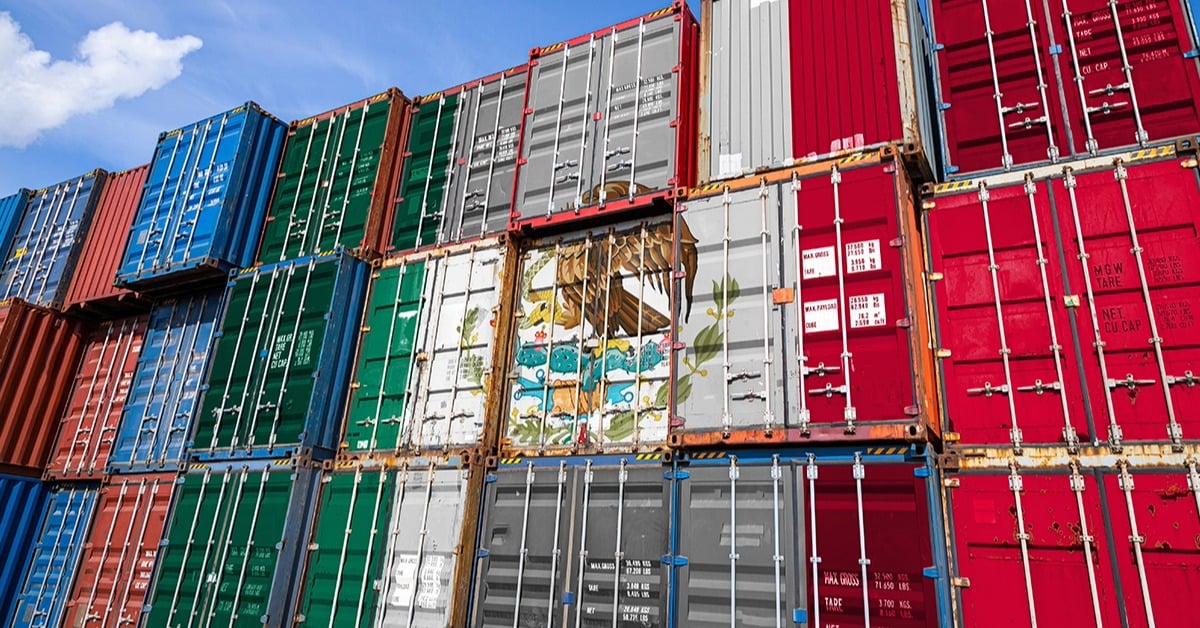
Mexico recorded a $1.012 billion trade deficit in the first quarter of 2026, even as exports continued to grow and March delivered a strong monthly surplus.
The result means Mexico bought slightly more goods from abroad than it sold overseas between January and March. Total exports reached $175.586 billion in the quarter. Imports totaled $176.598 billion.
The gap was wider than in the same period in 2025, when Mexico posted a $269 million deficit. Still, the quarterly figure masks a sharp improvement in March, when Mexico registered a $5.932 billion trade surplus.
March changed the tone of the quarter
March was the strongest part of the report. Exports rose 27.7% from a year earlier, reaching $70.727 billion. Imports increased 24.3%, totaling $64.795 billion.
That monthly surplus helped offset weaker numbers earlier in the quarter. In January, Mexico posted a large deficit. February also remained negative, though much smaller. March then pushed the balance close to even for the quarter.
The shift came mainly from non-oil trade, where Mexico recorded a March surplus of $8.320 billion. The oil balance moved the other way, with a $2.388 billion deficit.
That split matters because Mexico’s economy is now driven far more by manufacturing than by oil exports. Petroleum remains important, but it no longer defines Mexico’s trade position the way it once did.
Exports are still doing the heavy lifting
For the first quarter, exports grew 17.9% from the same period last year. That growth came from non-oil exports, which rose 19.7%. Oil exports fell 25.5%.
Manufactured goods remained the center of Mexico’s export economy. In the first three months of the year, manufactured products made up 91.1% of total exports. Agricultural and fishing products accounted for 3.3%, while oil products represented 2.5%.
The United States remained Mexico’s dominant customer. More than 83% of non-oil exports in the first quarter went to the U.S. market. That keeps Mexico highly exposed to U.S. demand, U.S. policy, and the direction of North American trade rules.
This is why trade numbers often matter to people who do not work in factories. Export strength can support jobs, business investment, and confidence in the Mexican peso. Weakness can do the opposite, especially when it is tied to the U.S. economy.
Imports also tell an important story
A trade deficit is not automatically a warning sign. It can mean a country is consuming more foreign goods. It can also mean companies are importing parts, machinery, and raw materials for future production.
Mexico’s import structure points strongly toward the second explanation. In the first quarter, 79.7% of imports were intermediate goods. These are items used to make other products, such as parts, components, and industrial inputs.
Consumer goods made up 12.7% of imports. Capital goods, such as machinery and equipment, represented 7.6%.
That mix suggests many imports are tied to production, not just household spending. For Mexico, this reflects the way cross-border supply chains work. A product may cross borders more than once before it becomes a finished car, appliance, or electronic device.
Why the oil balance still weighs on the report
Oil trade remained a drag on the overall balance. In March, petroleum exports were valued at $1.707 billion. Crude export volumes fell to 495,000 barrels per day, down from 827,000 barrels per day in March 2025.
That decline helped explain why oil exports fell even as crude prices were higher than a year earlier.
At the same time, Mexico continued importing petroleum-related products. That is one reason the oil balance stayed negative. The country exports crude but still imports fuels and other refined products.
For consumers, the oil side of the trade report matters because fuel costs can affect transport, groceries, and other everyday prices. It does not move prices on its own, but it feeds into the broader cost picture.
The timing matters for North American trade
The report comes as Mexico, the United States, and Canada move through another sensitive period for T-MEC, known in English as USMCA.
Trade talks and technical discussions are already focused on rules of origin, supply chains, manufacturing employment, and the future of North American production. Mexico’s export strength gives the country leverage, but it also shows how dependent the economy remains on U.S. demand.
For foreign residents in Mexico, the main takeaway is not that a deficit means trouble. The better reading is more balanced. Mexico’s first quarter showed strong exports, rising imports, a weak oil balance, and a powerful March rebound.
The next few months will show whether March was a one-month bounce or the start of stronger momentum. That will matter for the peso, business confidence, and the wider cost environment across Mexico.