Puerto Vallarta, Jalisco, October 20, 2026 – Mexico’s state power utility is expected to consider preliminary approval Tuesday for renewable energy projects worth an estimated US$12.5 billion, according to Bloomberg.
Bloomberg’s report, republished by Energy Connects, says the Federal Electricity Commission’s board is scheduled to review more than 60 projects, mainly wind and solar farms. Together, they could add approximately 8.2 gigawatts, or 8,200 megawatts, of generating capacity.
The report cites people familiar with the proposals. A CFE spokesperson told Bloomberg the utility was still working with companies on the terms and that it was premature to say how many projects would receive approval. The estimated investment also depends on transmission costs.
For Puerto Vallarta, the practical question is whether a national expansion of cleaner electricity can translate into fewer interruptions at home and work.
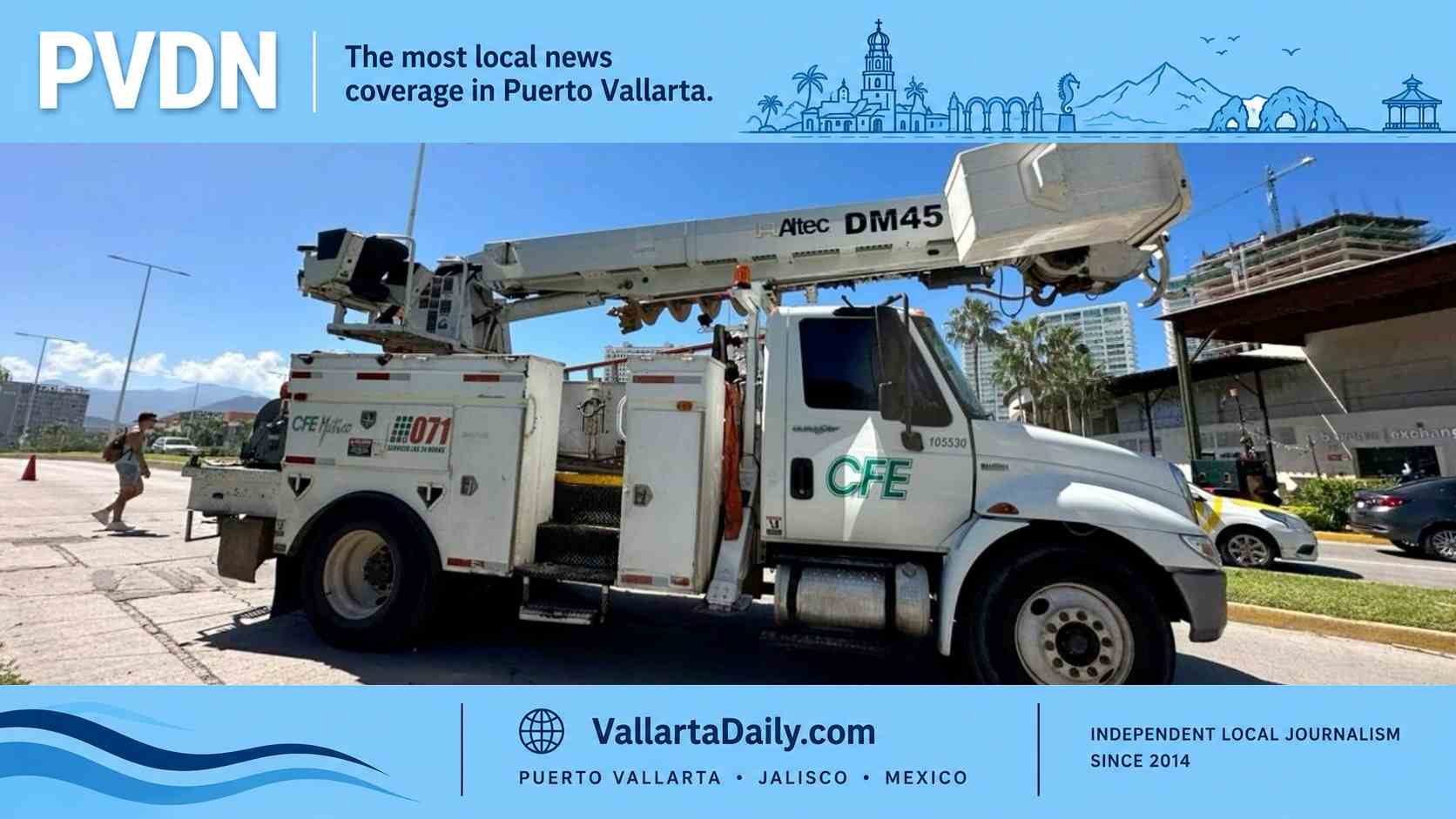
There is a clear local reason to ask. Vallarta Daily’s August reporting on repeated neighborhood outages documented service returning briefly before failing again. Days later, local businesses were pressing CFE for answers, with Coparmex reporting lost operating time and economic damage among companies of different sizes.
Additional generating capacity could help Mexico meet growing demand. Delivering dependable service, however, also requires investment in the networks carrying that electricity to consumers.
The proposed projects would extend President Claudia Sheinbaum’s use of partnerships with private companies to expand electricity infrastructure. Bloomberg describes that approach as a shift from former President Andrés Manuel López Obrador’s restrictions on private investment in the sector.
The opening operates within a framework that preserves state control. Mexico’s Electricity Sector Law, published in March 2025, permits state, private, and jointly developed generating plants. It requires the state to maintain at least 54% of electricity injected into the grid over a calendar year and reserves public transmission and distribution services to the state.
That distinction helps explain Sheinbaum’s strategy: private companies can provide capital and develop projects while CFE retains the central role in the electricity system.
Reliable power is also part of Mexico’s investment competition. In its May assessment of Plan México, the Mexican Institute for Competitiveness identified clean energy, infrastructure, and regulatory certainty among the conditions needed to attract investment as global supply chains change.
That connects to nearshoring, the relocation of production closer to customers, particularly in the United States. A factory needs enough electricity to operate, dependable connections, and confidence that the supply can accommodate expansion. Announcing generating projects addresses part of that requirement; getting them connected and operating is what makes the capacity useful.
The proposed package sits within a broader federal expansion program. The presidency’s June presentation of its renewable energy plan outlined 32 gigawatts of additional capacity by 2030, with approximately 70% of the additions coming from renewable sources.
The project sizes need some explanation. Comparing 8.2 gigawatts with eight large nuclear reactors gives a rough sense of generating capacity, but it does not establish equivalent annual electricity production.
As the U.S. Energy Information Administration explains, wind and solar output varies with resource availability throughout the day and across seasons. Nuclear plants generally operate close to their generating capacity for much of the year.
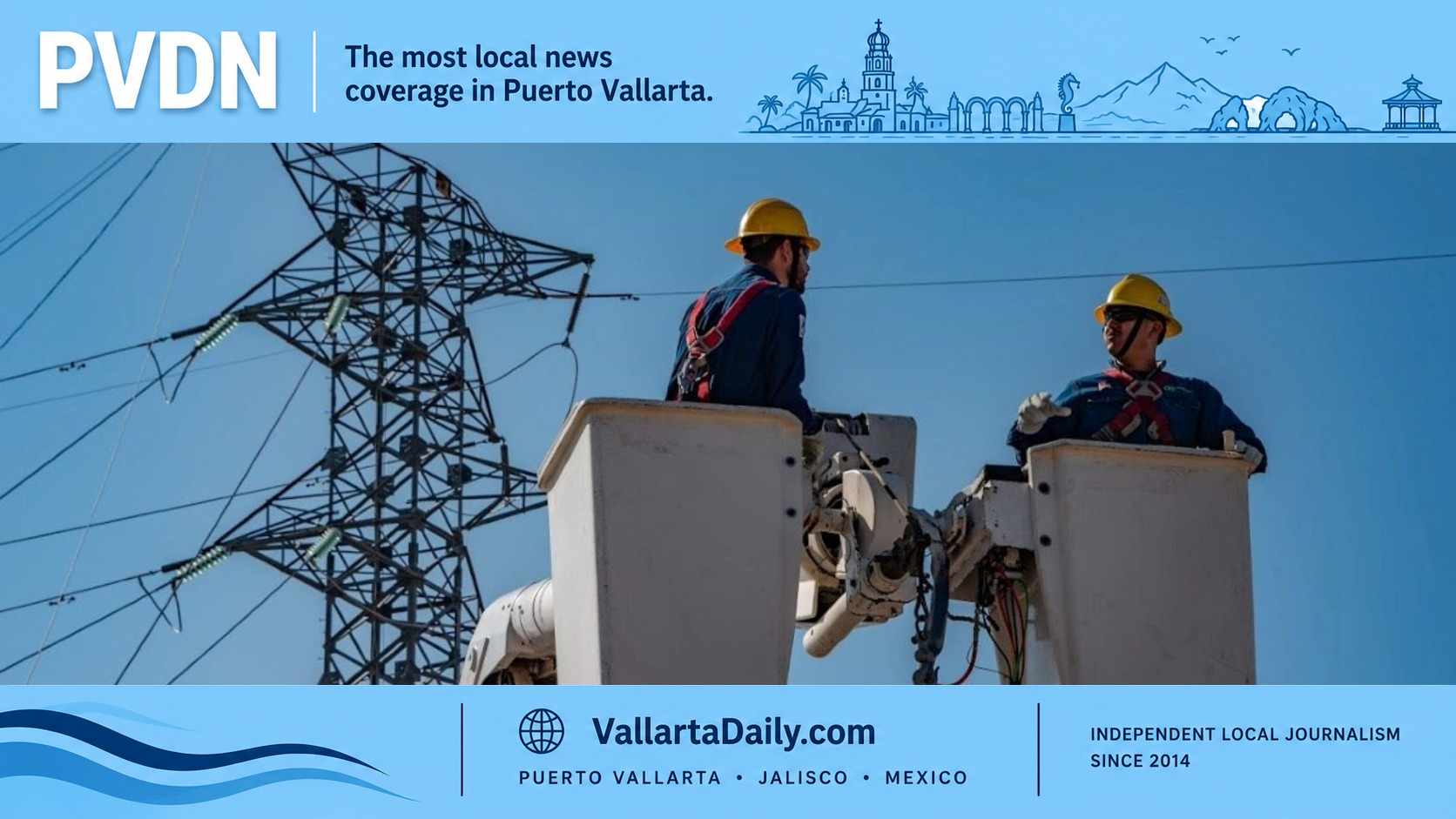
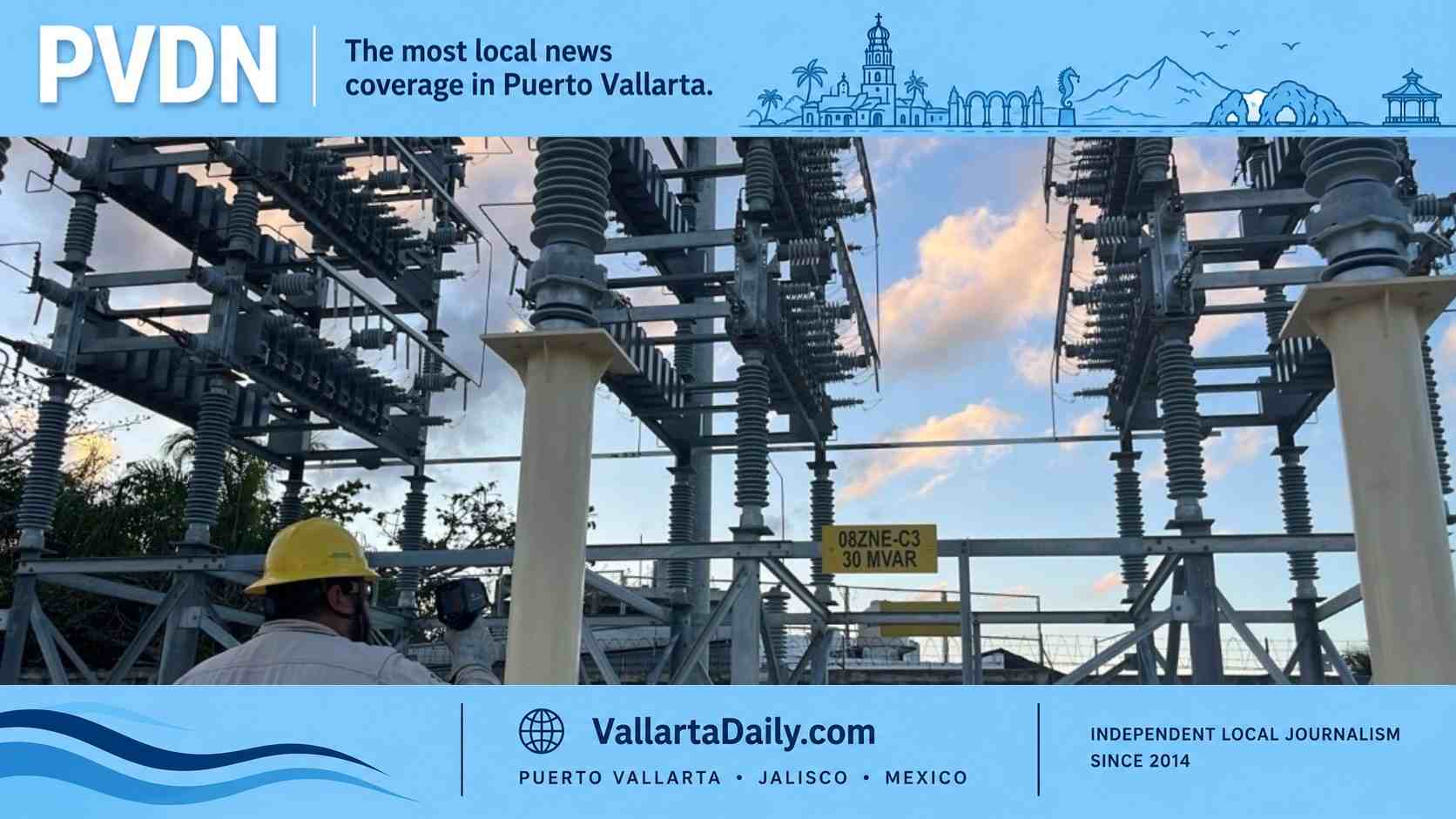
Electricity must then travel through transmission lines, substations, transformers, and local distribution circuits. The EIA’s explanation of electricity delivery shows why generating more power and maintaining reliable local service are connected but separate tasks. Adding a solar farm cannot, by itself, repair a damaged transformer serving a neighborhood.
Sheinbaum acknowledged that delivery problem while discussing outages in Hermosillo on July 2. According to the official presidential transcript, she said, translated from Spanish: “Most interruptions have to do with overloaded distribution lines.”
At that briefing, she put planned transmission and distribution investment during her administration at 244 billion pesos. Of that amount, 172 billion pesos is intended for transmission and 72 billion for distribution—the lines and equipment that ultimately carry electricity into homes and businesses.