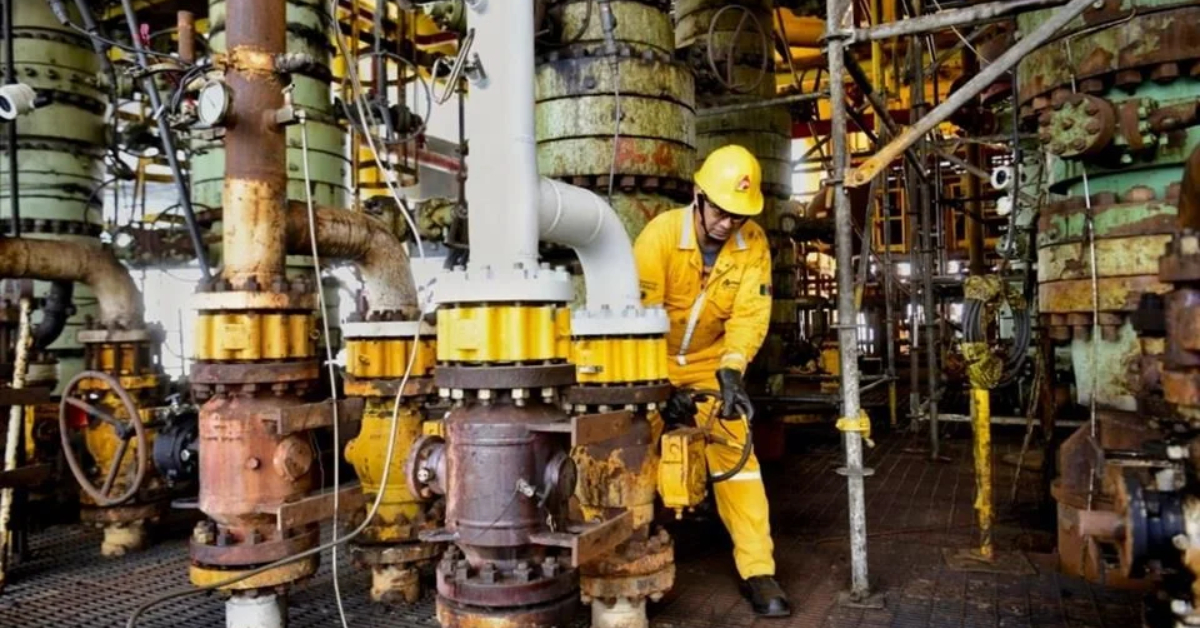
Mexico’s fuel cushion may be measured in days, not months. That does not mean pumps are about to run dry tomorrow, but it does expose a weak point in the country’s energy system. The issue is drawing fresh attention as global oil markets face new stress, governments abroad release emergency stocks, and Mexico still relies on imported refined fuels. At the same time, Pemex says domestic refining and fuel output have improved, raising a harder question: why is the national buffer still so thin?
Why this matters now
Mexico may have only about five days of gasoline and diesel on hand in the event of a serious supply shock. The issue has moved into focus as oil markets react to supply disruptions tied to conflict in the Middle East. This month, the IEA coordinated its largest-ever release of emergency oil stocks. For readers outside Mexico, the warning is simple. Mexico’s fuel cushion appears far smaller than the one many countries keep for emergencies.
That does not mean Mexico is five days away from running out of service stations. It means the system has less room to absorb a sudden hit. A port problem, refinery outage, shipping disruption, pipeline issue, or panic buying wave would be harder to manage. The storage buffer is thin. In energy security, time matters. Extra days can calm markets, protect essential services, and give officials time to reroute supplies.
What the five-day figure really means
The five-day number is a minimum coverage level, not a giant national reserve in one place. Mexico’s fuel system relies on Pemex facilities, private storage, imports, refineries, pipelines, trucks, and marine terminals. Current reporting puts the estimate at roughly three to six days. The exact figure depends on what infrastructure is counted. It also depends on how quickly those barrels could reach consumers. SENER publishes weekly inventory data, but that is not the same as a single national reserve figure.
That distinction matters because commercial inventories are not the same as a strategic reserve. A strategic reserve is built for emergencies. It has clear access rules, release procedures, and a policy purpose beyond daily operations. Commercial storage is different. Some of it is already tied to normal sales and deliveries. So not every barrel in a tank is true emergency stock.
Why the 90-day comparison needs context
The comparison with the 90-day benchmark is useful, but it needs context. Mexico joined the International Energy Agency in 2018. As a net oil exporter, Mexico does not face the same stockholding obligation as net importers under IEA rules. So this is not a simple story about Mexico breaking one international rule.
Even so, the comparison still matters. Many countries maintain much deeper emergency buffers. They do so through government reserves, agency stocks, or industry obligations. Mexico’s own storage policy has been far more modest. The official minimum cited in the current framework is five days for gasoline and diesel. It is 1.5 days for jet fuel. That is a thin cushion for a large country with long supply chains and heavy demand for road transport.
Why Mexico is still exposed
Mexico exports crude oil, but that does not eliminate the risk. The country still depends on imported refined fuels. That dependence grows when domestic refining cannot fully cover demand or when logistics become strained. That is why storage matters so much. A country can produce more fuel at home and still remain vulnerable. The weak point may be tanks, dispatch capacity, marine handling, or transport flexibility.
There are signs of improvement on the production side. Pemex reported that crude processing in the National Refining System averaged 1.136 million barrels per day in the fourth quarter of 2025. It also reported 1.177 million barrels per day in fuel output during the same period. Those numbers suggest a stronger domestic supply base than in earlier years. But higher output is only part of the equation. Storage and distribution determine how well that supply can withstand stress.
What a short buffer means for consumers
For most households, the first effect of a thin reserve is not an immediate shortage. It is a faster pass-through of risk. When traders, distributors, and officials know the margin for error is small, prices become more sensitive to global events. The government can try to cushion that pressure with tax adjustments or price agreements. But those tools cost money and do not create physical supply.
A short buffer also narrows the room for emergency prioritization. Airports, freight carriers, public transport, hospitals, food supply chains, and generators all compete for fuel during a disruption. The fewer products on hand, the harder it becomes to shield essential sectors without causing problems elsewhere. That is why countries build reserves in the first place. They are not only about price. They are about time, flexibility, and control.
What officials and Pemex are trying to do
Pemex’s current strategic plan recognizes the logistics problem. The company says it will invest in terminals, docks, tanks, ships, and pipeline integrity to strengthen supply reliability. Among the projects it describes are the rehabilitation of marine infrastructure and work on storage tanks. It also plans to store 150 thousand barrels of fuel in Veracruz. The plan also aims to reduce the need for gasoline imports over time.
Those steps could help, especially if refinery performance remains stable. But they do not amount to a large, transparent national strategic reserve of the kind many readers may picture in the United States or Europe. Building that kind of cushion would take years, money, clearer policy design, and stricter measurement of what counts as immediately available fuel. Until then, Mexico’s buffer is likely to remain measured in days, not months.
What comes next
The real test is not whether Mexico can produce more fuel in good weeks. It is whether the country can keep supplies moving in bad times. That means watching not only refinery output, but also storage additions, terminal upgrades, shipping capacity, and the government’s willingness to treat fuel security as a logistics issue as much as a production issue.
For now, the five-day warning should be read as a vulnerability signal, not a countdown clock. Mexico is not out of fuel. But it does appear to have less margin for error than many countries would consider comfortable. In a calm market, that may stay mostly invisible. In a disrupted one, it can quickly become a national problem.