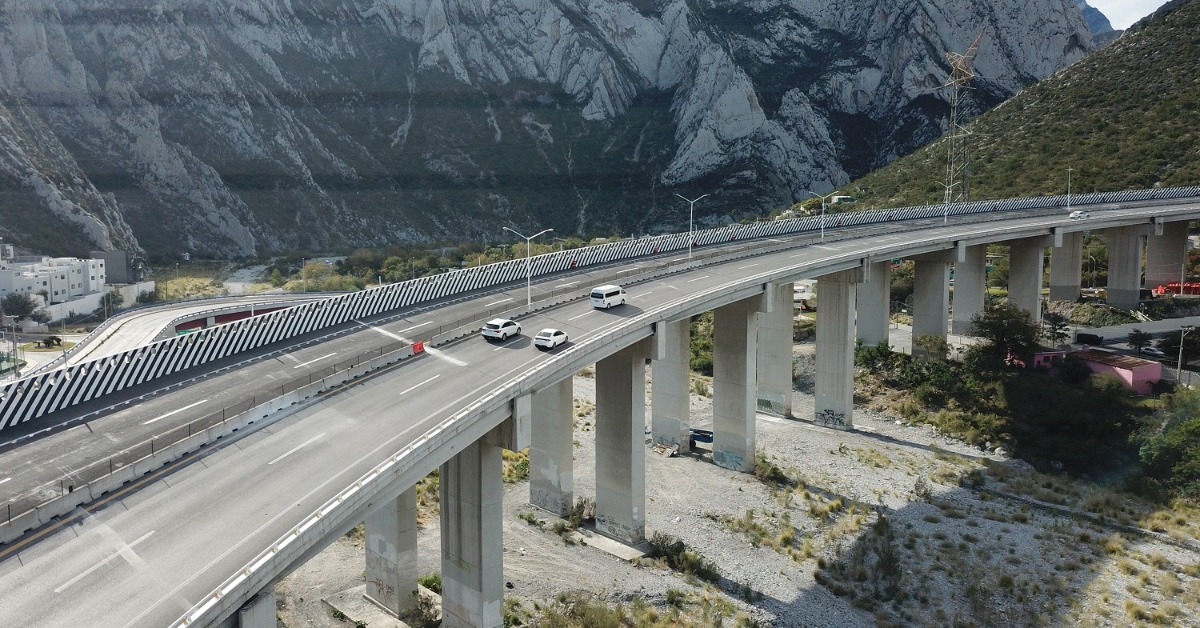
The headline number is stark, but the real story sits underneath it. Mexico did not see all investment vanish in early 2026. The sharp fall came from federal public spending on infrastructure, machinery, and equipment, with energy carrying most of the decline. That still matters. Public investment often sets the pace for roads, ports, power systems, and water projects that private business depends on. The question now is whether the government’s new infrastructure plan can close the gap before slower capital spending weighs harder on growth.
A sharp drop with an important caveat
Mexico’s public-sector productive investment posted a 44.9% real drop in the first two months of 2026, according to federal finance data. The decline was the steepest on record for this budget category. The figures cover physical investment, meaning public spending on infrastructure, machinery, and equipment. In pesos, the federal public sector spent 87.1 billion pesos in January and February. That makes this story larger than a routine budget adjustment. Investment spending is one of the clearest signals of how much capacity an economy is building for future growth.
It is important to separate this figure from the total investment in Mexico. The new data refers to federal capital spending, not every peso invested by households or private companies. Still, the public figure matters because it shapes the systems that private investment later uses. Roads, rail, ports, electricity, hospitals, and water networks often depend on early public outlays. When those outlays slow sharply, the effects can show up later in construction, logistics, energy reliability, and job creation.
Why energy and Pemex drove the collapse
Most of the drop came from energy spending. Public investment in that sector fell 75.3% in real terms from a year earlier. Within that category, spending tied to hydrocarbons fell 78%, while the electricity component declined 6%. Communications and transport also dropped 65.7%. That helps explain why the aggregate figure looks so dramatic. This was not a uniform pullback across every public function.
The Pemex effect is especially important. Excluding the state oil company, physical investment would have increased 5.4% in the first two months of 2026. Some categories also rose from low year-earlier bases, including education, health, water supply, and sewer systems. In other words, the record fall says a great deal about where the cuts were concentrated. It says less about a complete freeze in all government capital spending.
Why this matters beyond the budget
The timing matters because Mexico entered 2026 with softer growth signals. INEGI reported that gross fixed capital formation rose 0.5% in December from November, but remained 1.6% below its level a year earlier. Within that same report, spending on machinery and equipment fell 7.9% year over year, even as construction rose. Separately, overall economic activity fell 0.9% in January from December. These indicators do not prove a broad investment collapse. They suggest that the economy entered the year with little margin for weaker capital spending.
Business sentiment also remains cautious. INEGI said the manufacturing confidence index stood at 48.1 in February, below the 50-point threshold for a twelfth straight month. Construction confidence remained weak as well. That does not mean companies have stopped planning projects. It does mean the public and private sides of investment are moving through 2026 without strong momentum.
The investment drop also sits inside a broader fiscal story. Federal authorities are trying to narrow the deficit after heavier spending in 2025. In the first two months of 2026, the public-sector deficit fell 81.6% from a year earlier, to 23.6 billion pesos. Budget revenues rose 2% in real terms, while net spending increased 2.5%. That mix points to tighter control over where money is being deployed. Capital spending is often easier to slow than pensions, wages, or other current obligations. The trade-off is clear. Cutting investment can improve near-term fiscal results while weakening future productive capacity.
What comes next
That is why the government’s 2026–2030 infrastructure plan matters. The administration announced a package of 5.6 trillion pesos in public and mixed investment across energy, trains, roads, ports, health, water, education, and airports. For 2026 alone, the plan envisions additional spending equal to about 2% of GDP. On paper, that is large enough to change the picture. The harder question is execution. Announced projects matter only after contracts are awarded, permits are issued, financing closes, and money is actually spent.
For readers living in Mexico, this is the part worth watching. A weak investment cycle rarely shows up all at once. It appears later in slower public works, delayed energy projects, tighter infrastructure bottlenecks, and weaker job creation. If federal spending accelerates in the coming months, the early-year drop may look like a sharp but temporary adjustment. If not, this figure may read as an early warning that Mexico’s 2026 growth story has less support than expected.