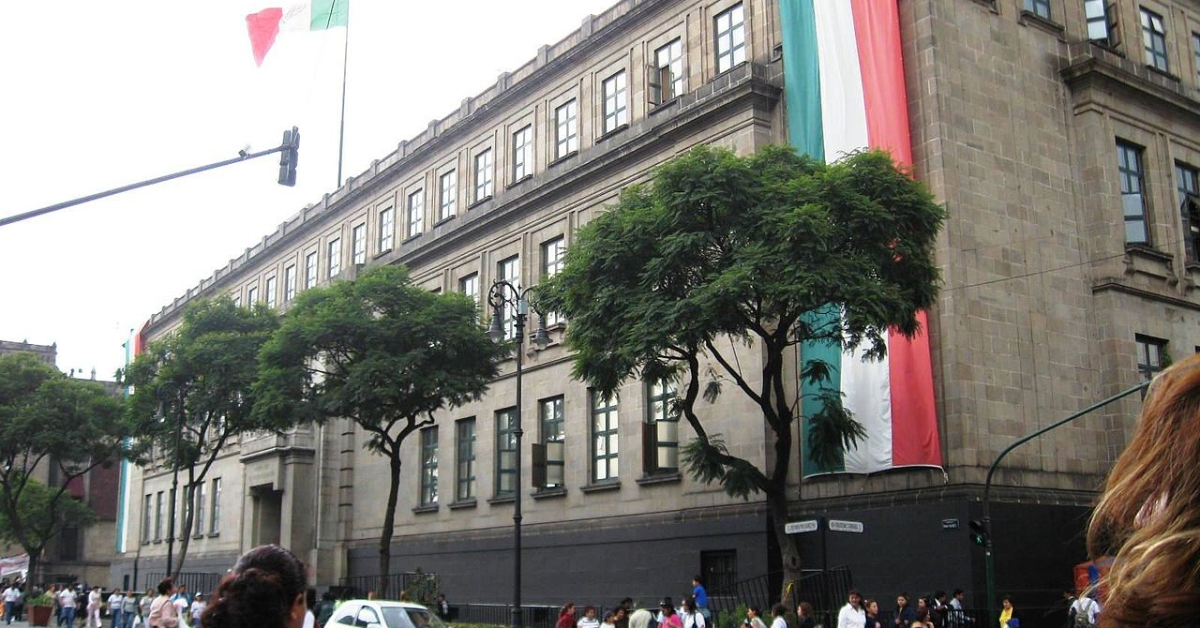
Mexico’s top court didn’t start the year with a technical legal note. It began with a warning aimed outward, at a world where rules are being tested. What pushed judges to speak like statesmen—and what that choice quietly signals about Mexico’s posture right now—is the story behind the headline.
A message from the bench
On Monday, Mexico’s Supreme Court began its first session of 2026 with remarks that stepped far beyond the usual rhythm of court business. The Court’s president, Hugo Aguilar Ortiz, said the international community cannot allow “the law of the strongest” to dictate outcomes, and urged respect for international law as the only workable guardrail against escalation.
The language mattered as much as the timing. The Court framed legal norms not as a polite ideal, but as a practical barrier against the abuse of force. In other words, this wasn’t a philosophical aside. It was a warning: when countries stop treating rules as binding, they start treating power as permission.
Aguilar Ortiz presented the point as a shared conviction of the Court’s full bench, and he tied it to a broader idea that law is the tool societies use—locally and internationally—to resolve differences without violence, and to build a more just and dignified life.
Why now and why it sounded so pointed
The Court did not name any government. Still, the backdrop was hard to miss.
In the days leading up to the session, the hemisphere was rattled by a dramatic turn in Venezuela: the United States carried out military strikes and captured Venezuelan President Nicolás Maduro and his wife, according to widely reported accounts. The event triggered fast, sharp reactions around the world, including condemnation and urgent debate at the United Nations about sovereignty and the legality of unilateral force.
That context helps explain why the Supreme Court’s phrasing landed like a gavel strike. “International law” can sound abstract until a major power decides to act first and argue later. The Court’s statement essentially insisted that the international system cannot be run like a street fight, where the biggest player writes the rules in real time.
Another minister, Lenia Batres Guadarrama, reinforced that idea in the same session, calling for institutions to close ranks around the legal order that protects sovereignty and the self-determination of peoples. She punctuated it with a line nearly every Mexican student recognizes from Benito Juárez: respect for others’ rights is peace.
What it signals inside Mexico
It’s unusual—though not unheard of—for a country’s highest court to speak in such overtly international terms at the start of a judicial year. Courts tend to avoid sounding like foreign policy actors. But Mexico’s Supreme Court is also an institution that, by design, sits at the intersection of rights, constitutional order, and the country’s relationship with the broader legal world.
Mexico’s constitutional tradition places a heavy weight on sovereignty, non-intervention, and the peaceful resolution of disputes. Those aren’t just diplomatic preferences; they are part of how the Mexican state explains itself, both to its citizens and to other countries. When the Supreme Court uses language about the “law of the strongest,” it’s tapping directly into that tradition—and also defending the basic idea that rules apply even when they’re inconvenient.
There’s also a domestic layer that shouldn’t be ignored. Mexico’s Supreme Court has recently entered a new era after major judicial reforms, including structural changes and a new composition. Public confidence, institutional legitimacy, and the Court’s role as a stabilizing actor are all under sharper scrutiny than usual. A message that elevates rule-of-law principles beyond Mexico’s borders can also be read as a statement about what kind of institution the Court wants to be at home: one that insists rules matter, even when power tempts people to skip steps.
Why expats in Mexico should care
Most expats aren’t tracking Supreme Court sessions for fun. But moments like this are a reminder that legal culture shapes daily life in ways that only become obvious during tension.
When international disputes heat up, Mexico can get pulled into the current quickly—through diplomatic pressure, economic uncertainty, security debates, and even the tone of public discourse. Institutions that publicly affirm legal constraints can help keep national responses predictable, steady, and anchored to principles that don’t change with every headline.
For expats, that predictability matters. It affects the environment you live and work in, the way government institutions talk about sovereignty and foreign pressure, and the broader sense of whether the country is reacting calmly—or being yanked into someone else’s crisis.
The Court’s warning won’t change events in Venezuela. But it does tell you something about how Mexico’s highest judicial authority wants to frame this moment: not as a contest of winners and losers, but as a test of whether the world still believes in rules at all.