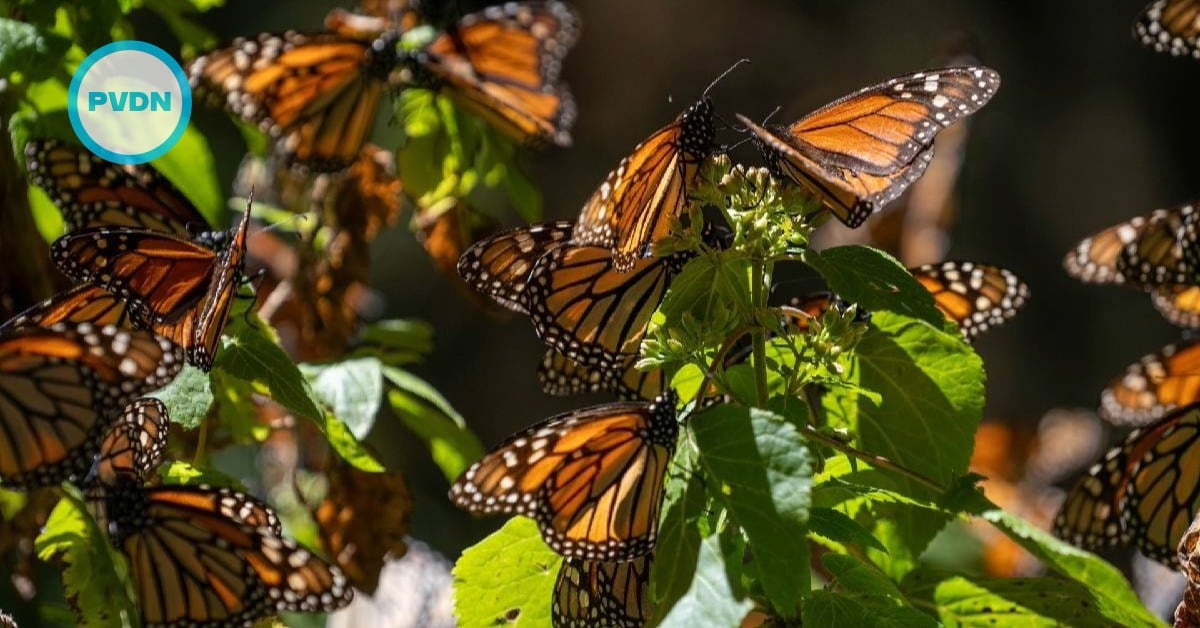
Mexico’s monarch butterfly sanctuaries opened their 2025–2026 season, balancing visitor demand, local income and urgent habitat protection.
Millions of orange and black wings have reached the high forests of central Mexico, and with them, the doors of the Monarch Butterfly Biosphere Reserve are open once again. Authorities in Michoacán and the State of Mexico have launched the 2025–2026 winter visiting season at the key sanctuaries where monarch butterflies cluster to rest after flying thousands of kilometres from Canada and the United States. The visitor season will run through the end of March, giving people a new window to see one of North America’s most famous migrations up close.
This year’s opening comes on the heels of a cautiously good report for the species. During the 2024–2025 season, butterfly colonies covered 1.79 hectares of forest, almost double the 0.9 hectares measured the previous winter. Conservation officials link that jump to more favourable weather during the migration and to years of work to protect fir and pine forests along the Michoacán–Estado de México border. Even so, scientists stress that the population remains vulnerable and still below the average of the last decade, so every season matters.
Monarch butterfly sanctuaries
The sanctuaries now open to visitors are the best-known corners of a much larger protected landscape. The Monarch Butterfly Biosphere Reserve spans about 56,000 hectares of rugged mountains roughly 100 kilometres northwest of Mexico City. Within that area, four official tourism sites are operating this winter: El Rosario in Ocampo, Sierra Chincua in Angangueo and Senguio in Michoacán, along with Piedra Herrada near San Mateo Almomoloa in the State of Mexico. All are part of a UNESCO World Heritage site created to safeguard the butterflies’ winter habitat.
From the towns at the base of the hills, visitors follow steep forest paths on foot or on horseback, climbing into cool, thin air where oyamel fir trees dominate the canopy. On good days, the sound of traffic fades and is replaced by the soft rustle of wings and the murmur of local guides explaining the rules of the sanctuary. At the peak of the season, the trees can appear completely draped in butterflies, and when a shaft of sunlight passes through the branches, entire clusters take flight at once.
Local communities sit at the heart of this experience. The reserve overlaps dozens of ejidos and Indigenous lands whose residents manage trails, offer guiding services, and sell food, crafts and lodging around the access points. Entrance fees and seasonal tourism provide one of the few steady sources of income in these highland villages. Community leaders say that when travellers respect the rules, the money that comes with this migration can help keep families on the land while giving them a reason to keep forests standing.
Behind the scenes, scientists and park staff are already preparing to measure what this season brings. Formal monitoring of monarch colonies will begin in early December, once most butterflies have settled into stable clusters. Technicians will visit each known colony and map the area covered by butterflies on tree trunks and branches to calculate the total forest surface they occupy. The final figure, expected early in the new year, will show whether last season’s rebound was a one-year bump or the start of a more solid recovery.
Communities, threats and shared responsibility
The monarch spectacle depends on more than the butterflies themselves. For years, communities, government agencies and conservation groups have tried to clamp down on illegal logging in and around the reserve, which once cleared entire patches of forest inside the core protection zone. Recent monitoring shows that forest damage has slowed in the most sensitive areas, but clearing and small-scale logging continue in the buffer zone around the sanctuaries. Drier, warmer conditions linked to climate change are also stressing oyamel forests and making them more vulnerable to pests and fires.
These pressures shape the way visitors are now received. Sanctuary rules ask people to stay on marked trails, keep their voices low and avoid clapping or shouting near the colonies. Guides remind tourists not to bring pets, not to smoke or light fires, and not to consume alcohol or eat inside the forest. Cameras are welcome, but flashes are not, and visitors are asked not to touch or collect butterflies, alive or dead. In many sanctuaries, groups are allowed to stay only a short time, around 15 to 20 minutes, directly beneath the clusters so that the insects can rest undisturbed.
The hope is that responsible tourism can help fund long-term protection. When visitors hire local guides, stay in community cabins or small hotels, and buy food from families near the trailheads, more of the money stays in the region. That, in turn, helps fund patrols, trail maintenance and reforestation projects that keep the habitat suitable for future generations of monarchs. It also helps ensure the benefits of a World Heritage site are reflected in household budgets, not just on government maps.
For travellers, this season offers more than a photograph. The migration is a link between milkweed fields in Canada, backyard gardens in the United States and high mountain forests in Mexico. Standing under a monarch cluster in Michoacán or the State of Mexico means standing at the endpoint of a journey that crosses an entire continent. As the 2025–2026 season unfolds, the butterflies’ return is a reminder that this shared natural wonder depends on choices made in all three countries, from how we farm and build to how gently we walk through the forest when the branches turn orange.