It began as a neighborhood report about a man walking with something that looked like a green bazooka. Within minutes, the situation moved from a street stop to a case that required federal custody. Police say the device was not a prop or a replica, and that detail changed who took control of the investigation. Then a routine identity check added another layer, tying the suspect to an outstanding court order. What followed was a handoff between agencies and a set of questions that investigators now face.
A street tip that shaped the entire response
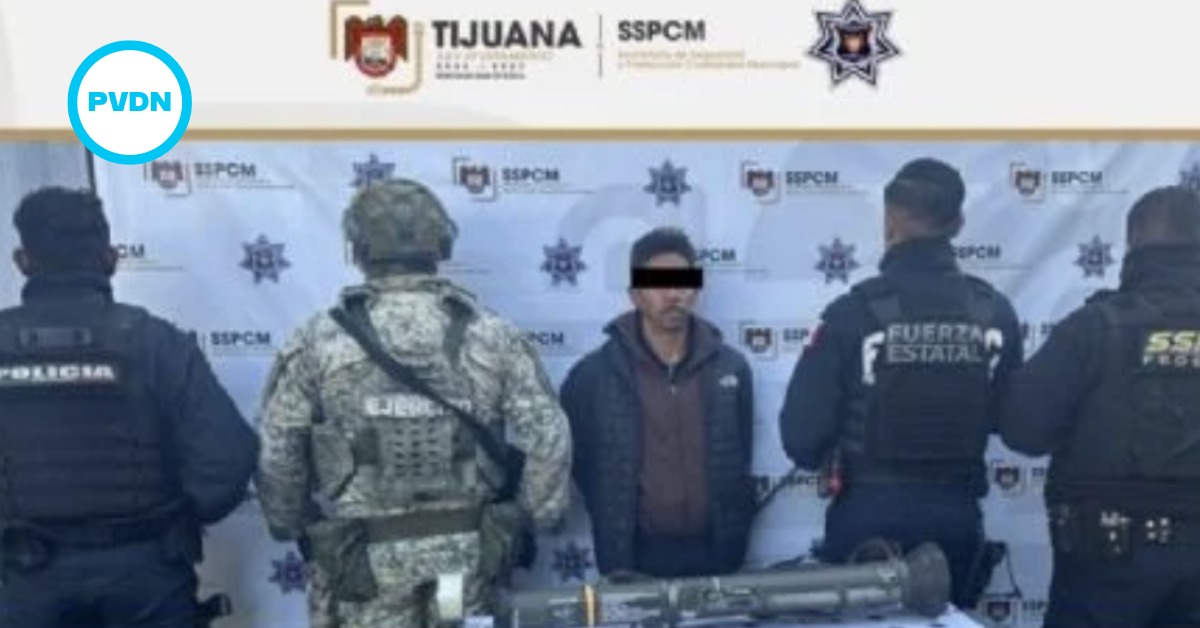
Authorities said the detention began when a citizen approached a municipal police unit in Tijuana. The report described a man walking in public with a green “bazooka-like” object. Officers say the call came in during the early hours of Thursday, Feb. 19, and they moved quickly to locate the person. The search focused on the Sánchez Taboada area, which police describe as a high-priority patrol zone. When officers found the suspect, they say he still held the device. Police used verbal commands and ordered him to drop it. Authorities said the man complied, allowing officers to secure the object without injuries or a reported confrontation. The early moments mattered because they framed the incident as a public safety stop, not an investigation that began with a known suspect. Officials later identified the detained man as Miguel Ángel “N,” 48, also known as “El Tío Mike.” From that point, the case shifted from the initial call to what the device was and what checks revealed about the suspect.
Why the weapon label quickly pulled in federal authorities
Police said the object was a launcher-type weapon classified for exclusive military use. That classification is the hinge point in the story. When authorities treat a weapon as restricted to the armed forces, custody and investigation typically fall outside municipal jurisdiction. Officials said they requested support from Defense personnel and federal and state security elements once the weapon type was confirmed. Authorities then reported that they had transferred the suspect to federal prosecutors for investigation. In practical terms, the alleged weapon category drives the next steps. Investigators must document lawful seizure, preserve the chain of custody, and determine whether the device is functional. They also have to establish how the suspect obtained it. For foreign residents, the broader takeaway is straightforward. Mexico’s firearms regime is strict, and restricted weapons are treated as a federal matter. A stop that starts as a citizen report can become a federal case within hours when the item is deemed military-only.
The routine ID check that changed what the arrest meant
After the detention, authorities said a records check revealed an active arrest warrant. Police reported the warrant as being for “homicidio calificado,” a serious homicide charge. Officials did not provide public details about the underlying case in their initial summaries. They did state that the suspect was already wanted by the justice system. That detail changes the meaning of the stop, because it becomes more than a weapon possession case. Authorities also described the suspect as a “presunto generador de violencia,” a label agencies use to flag people tied to repeated violent incidents or patterns in specific neighborhoods. Officials linked that characterization to several areas, including Camino Verde, Sánchez Taboada Produtsa, and Reacomodo. The suspect was reported to be placed at the disposal of federal authorities for both the restricted weapon issue and the outstanding warrant. From here, the case depends on filings and judicial process. The warrant must be executed, and the weapons investigation must be supported by forensic and documentary evidence that can stand in court.
What to watch next as investigators build the case
Authorities have not reported that the device was fired, used in an attack, or linked to a specific incident at the scene. They also have not publicly detailed how the weapon was obtained or whether it was operational. Those answers usually come from technical examination, interviews, and follow-up checks across agency databases. Prosecutors will also need to clarify the legal basis for each alleged offense and how charges are presented. In Mexico, it is common for separate legal tracks to run in parallel. A weapons investigation can proceed while a separate warrant is processed in court. For residents and visitors, the public-facing question is whether officials tie the seizure to a broader investigation or treat it as a standalone event. Another issue is transparency. Early official summaries often include core facts but omit case history, detailed evidence, or judicial timelines. Updates typically arrive only after prosecutors formalize steps in the case. Until then, the most stable facts are the location, the reported weapon category, and the existence of an active warrant noted by authorities.