The city’s site museum turned into a classroom that kids wanted to be in. Over several mid-August sessions, the Museo de Sitio de Palenque—known locally as MUSIPA—hosted Manos a la Obra, a playful summer workshop that used games, crafts, and guided explorations to introduce children to Maya history on their home turf. Reporting from Diario de Palenque describes youngsters touring galleries and trying activities that explain daily life, art, writing, and worldview in accessible ways.
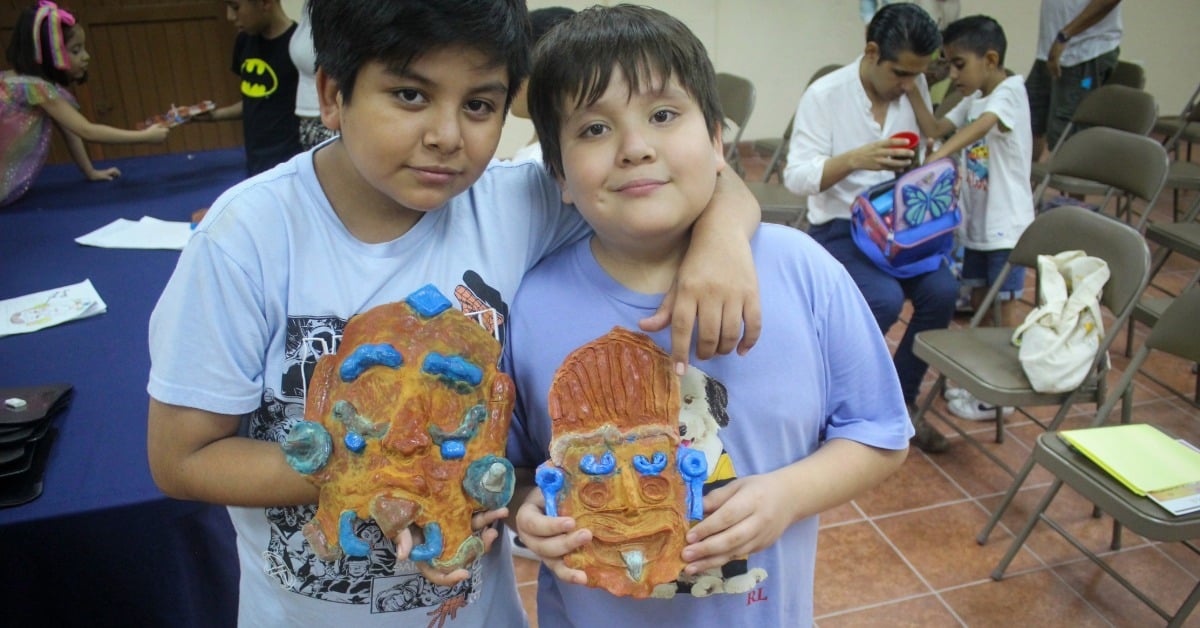
The workshop also zoomed in on one of Palenque’s most recognizable ritual objects: the incense-burner “portaincensario.” On day one, staff walked children through materials, forms, colors, and meaning, then invited them to design their pieces—blending artmaking with cultural literacy for a crowd that rarely gets to touch the past this directly.
Why this matters for Palenque’s kids
Palenque is not just a tourist stop. It’s a municipality with a significant youth population: in 2020, the largest age groups were 0–14 years, together comprising nearly a third of residents. Programs that meet children where they live can have an outsized impact.
And the museum is uniquely positioned to make the past feel present. MUSIPA sits inside the Pre-Hispanic City and National Park of Palenque, a UNESCO World Heritage site recognized in 1987 and administered by Mexico’s National Institute of Anthropology and History (INAH). For kids in Palenque, “heritage” isn’t an abstract concept—it’s the place their parents take them on Sundays.
MUSIPA’s galleries tell the story of a city that once ruled a corner of the Maya world, and they do it with objects children can point at and talk about. Since reopening with upgraded museography in 2024, the museum has emphasized visitor experience and interpretation—exactly the kind of setting that lets a summer workshop feel like discovery rather than homework.
It also helps that the museum’s namesake achievement isn’t tucked away in a textbook. When Ruz Lhuillier cleared a sealed stairway in the Temple of the Inscriptions and entered Pakal’s tomb in 1952, it changed how the world understood Maya kingship. MUSIPA foregrounds that story; for kids, it’s a local legend—told with stone, jade, and a replica crypt—rather than a distant tale.
The portaincensario lesson, beyond the craft table
Portaincensarios are not props; they’re ritual technology. Museums from Baltimore to Fort Worth hold Palenque-style pieces—towering stands and effigy elements tied to deities known as the Palenque Triad, often used with copal incense. The forms are distinctive enough that scholars have long suspected local workshops in the Classic period. That makes MUSIPA’s gallery a perfect stage for children to see what their ancestors made, and then try a version themselves.
Academic work on Palenque’s incensarios shows how varied and important they were—pedestal burners for the fire itself, and elaborately flanged cylindrical stands that supported braziers and represented divine beings. Translating that scholarship into child-sized activities is where a workshop like Manos a la Obra shines: it turns typology into touch.
INAH’s museums across the country prepared summer slates of workshops and guided activities this year. MUSIPA’s Manos a la Obra fits that national pattern but reads as grounded and local—centering the objects and stories of a place where many families identify as part of a broader Maya world. Done well, that mix—national support, local ownership—gives kids a reason to care long after vacation ends.
The workshop’s design—short sessions, hands-on work, low barrier to entry—aligns with what education experts say matters for communities that still face access gaps. Nationally, Indigenous children in Mexico contend with higher out-of-school rates and fewer resources, so programs that bring culture and learning together, close to home and free of intimidation, punch above their weight.
There’s nothing abstract about watching a child recognize a god’s face on a ceramic stand, then build their version from clay. Manos a la Obra doesn’t try to “simplify” Maya culture; it makes it tangible—rooted in objects, place, and pride. Palenque’s kids deserve that kind of education in the museum down the road, not only in the pages of a textbook. And when they look at those galleries years from now, they’ll remember what their hands learned first.