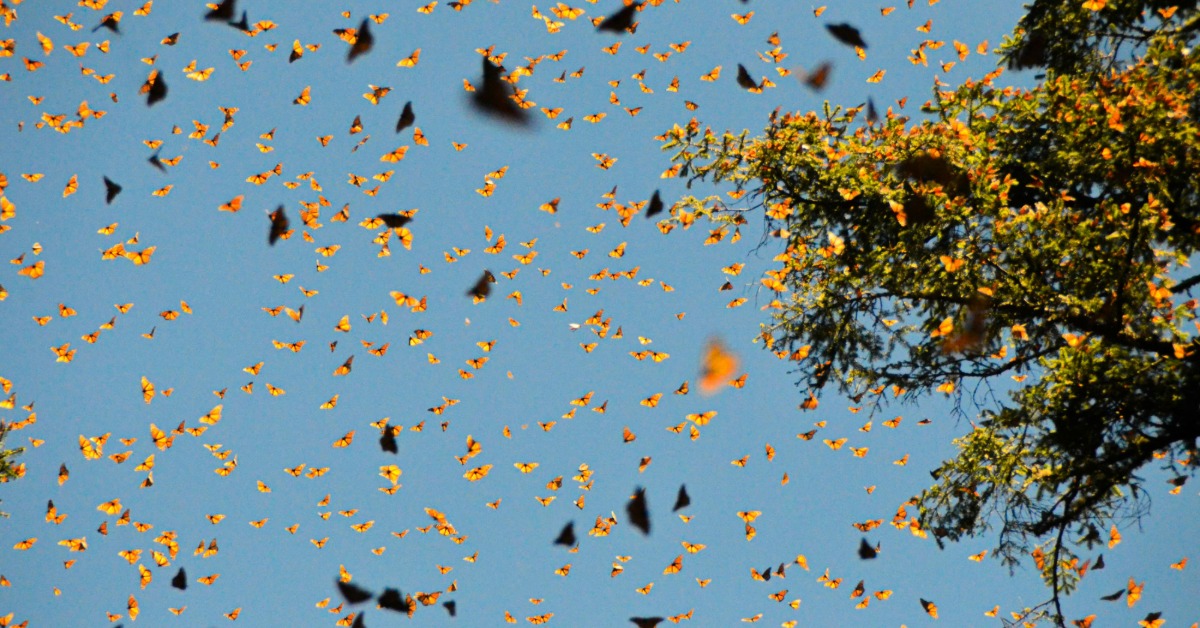
In a hushed mountain forest, thousands of monarch butterflies cling to oyamel fir branches, waiting for the morning sun to warm their wings. Visitors tiptoe along the trails, whispering and watching every step to avoid disturbing the delicate creatures blanketing the ground. It’s a scene of otherworldly calm in central Mexico’s Monarch Butterfly Biosphere Reserve—yet beyond the quiet awe, an unseen security presence now stands guard. In an unprecedented effort to protect this World Heritage sanctuary from harm, a 300-strong unit of Mexico’s National Guard patrols the reserve around the clock, determined to shield the monarchs’ habitat from those who threaten it.
Community at the Heart of Conservation
For local residents, safeguarding the monarch butterfly is more than just an environmental cause—it’s a way of life. Horacio Cruz, a caretaker at the El Rosario butterfly sanctuary in Michoacán, feels immense pride in protecting this natural wonder, a tradition carried by his family for generations. “It’s a feeling you can’t really describe,” he says, “but you feel it when you’re there—hearing the flutter of their wings as they fly around and even land on you.” Teaching the value of the monarchs to the next generation is fundamental in these communities. Cruz emphasizes that the forest and its butterflies are part of the local identity. He makes sure children understand why the monarchs return each year: “If the butterflies choose to come here, it’s because of the richness they find in these trees,” he notes, highlighting the pristine habitat their ancestors have long protected.
This deep connection has turned the monarch sanctuaries into a source of sustainable livelihood for many Michoacán families. The butterfly tourism season lasts about five months, from November through March, during which locals like Cruz work daily as guides and guardians of the forest. For the remainder of the year, they pivot to conservation and farming. In villages around the reserve, residents organize reforestation drives and tend tree nurseries to replace the oyamel firs lost to wildfires. They clear underbrush and maintain firebreaks to prevent forest fires, and they form volunteer brigades that patrol the woods for any signs of illegal logging or wildfires. The entire community takes turns caring for the forest. In El Rosario, for instance, people have formed three rotating committees—each with dozens of members—that alternate duties each year. This rotation ensures every family shares in the responsibilities and the modest economic benefits that butterfly ecotourism brings to the region.
24/7 Protection Against Illegal Logging
Even with the community’s vigilance, the remote high-altitude forests that monarchs depend on have long tempted illegal loggers. Logging and land-clearing for agriculture—particularly for lucrative avocado orchards—pose a serious threat to the butterflies’ winter home. In response, the Mexican government has bolstered security by deploying 300 members of the National Guard’s Environmental Protection Battalion to the reserve. These troops, under the Ministry of Defense, conduct day and night patrols across the biosphere reserve, which straddles the border of Michoacán and the State of Mexico about 100 kilometers west of Mexico City. Their mission is clear: deter any illicit activity that could harm the forest ecosystem.
Stephanie Rojas, a National Guard soldier assigned to the monarch sanctuary detail, explains that her unit crisscrosses the rugged terrain on foot and in all-terrain vehicles. They set up checkpoints on mountain roads and inspect trucks carrying wood to ensure each log has a permit. “Logging is banned in this reserve because it damages the ecosystem,” Rojas notes, underscoring the strict protections in place. The patrols also monitor wildlife poaching and plant theft, and coordinate closely with local authorities to respond to any security issues. Rojas herself grew up in Michoacán and learned from a young age how special the monarch butterfly is to her home state. Serving in this battalion is personal for her. “Our state produces many things, but say ‘Michoacán’ and people think of the monarch butterfly,” she says, reflecting the pride that residents feel for this emblem of their land.
The heavy National Guard presence is a novel sight in these peaceful forests, but it comes after years of mounting concerns. In the past, illegal logging driven by organized criminal groups led to violent conflicts in the monarch region. In 2020, the former manager of the El Rosario sanctuary, Homero Gómez González, was found murdered after speaking out against logging, a tragedy that shocked the nation and highlighted the dangers faced by environmental defenders. Since then, authorities have pledged to end such violence and protect the people and forests of Michoacán. The 300-strong battalion is part of that promise. Their constant vigilance has already made a difference—local officials report that outright illegal logging within the core protected zone of the reserve has been effectively eliminated in recent years. Now attention is focused on guarding the buffer areas on the reserve’s edges, to ensure encroaching orchards or timber poachers don’t undo the progress. For the local communities who risked their lives to watch over these woods, having the National Guard on their side brings a much-needed sense of security. It allows butterfly guides and visitors alike to breathe a little easier, knowing that an extra layer of protection stands between the monarchs and those who would destroy their habitat.
A World Heritage Migration
The Monarch Butterfly Biosphere Reserve is not only a Mexican treasure—it’s an international marvel. The reserve’s oyamel fir forests, cool and high in the mountains, serve as the winter refuge for one of the most remarkable migrations on the planet. Each autumn, millions of monarch butterflies fly over 4,000 kilometers from Canada and the United States to reach this sanctuary in central Mexico. They arrive around early November and remain in a semi-dormant state through the cold months, clustered by the thousands on tree trunks and branches. Since 2008, the reserve has been recognized as a UNESCO World Heritage Site, reflecting its critical importance to global biodiversity. Nature lovers from around the world travel to Michoacán and the State of Mexico each winter for a chance to witness the spectacle of orange-and-black butterflies carpeting the trees like living autumn leaves.
By late winter, usually starting in February, warmer temperatures awaken the monarchs. The once-motionless clusters burst into life as butterflies flutter down to sip water from mountain streams and soar through sunlit clearings. Tourists stand in silence, cameras in hand, as clouds of monarchs swirl around them in what can feel like a dream. This season, the spectacle has been especially encouraging. Conservation officials say the monarch population is up from recent years—by some estimates, around 1.8 million butterflies are wintering in the reserve now, roughly 20% more than last year. The monarchs are spread across five main colonies in the protected forests, each colony occupying a swath of trees that can span several acres. It’s a positive sign after decades of worrying declines in monarch numbers.
Scientists caution that North America’s monarch butterflies have still diminished drastically from their numbers a few decades ago due to habitat loss, climate shifts, and pesticide use. But the joint efforts in Mexico are starting to pay off. Illegal logging in the heart of the monarch reserve has fallen to near zero. Large-scale reforestation and sustainable tourism initiatives are underway. International cooperation is growing to ensure the butterflies find healthy habitats all along their migratory route. In a notable turn, global conservation authorities recently revised the monarch’s status on the Red List from “Endangered” to “Vulnerable,” reflecting a slightly improved outlook for the species. It’s not a declaration of victory by any means, but it shows that unwavering conservation work—by community members, park rangers, scientists and now the National Guard—is making a tangible difference.
As March approaches, the monarchs will soon depart Mexico, fluttering northward to begin the next generation. But for now, under the gentle gaze of local guardians and the watchful patrol of military boots, they remain safe in their ancestral winter home. Every year without fail, the first monarchs appear in these mountains around the 2nd of November, coinciding with Mexico’s Día de Muertos (Day of the Dead) celebrations. Locals like Horacio Cruz take comfort and pride in this timing. “They always arrive on the Day of the Dead—we say they are the souls of our departed returning,” Cruz smiles, sharing a piece of Michoacán folklore. Thanks to the dedication of the community and the new shield of the National Guard, those souls in orange and black will continue to find a haven here, fluttering peacefully among the sacred firs for generations to come.
With information from La Jornada, Mexico Business News, Smithsonian (NMAI Magazine), The Guardian