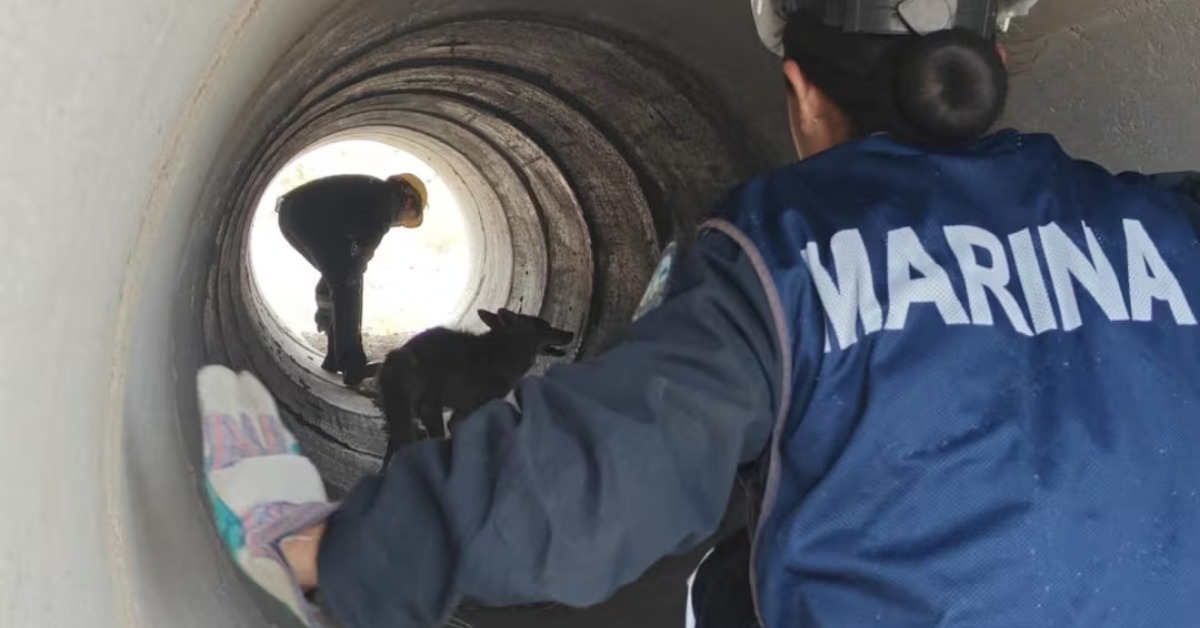
San Felipe, Baja California, June 12, 2026 – Federal authorities rescued a dehydrated juvenile coyote south of San Felipe, Baja California, after a report that the animal had trouble moving its rear legs.
Navy personnel from the San Felipe Naval Sector responded with Profepa, Mexico’s federal environmental enforcement agency. The coyote, identified as Canis latrans, received initial hydration and food before being moved for veterinary evaluation, according to current reporting on the rescue.
The animal was transferred to Mexicali. Specialists are expected to evaluate whether it can return to its habitat, depending on its health, according to a second report citing federal information.
What the Baja California rescue means for readers here
The case is still useful in Puerto Vallarta because the same federal wildlife rules apply when residents or visitors find an injured, trapped, displaced, or illegally held wild animal.
PVDN reviewed Profepa’s public records and federal open-data listings. Profepa’s open-data page includes 2026 records for wildlife inspections, environmental complaints, and enforcement actions, showing that wildlife response is part of the agency’s regular work, not an isolated case. Those federal datasets are published through Mexico’s open-data portal.
In Puerto Vallarta and Bahía de Banderas, wildlife calls more often involve crocodiles, sea turtles, birds, iguanas, snakes, or mammals pushed near roads, canals, beaches, and developed areas.
PVDN has reported on that overlap before, including crocodile alerts on Vallarta beaches and broader Puerto Vallarta environmental news involving beaches, rivers, wildlife, water quality, and development pressure.
Release depends on the animal’s condition
Federal authorities have not said what caused the coyote’s dehydration or mobility problems. The available reports do not mention a vehicle strike, poisoning, disease, captivity, or mistreatment.
That leaves the veterinary review as the key step. A wild animal may not be ready for release if it cannot move normally, find food, defend itself, or avoid people and roads.
Coyotes are native mammals found across much of North America. A Conanp species sheet describes them as adaptable animals that can live in varied habitats, often alone or in pairs. The same federal material notes that coyotes can appear thin even when healthy, which is one reason a veterinary review matters before making assumptions based on appearance alone.
How to report injured wildlife in Mexico
Profepa advises residents to report wildlife cases rather than attempt to capture, keep, or move the animal themselves. Its public complaint channels include the federal environmental complaint system, [email protected], and the 800 PROFEPA line listed in the agency’s reporting guidance.
The safest response is to keep your distance, keep pets away, avoid feeding the animal, and contact local emergency services or the appropriate environmental authority if the animal appears injured, trapped, aggressive, or in a high-risk public area.
The Baja California coyote remains under veterinary evaluation in Mexicali. Federal authorities have not announced a release date.