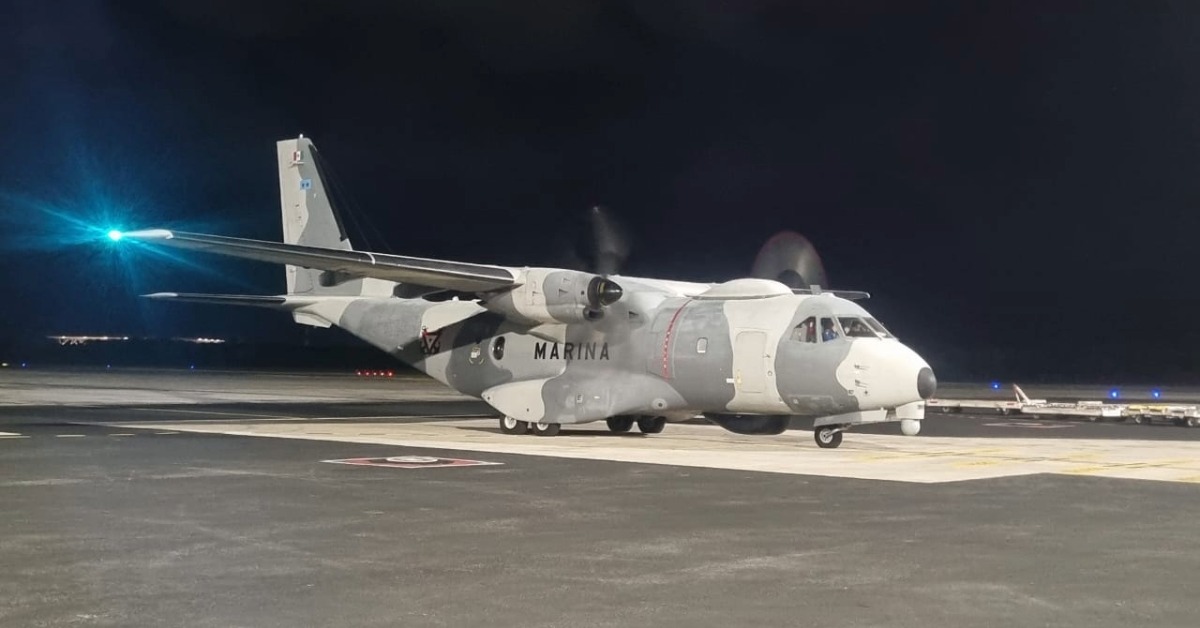
The Mexican Navy reinforced the search for a recreational vessel reported missing along the Quintana Roo coast, coordinating through its Fifth Naval Region as families and marinas kept the phone lines active through Sunday. The boat, a Regal 33 OBX, left Key West for Isla Mujeres and failed to arrive as planned, triggering a complete maritime search-and-rescue response.
What we know about the vessel and route
Local outlets identify the craft as a Regal 33 OBX, black hull with a red stripe, flying the Polish flag, and registered as POL001J4R. Two experienced Cozumel captains—named in local reporting as Jorge Aragón and Ricardo Argáez—were aboard. They reportedly departed at 10:00 a.m. on August 20 with an estimated arrival at 4:00 a.m. on August 22; when the boat did not show, relatives raised the alarm, and authorities activated the search.
The Navy’s regional command said the “delay in arrival” report was received on August 22 and that search operations began immediately to safeguard life at sea.
Assets in the water and air
Navy officials detailed a mixed response: an interceptor patrol craft executing search patterns, a Defender-class boat from ENSAR Isla Mujeres, and a fixed-wing aircraft flying continuous reconnaissance over likely drift corridors. The Navy also coordinated with the U.S. Coast Guard and requested overflights in Cuba’s Exclusive Economic Zone, reflecting the cross-border nature of the route.
On the ground, the call-out from relatives and friends ricocheted through the nautical community, with marinas and crews passing along the vessel description and last-known plans. At the same time, authorities kept families updated on the search.
Why this search area is tricky
The corridor between the Florida Keys and Isla Mujeres straddles the Yucatán Channel, where the Loop Current funnels warm Caribbean water into the Gulf of Mexico. That current can be strong, deep, and changeable, complicating drift predictions for search grids. It also interacts with eddies that can move floating objects in unexpected directions.
Those dynamics are why responders widened the search and synchronized efforts with U.S. and Cuban authorities—an approach consistent with best practice when currents can stretch or bend a vessel’s probable track.
The human side
For families in Cozumel and across Quintana Roo, the past 48 hours have moved in slow motion: unanswered calls, rumor control, and steady contact with naval liaisons. Community pages amplified descriptions of the boat and crew, while local newsrooms kept a spotlight on official updates to keep facts from scattering. That pressure matters; broader awareness puts more eyes on the water while formal searches continue.
As of Monday morning, the Navy said search flights and sea patrols were ongoing, with coordination continuing across agencies. Families asked boaters transiting the Florida–Isla Mujeres lane to keep a sharp lookout and report any sighting immediately to the authorities or via VHF 16. The Navy reiterated its focus: bring two mariners home.