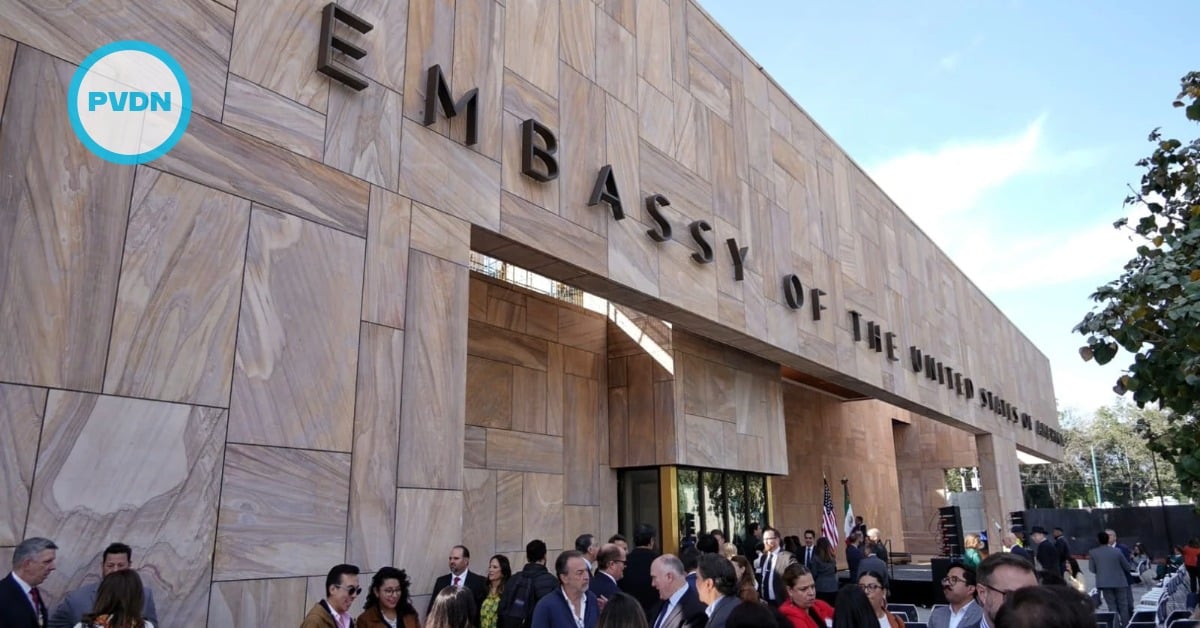
From November 24, all U.S. visa and citizen services in Mexico City move to a larger, more secure embassy complex in Miguel Hidalgo.
For years, people seeking a U.S. visa in Mexico City have followed the same routine: line up near Paseo de la Reforma, shuffle through security, and hope the day ends with good news. That routine is about to change.
Starting Monday, November 24, the new US embassy Mexico City complex in the Miguel Hidalgo borough will take over as the capital’s main consular hub. Visa interviews, U.S. passport services, citizenship procedures and notarial appointments will all be handled at the new compound in the Irrigación neighborhood, better known to many chilangos as part of Nuevo Polanco.
The move will finally bring consular operations into the billion-dollar embassy campus that has been rising for years on a former industrial site near the Soumaya Museum and the Antara shopping center. The building was formally dedicated in December 2024, after construction delays and a lengthy cleanup of contaminated land. U.S. officials describe it as the largest embassy the country has anywhere in the world, with space for well over a thousand employees and dozens of federal agencies that were previously scattered across Mexico City.
What the new US embassy Mexico City changes in practice
For the public, the most important detail is location. The embassy’s official address is Presa Angostura 225, in colonia Irrigación, Miguel Hidalgo. Visitors, however, will not walk in through that door. Consular traffic will enter through a separate pavilion on Avenida Casa de la Moneda at the corner with Calzada Legaria, where signage directs people with appointments to security screening and waiting areas. That entrance is meant to keep the consular flow apart from other diplomatic business and from vehicle traffic on surrounding streets.
Another key detail is what does not move. The Applicant Service Center (CAS), where many visa applicants give fingerprints and photos, remains at its current address on Hamburgo 213 in colonia Juárez. People starting a visa process will still need to follow their appointment instructions carefully, because some steps will happen in Juárez and others at the new compound in Irrigación. The embassy has urged applicants to read their confirmation notices closely to avoid showing up at the wrong site on the wrong day.
Embassy statements say routine consular services were paused briefly during the physical move and will resume at the new location on November 24. Emergency assistance and emergency passport services for U.S. citizens continue to be available even during the transition period, handled through the usual phone and online channels.
Behind the scenes, the shift is about capacity as much as comfort. The new complex brings together staff who had been split between the Reforma building and several leased offices. Internal planning documents highlight an expanded consular hall and upgraded technology designed to move visitors through security and interview windows more efficiently, an important change in a country that now generates more U.S. visa applications than almost anywhere else.
In 2023, Mexican nationals received more than 2.3 million U.S. visas, about 22% of all visas issued worldwide that year. That was a record, and demand has remained high into 2024 and 2025. Long wait times for first-time visitor visas have become a recurring complaint, especially in Mexico’s largest cities.
The embassy’s move comes just as policy changes in Washington are making those visas more expensive. A new “visa integrity fee” of US$250, introduced this fall, raises the total cost of a standard visitor visa to US$442 for travelers from non-waiver countries such as Mexico. Travel industry groups warn that higher costs and tougher screening could dampen demand, even as consular posts rebuild capacity after the pandemic.
A bigger embassy for a bigger relationship
The Mexico City mission has grown along with the ties between the two countries. The new embassy complex, designed by prominent U.S. architecture firms, stretches across roughly 49,000 square meters and includes underground levels, an internal courtyard, an art gallery and sustainability features like solar panels and reclaimed-water systems. Officials say the project injected hundreds of millions of dollars into the local economy and generated thousands of jobs during construction.
Mexico is also home to one of the largest communities of U.S. citizens anywhere in the world. Recent demographic studies estimate that more than 700,000 U.S. nationals now live in Mexico, many of them in or near major urban centers. They rely on the embassy and nine U.S. consulates around the country for passports, consular reports of birth abroad, emergency help and other services that never make the headlines but matter when something goes wrong far from home.
Embassy planners say the enlarged consular section in Irrigación is built with that population in mind, along with the hundreds of thousands of Mexican travelers who pass through its windows every year. The building’s design separates different kinds of visitors, aiming to reduce bottlenecks and car congestion on surrounding streets. Discreet entrances, layered security and a location away from the constant protests that marked life on Reforma are meant to make life easier for staff and for visitors queuing outside.
For people with appointments in the weeks ahead, the advice is simple but important: triple-check the address on your confirmation, plan extra time to reach the Irrigación area, and be ready for a slightly different routine once you arrive. The concrete and glass may be new, but the basic rules of consular visits remain the same—show up prepared, follow the instructions, and expect security to be tight.
The change marks the end of an era for the U.S. diplomatic presence on Paseo de la Reforma and the beginning of a new one in Nuevo Polanco. Whether the move eventually shortens lines or eases wait times will be measured in months and years, not days. For now, the priority is much simpler: making sure that on November 24, visa applicants and U.S. citizens walk up to the right gate.