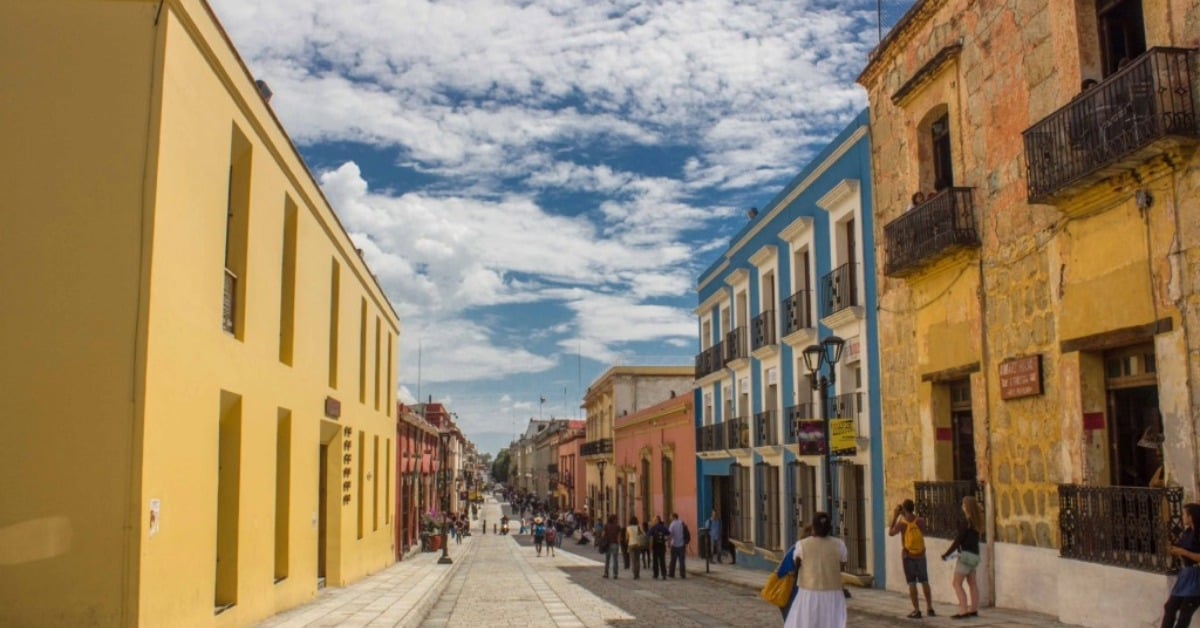
The city of Oaxaca has launched a push to rescue damaged properties in its UNESCO-listed Centro Histórico, approving the Programa de Atención a Inmuebles en Mal Estado, known as PAIME. City officials say the plan folds into the Historic Center’s disaster risk strategy and invites owners to partner with the municipality on repairs.
Under PAIME, the city is waiving municipal fees tied to construction and urban-order permits for buildings that pose a public risk inside the historic polygon. The measure aims to remove cost barriers for owners while guiding work through technical oversight.
Why this matters in a UNESCO site
Oaxaca’s historic core and the nearby archaeological site of Monte Albán have held World Heritage status since 1987, a recognition anchored in the city’s colonial grid and the pre-Hispanic landscape carved into the mountain. With that status comes a duty to conserve the built fabric and keep interventions consistent with heritage standards.
The center has long faced wear, seismic stress, and deferred maintenance. In 2024, local reviews listed 30 deteriorated buildings, seven at very high risk. This week, city risk teams reported at least 63 high-risk structures within the polygon, underscoring the urgency behind PAIME.
Heritage rules do not vanish under PAIME. Any work on catalogued historic monuments—or on buildings within the federal Zone of Historic Monuments—must secure authorization from the National Institute of Anthropology and History (INAH). That process runs through INAH’s permit system and uses the INAH-02-002 format before any intervention can begin.
Municipal and state regulations also restrict façade changes, signage, and structural alterations in the Centro Histórico, aligning local ordinances with conservation norms. PAIME sits on top of these rules by easing municipal costs, not replacing the legal framework.
A city shaped by shocks and slow decay
Earthquakes in 2017–2018 triggered Mexico’s largest heritage repair drive, exposing how fragile older buildings can be without steady maintenance. National reporting and cultural authorities documented thousands of restorations and a long tail of projects, alongside criticism about funding and oversight. Oaxaca’s new municipal program reads as a local answer: target the riskiest structures, cut red tape, and push owners to act.
That balance—speed with standards—will define whether the program succeeds. The city’s public outreach stresses collaboration with owners and technical accompaniment. Social posts and official messages highlight a 100% discount on municipal fees for qualifying cases, a lever meant to get stalled properties moving.
The immediate test is follow-through. The municipality has identified dozens of high-risk buildings, some with absent or unresponsive owners. PAIME gives compliant owners a financial on-ramp and a technical lane. For the rest, the city’s enforcement powers and INAH’s heritage protections remain the backstop to keep streets safe and historic fabric intact.
If the city can pair rapid fee relief with careful supervision, Oaxaca could chip away at long-standing hazards without trading away authenticity—a result worthy of a site that spans Monte Albán’s carved slopes and a colonial center designed on a grid.