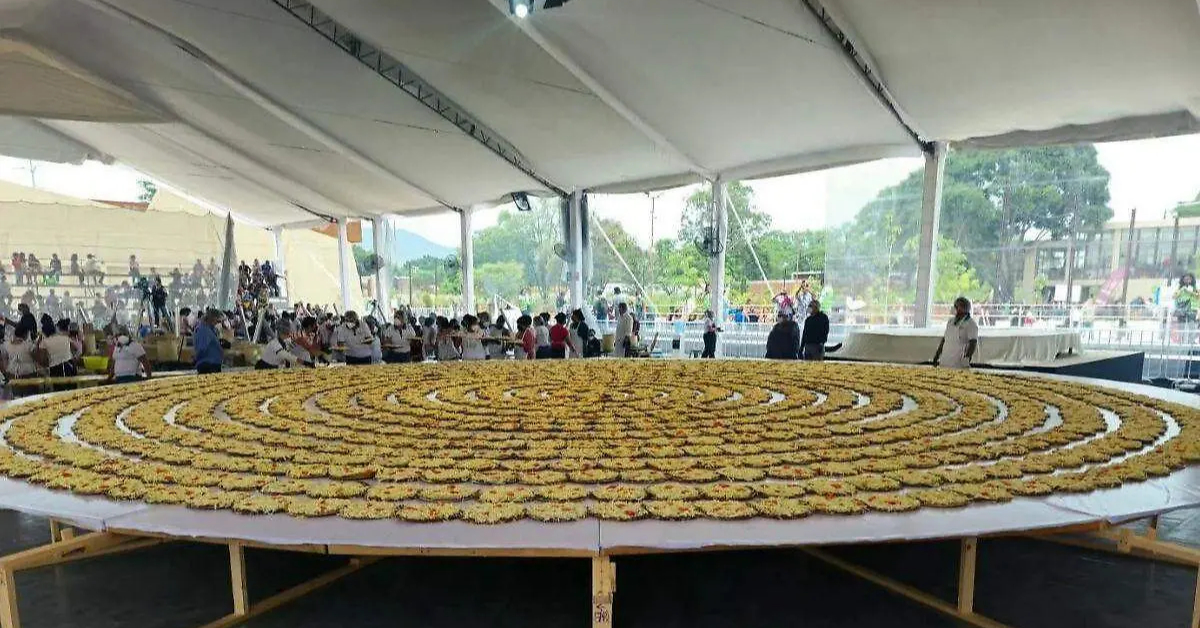
Oaxaca chefs align 1,200 tlayuda pieces in a 350 m spiral to set the Guinness record for the world’s largest tlayuda at Guelaguetza 2025 celebration.
OAXACA CITY — Oaxaca made history again during Guelaguetza 2025 when more than 120 female cooks from San Antonio de la Cal shattered their own Guinness record by creating the world’s largest tlayuda. In just five hours, these artisans assembled 1,200 individual tlayuda pieces in a spiral that stretched 350 meters across Parque Primavera Oaxaqueña.
A tlayuda is a hallmark of Oaxacan cuisine: a large, thin maize tortilla toasted on a clay comal, then topped with black beans, Oaxacan cheese, salsa, and often local meats or vegetables. Its name comes from the Nahuatl word tlayolli, meaning “something toasted.”
At the Expo Venta Del Comal para el Mundo: La Tlayuda, tradition met spectacle as cooks aligned each tlayuda slice edge to edge, forming a collective masterpiece. The previous record of 500 pieces now seems modest compared to this year’s achievement.
“We rose at 3 a.m. and proved it’s possible,” said one of the cooks, tears glistening as she appealed to Governor Salomón Jara Cruz. “Support us as we support you.” The women formally requested recognition and backing to patent the Tlayuda Fair as a symbol of their community’s dedication.
Víctor López Leyva, Secretary of Agricultural and Rural Development, underscored Oaxaca’s vital role in Mexico’s maize heritage. “We grow 35 of the 59 native corn varieties in the country,” he noted. “A corn cob holds eight thousand years of ancestral wisdom. Here corn is art, culture and food sovereignty. We don’t need genetically modified grain to feed our people.”
Guinness World Records adjudicator Alfredo Arista Rueda officially validated the feat, awarding the new title that cements Oaxaca’s cultural and culinary leadership. He praised the cooks’ coordination and respect for ancient practices.
Beyond the record, the event highlighted the state’s ongoing fight against illegal fishing and urban sprawl, which threaten its lagoon ecosystems. The fair’s name—Expo Venta Del Comal para el Mundo—reflects a goal to share Oaxaca’s food traditions and ecological values with global visitors.
Local vendors and cultural groups joined the celebration, offering mezcal tastings, handcrafted pottery and live music. Tourists and residents flocked to see the giant tlayuda spiral and taste samples, reinforcing the dish’s role as a cultural ambassador.
Organizers estimate that by 2027, at least 20,000 visitors and community members will engage with the site’s environmental message. The fair’s seed fund for entrepreneurs will finance sustainable tourism projects, while training sessions will teach best practices for chefs and guides.
The new record builds on Oaxaca’s reputation for bold culinary projects. Earlier this decade the city set a record for the largest mole negro, and now it proves once more that its mix of grassroots passion and organized effort brings global attention and local pride.
As the last tlayuda was laid, cooks joined hands in a circle. The spiral behind them symbolized not only their teamwork but the unbroken link between past and future that Oaxaca weaves every day through its food and culture.