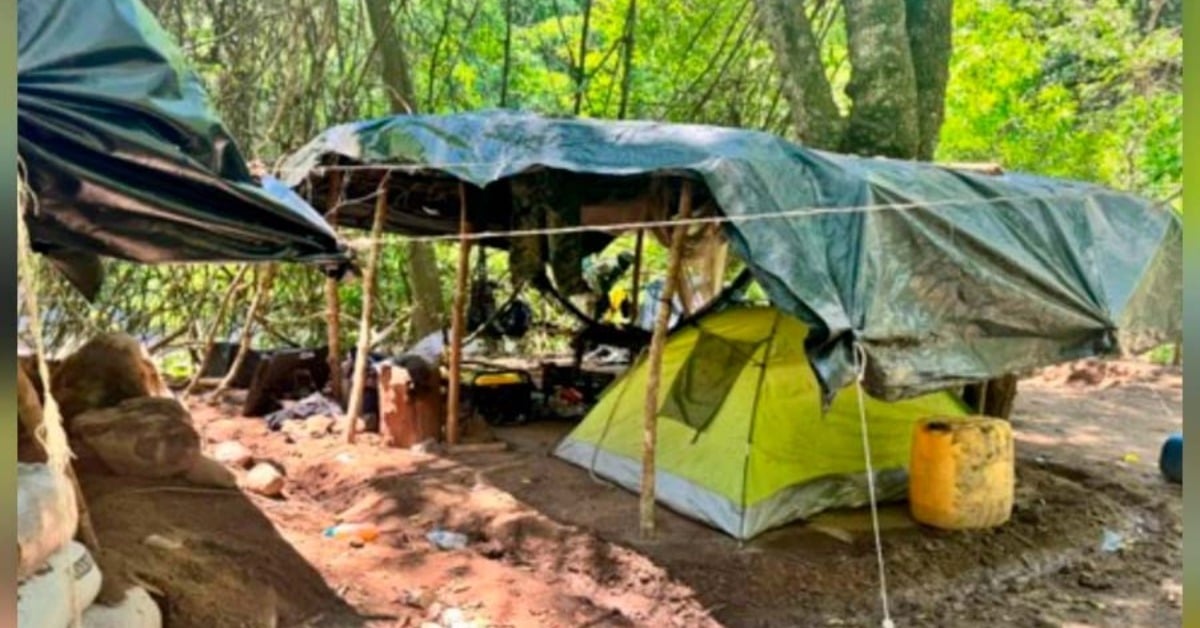
Mazatlán, Sinaloa – personnel from the Mexican Army, as part of an interinstitutional operation, located and dismantled a clandestine camp allegedly used by organized crime operatives in the Sierra near La Noria, north of Mazatlán. The discovery raises concerns about cartel entrenchment in rural zones and the potential for these sites to facilitate illicit logistics—including staging, planning, or weapons storage.
Contested rural territories and cartel infighting
This incident comes amid a broader statewide security crisis. Since September 2024, internal conflicts within the Sinaloa Cartel—most notably between the factions known as Los Chapitos and La Mayiza—have triggered a violent phase often referred to as the “Third Culiacanazo.” These turf disputes have led to cartel fragmentation, increased clandestine activity in outlying communities, and sporadic violence even far from urban centers.
Details of the operation
Military reconnaissance units conducted a terrestrial survey of the suspected area, identifying a makeshift camp containing tactical gear. While authorities did not recover firearms or ammunition at the site, items seized were turned over to the Federal Public Ministry for further forensic analysis and potential prosecution.
Implications—Security, communities, and policy
The discovery exposes a persistent vulnerability: cartel operations beyond surveillance zones in remote areas. Local villages like La Noria may not yet perceive the presence of organized crime, making early detection challenging. It underscores the need for enhanced rural intelligence-gathering, interagency (Federal-Estate-Municipal) data sharing, and integration of civilian reports into surveillance networks.
Recommendations from public safety experts include expanding community outreach programs—building trust so residents report suspicious activity—and deploying environmental impact assessments when these sites appear in ecologically sensitive zones.