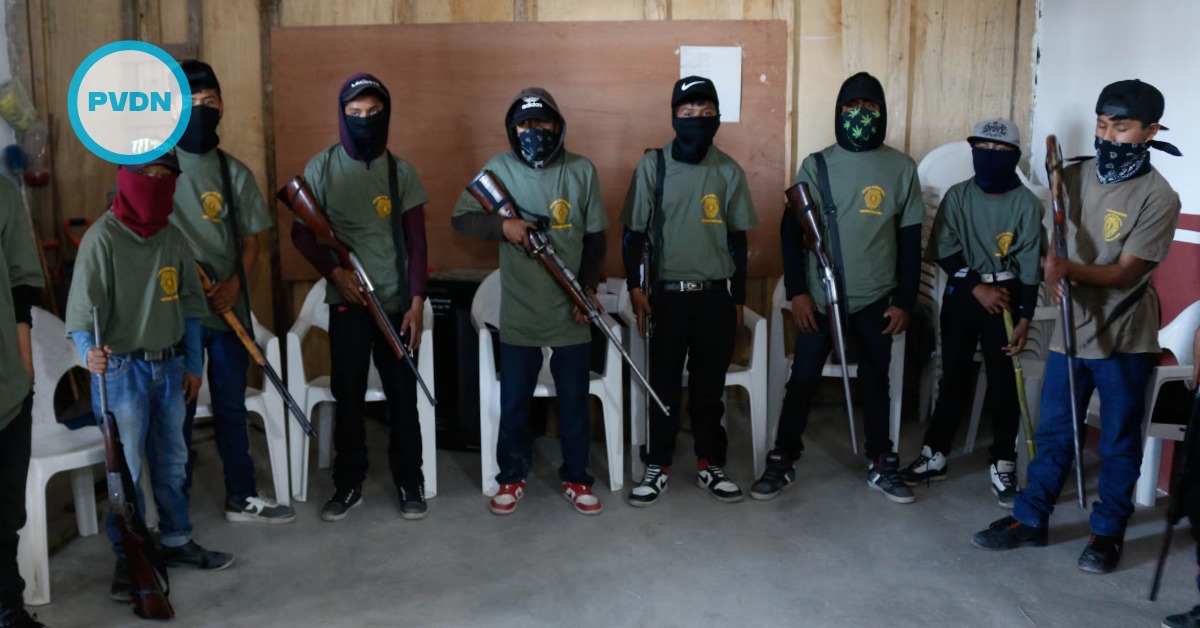
Mexico’s criminal groups rarely begin by handing a teen a gun. Organized crime recruitment often starts smaller: a favor, a lookout shift, a ride, a promise of protection. A new annual balance from child-rights advocates says those first steps are becoming more common, while the country still lacks clear official data and an autonomous crime for forced recruitment. Behind the numbers are families searching for missing adolescents, and neighborhoods where violence has quietly become a career path. What’s driving it, and what might slow it down?
Organized crime recruitment is showing up in the numbers
A new annual balance on children’s rights in Mexico highlights a rise in cases that can signal forced recruitment, even when authorities don’t record them that way. The report points to adolescents being deprived of their liberty in crimes commonly linked to organized groups, treating these incidents as probable recruitment-related victimization.
The figures cited are stark: in 2024, the number of adolescents deprived of liberty in these contexts ranged from the high hundreds to just over a thousand, and the year-over-year increase was noticeable. The highest counts were reported in states associated with territorial disputes and sustained criminal presence, where recruitment pressure tends to be most intense, and the consequences for refusing can be immediate.
The uncomfortable takeaway is that recruitment isn’t a rumor confined to distant “hot zones.” It’s increasingly visible in the kinds of cases that show up in police files, missing-person searches, and community whispers that never become formal complaints.
How teens get pulled in
Organized crime recruitment is often described as a ladder, not a leap. A teen is first asked to watch a corner, carry a phone, deliver a message, or run something “small.” The work looks temporary, even casual, until it isn’t. From there, roles can expand into moving drugs, transporting weapons, acting as a lookout, enforcing threats, or participating directly in violence. Some are drawn in by money, status, and the illusion of belonging. Others are coerced through intimidation, debt, or the simple fact that someone knows where their family lives.
This is why the recruitment of minors can surge without a neat statistical trail. It can present as truancy, sudden new spending, abrupt changes in behavior, or a teenager who vanishes after responding to what appears to be a job offer. In places where opportunity is scarce and fear is common, criminal groups don’t need to “convince” every recruit. They only need a steady supply of kids who feel cornered.
A wider estimate from earlier research underscores the scale of vulnerability. That analysis suggests the number of children and adolescents at risk of being recruited or used by criminal groups falls in the hundreds of thousands, with risk concentrated in several large states where demographics, inequality, and violence overlap. Estimates differ, methodologies vary, and no single number captures the full picture, but they point in the same direction: the pool of potential targets is enormous.
The data and legal gap that keeps it hidden
One reason recruitment spreads so easily is that Mexico still struggles to measure it cleanly. Underreporting is baked into the problem: families fear retaliation, violence has been normalized in some communities, and trust in authorities can be thin. When the victim is a minor, those barriers get worse, not better.
There’s also a structural issue: forced recruitment of minors is often not treated as its own standalone crime. Instead, it gets buried inside other charges or disappears into categories like disappearance, extortion, trafficking, or weapons and drug offenses. That makes it harder to see patterns, harder to prioritize resources, and easier for recruiters to operate in the gray areas.
Recent legislative proposals reflect growing recognition of that gap, including efforts to explicitly criminalize recruiting, training, or arming minors and to frame recruited children as victims entitled to protection and support, not simply as offenders to be processed. Whether those proposals become an enforceable reality is another question. Laws matter, but so do specialized investigators, safe reporting channels, and long-term support for kids who escape.
Living here with open eyes
For expats living in Mexico, this story can be unsettling. It’s easy to read it as a security headline, file it away, and move on. But recruitment is also a community issue, because it thrives where adults look away and where teens feel invisible.
If you live in a neighborhood with young people, work with staff who have teenage relatives, or have kids in local schools, it’s worth understanding how recruitment can masquerade as opportunity. The early steps are designed to feel ordinary, and that’s precisely the danger. The goal isn’t paranoia; it’s clarity. Communities that talk honestly about risks, pay attention to sudden disappearances, and support safe youth spaces make recruitment harder. Communities that stay silent make it easier.
The deeper solution is slow, unglamorous, and expensive: keeping kids in school, building credible pathways to work, strengthening mental health support, and making it safe to report coercion before it turns into a disappearance. The report’s warning is not just that recruitment is rising, but that Mexico is still trying to fight it with partial vision. And partial vision is exactly what recruiters count on.