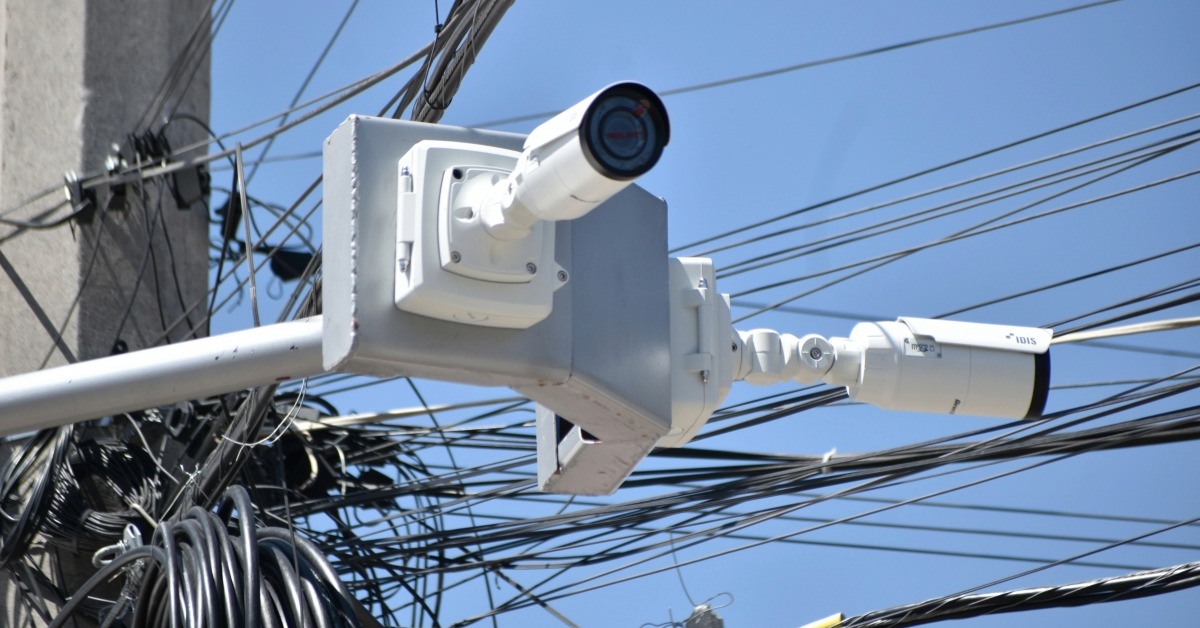
Hermosillo’s security hub is finding cameras that don’t belong to the state. Officials say these “parasite” devices sit on poles or hidden fixtures and point at the street, quietly feeding video to unknown hands. The C5 coordinator urges residents to report suspicious gear and reminds business owners that private cameras must face their own property, not public space. Behind the scenes, state and federal teams have already dismantled clandestine networks this year. What they’ve found—and what everyday people should watch for—tells a bigger story about who’s watching whom.
The alert came with a simple rule of thumb: if a camera on a public pole isn’t marked as part of the official network, it shouldn’t be there. Hermosillo’s C5 coordinator, Benjamín González Caballero, said state security teams are detecting and removing unauthorized devices installed to watch public streets. He stressed that private systems must point inward, toward the property they protect, not outward to the public way.
Officials describe these setups as hidden or discreetly mounted, sometimes piggybacking on lighting or service structures, and outside the state network’s control. That matters because the city’s certified cameras sit on “smart monitoring” poles, are visible, and feed into the C5. When a device appears off-grid and aimed at the street, authorities treat it as a public-safety risk and take it down.
Authorities have been clear about the boundaries for private owners. Businesses and homeowners can install cameras, but those devices cannot capture the public way beyond what’s strictly unavoidable to protect the property, and they cannot sit on government poles. Mexico’s data-protection framework also limits how private parties record identifiable people in public. The coordinator’s message to Hermosillo residents tracks with that legal baseline.
A problem bigger than one city
Hermosillo isn’t alone. In January, Sonora’s AMIC and the Army dismantled a small clandestine network in the capital, recovering cameras at several intersections and opening a case for “halconeo,” a crime tied to illicit monitoring. More recently, the state’s Mesa de Seguridad reported broader operations that took down dozens of “parasite” devices across Sonora.
States across Mexico are doing the same. In Baja California, the Navy reported hundreds of clandestine cameras removed this year. In Tabasco, authorities said they dismantled 75 illegal devices in Villahermosa. And Morelos officials say a national program to remove “parasite” cameras kicked off in February, targeting equipment that criminal groups use to track police and rivals.
In Hermosillo, the removal work runs through the state security table, which coordinates police and military units. The C5 stresses that official cameras are labeled and mounted on dedicated poles; irregular devices aren’t. Local outlets have echoed the warning, publishing guidance for residents on how to recognize off-grid gear and urging them to report it. The thrust is consistent: if it looks unofficial and points at the street, flag it.
What residents should know
For business owners, the safest compliance line is simple: keep cameras on your property and aim them at your own doors, counters, and parking bays. Don’t mount devices on city or state poles. If a neighboring camera appears unmarked, sits on public infrastructure, and faces the street, report it through 911 so the C5 can verify whether it’s part of the official grid. That protects your customers and your footage—and it helps investigators avoid blind spots.
Unauthorized street-facing cameras aren’t about neighborhood watch. Investigators say such systems can support extortion, track patrols, and give criminals live intelligence on police movements. When the state finds and removes them, it’s cutting into that shadow network. Hermosillo’s alert is a warning, but it’s also an invitation to help. The ground rule is clear: public space belongs to the public, and the public camera network is the one run by the state.