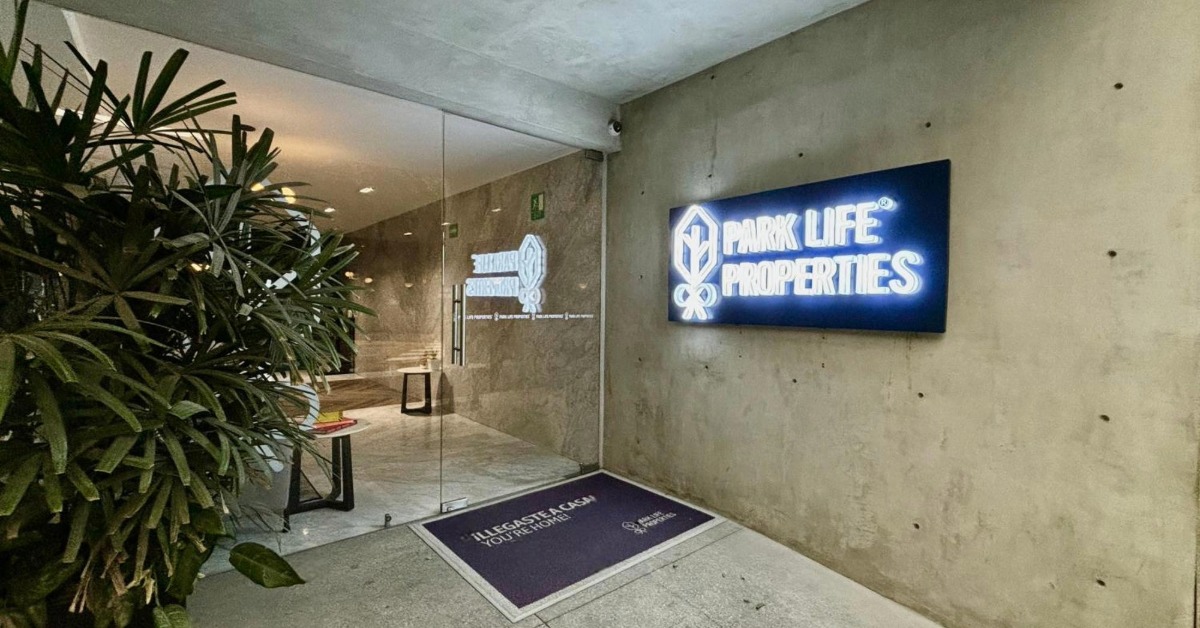
Park Life has taken a business long dominated by small landlords and pushed it onto Mexico’s public market. The debut is not just another real estate listing. It is an early test of whether institutional capital can scale rental housing in a country where renting is common, but professionally managed supply remains limited. The offering also raises a larger question for cities under pressure: can more formal investment improve the rental market without making it feel even farther out of reach?
Park Life is testing a new lane in Mexico’s housing market
Park Life entered the market with a FIBRA-style structure built around rental housing, giving investors access to rental income and potential gains from the underlying properties’ value. The company’s debut matters because it puts a still-fragmented business into a more formal setting, with public reporting, market discipline, and access to larger pools of capital. The offering was framed around as many as 1.3 million certificates and a valuation of nearly 1.5 billion pesos. The final placement raised about 267.9 million pesos, with 1,218,178 certificates sold at 220 pesos each.
What investors are actually buying
This is not a story about new construction breaking ground tomorrow. Park Life’s model is centered on acquiring and operating existing or nearly completed assets rather than acting as a traditional homebuilder. Its initial listed portfolio comprises four properties in Mexico City and Querétaro, primarily for residential leasing. The official filing details the asset mix and shows a combined rentable area of roughly 20,279 square meters. Market coverage tied that initial portfolio to about 287 units, with properties in Polanco, Condesa, Santa Fe, and Querétaro. Under Mexico’s FIBRA tax rules, the trust must distribute at least 95% of its fiscal result each year, although that does not guarantee a fixed cash payout.
Why this matters beyond one stock listing
For many readers outside Mexico, the key point is this: the country has a large rental market, but much of it still sits outside a fully institutional model. According to INEGI, 16.4% of inhabited homes in Mexico were rented in 2020, equal to about 5.8 million rented dwellings. That is a meaningful base, but it is still a market where small landlords remain central and where scale, uniform management, and investor-grade reporting are limited. Park Life is trying to turn that gap into an investment theme. In plain terms, it is betting that rental housing can become a recognized long-term asset class in Mexico, not just a collection of individually owned apartments and buildings.
What this could mean for renters
The company argues that a more professional rental model can lead to more predictable contracts, more standardized property management, and fewer ad hoc practices. That case will likely appeal to investors first, but it could also matter to tenants if the model produces more reliable service and clearer rules. Still, readers should not confuse this with a broad affordability solution. Park Life’s positioning has focused on urban properties with monthly rents ranging from about 9,000 to 50,000 pesos, placing much of the portfolio in the middle and upper segments of the market. That may expand formal supply in selected neighborhoods, but it does not address Mexico’s wider shortage of affordable housing.
The larger bet is on scale
The more important question is what happens next. Before the debut, Park Life said it wanted to build a portfolio worth 10 billion pesos between 2026 and 2028 and grow toward 1,000 rental homes across 18 buildings. After listing, reporting also pointed to a follow-on strategy to attract more institutional investors. If that plan advances, Park Life’s debut could mark the start of a more formal chapter for rental housing finance in Mexico. If it stalls, the listing may still be remembered as an important test case. Either way, the message is clear: rental housing is no longer being pitched only as a local property business. It is being pitched as a public-market segment.