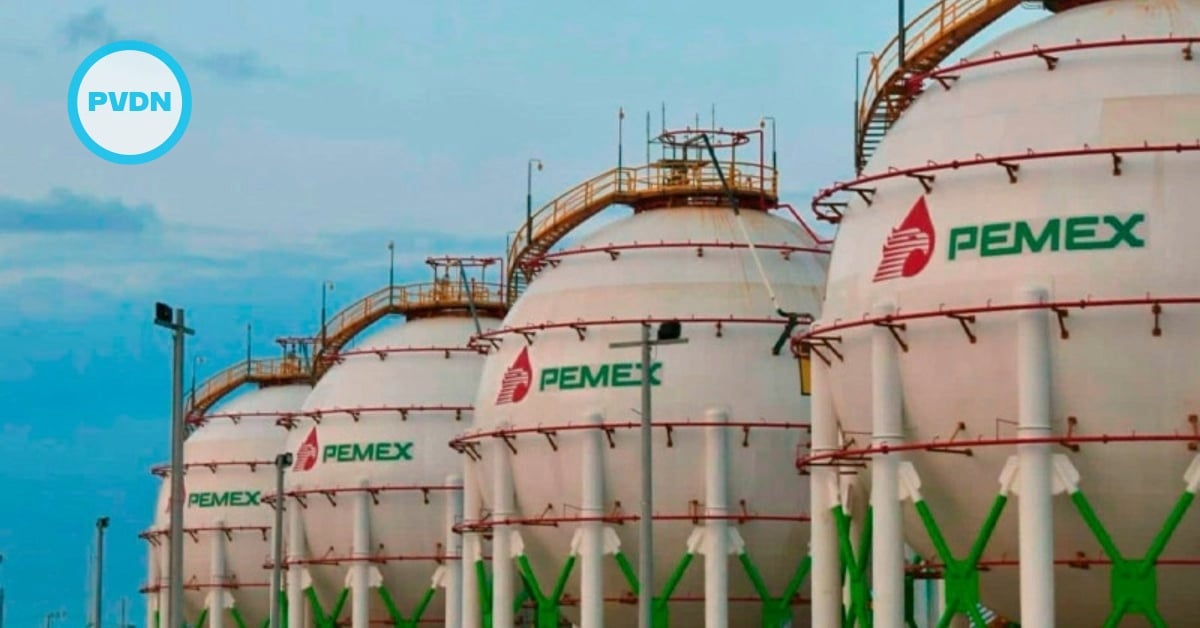
A sudden thaw in Venezuela’s oil prospects is rattling Mexico’s energy math. IMCO argues that if Caracas opens the door to foreign operators, capital that might have partnered with Pemex could detour south, right as Mexico needs outside money, technology, and speed to slow-falling output. The timing matters: 2026 brings tighter public budgets and a high-stakes USMCA review, while Pemex’s finances remain strained. The question now is not just who pumps more oil, but who looks investable.
A new competitor for oil dollars
For years, Mexico has tried to sell itself as the steadier, lower-drama option in the region: closer to the United States, with integrated supply chains, and a mature oil industry that investors already understand. IMCO’s warning is that a meaningful reopening of Venezuela’s oil sector—even if it starts slowly—could alter the comparison investors make when deciding where to deploy scarce capital and technical teams.
Venezuela’s pitch is simple and hard to ignore: enormous resource potential and a battered industry that could rebound if it regains access to foreign money, equipment, and markets. Even if a rapid production surge is unrealistic, the mere prospect of new contracts and improved access can redirect attention. In a sector where multi-billion-dollar decisions are planned years ahead, “maybe later” can still be enough to pull meetings, feasibility studies, and financing away from Mexico in the near term.
IMCO also makes a key distinction that’s easy to miss in the headline. The near-term impact on global oil prices may be limited, and Venezuela’s infrastructure problems are real. But Mexico doesn’t need Venezuela to become a market-moving giant again to feel pressure. It only needs Venezuela to look like a credible alternative destination for the same pool of international operators and investors Pemex wants to court with its mixed projects.
Pemex needs partners, fast
This lands at an awkward moment for Pemex. Mexico’s flagship producer has been fighting a long, stubborn decline that’s partly geological—maturing fields do what mature fields do—and partly operational, with offshore delays and complexity. Pemex’s own reporting shows crude output in 2025 running well below the levels Mexico wants to sustain, alongside a financial picture that still leaves limited room for error.
The government’s strategy leans heavily on mixed investment arrangements—partnership-style projects meant to bring in capital, technology, and execution capacity without fully surrendering state control. IMCO’s point is blunt: if Pemex has struggled to close these deals when Mexico looked like the obvious regional bet, it gets harder if investors can credibly choose Venezuela, too.
There’s also a timing problem inside Mexico. Public budgets are tighter in 2026, and large energy projects increasingly depend on private participation to move from announcements to steel in the ground. That means Pemex and the broader energy sector can’t afford drawn-out uncertainty over contract terms, payment reliability, and regulatory predictability. Investors don’t just compare geology; they compare how quickly they can start work, how confidently they can forecast returns, and how sure they are the rules won’t change halfway through.
Why this matters beyond the oil patch
For many expats, Pemex can feel like background noise until it isn’t. But the company’s health influences the country’s financial breathing room in ways that show up indirectly: the government’s ability to fund infrastructure, the credibility of fiscal plans, and the confidence that supports the peso during volatile global moments.
If Pemex fails to stabilize operations and cash flow, pressure tends to migrate outward. Supplier backlogs become a drag on local businesses and jobs. Government support becomes harder to taper without consequences. And when markets sense rising fiscal risk, currencies often take the hit first—raising the cost of imports and feeding inflation in everyday items, from groceries to rent-sensitive services in expat-heavy cities.
There’s a second-order effect, too. Mexico’s broader investment story—nearshoring, manufacturing expansion, and long-term energy demand—works best when the country looks predictable. In 2026, with a major USMCA review on the calendar and geopolitical friction already high, Mexico benefits from projecting stability. IMCO’s warning about Venezuela is partly about oil, but it’s also about the wider confidence game: when uncertainty rises, investors gravitate to jurisdictions where the rules feel clearer and the execution risk feels lower.
What to watch next
The key variable is not whether Venezuela can quickly return to its past production peaks. It’s whether the legal and commercial pathways for foreign participation become believable enough to compete with Mexico for capital right now. If international firms see workable contracts, export routes, and payment mechanisms taking shape, even modest early progress can shift investment committees’ priorities.
On Mexico’s side, the response is less about reacting to Venezuela and more about tightening the fundamentals at home. Pemex’s mixed projects need to look bankable, operationally feasible, and insulated from political whiplash. Speed matters. So does clarity on terms, dispute resolution, and how investors get paid without getting trapped in delays.
In other words, Venezuela may be the new distraction, but Mexico still controls the main story. Pemex is under pressure because it’s trying to persuade private partners at a time when the region may offer them more than one door to knock on.