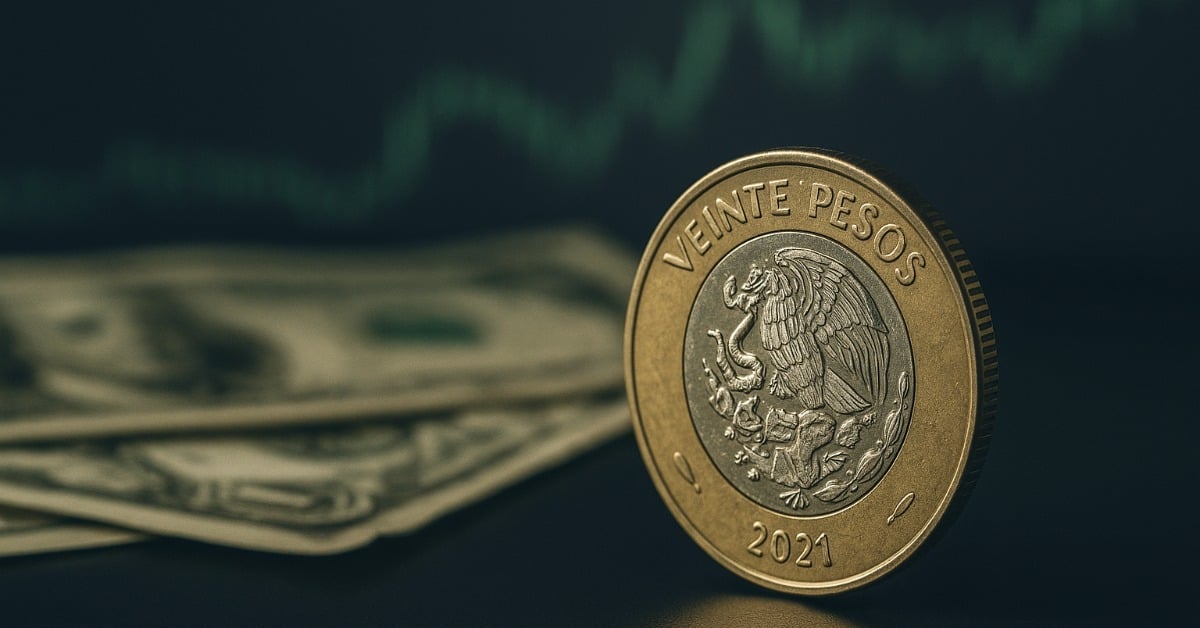
USD/MXN traded near 17.98 Monday, keeping the peso under 18 as the dollar softened and fresh Mexico activity data steadied bids.
The Mexican peso opened the week with steady gains, keeping the dollar priced in the high 17s for much of the morning. In spot trading, USD/MXN hovered around 17.98, down a few centavos from Friday’s close near 18.02. The move was small, but it mattered for sentiment because it kept the pair under the 18.00 line that many traders watch closely.
Official reference rates also reflected that same neighborhood. The daily FIX published for Monday came in at 18.0065 pesos per dollar, while the rate used to settle dollar-denominated obligations in Mexico was set at 17.9792. Those numbers tend to lag the live market, but they provide a clean benchmark for contracts, invoices, and accounting.
If you walked past a bank window, the story likely looked different. Retail quotes still sat well above the interbank market, with some major branches showing the dollar in the mid-18s for sale. That gap is normal. Banks and exchange houses build in spreads, and those spreads can widen when trading volume thins, which is common around late December.
What’s Driving the Dip
The day’s price action had two clear engines: a softer U.S. dollar globally and supportive signals from Mexico’s own data. One market strategist, Janneth Quiroz, the head of economic and FX analysis at Monex, summed it up simply in a morning note: USD/MXN was being pushed lower by the dollar’s pullback and by local economic releases.
On the dollar side, broad measures of U.S. currency strength were in retreat. The main dollar index slipped modestly, and that decline lined up with a generally calmer “risk-on” tone in major markets. When the dollar fades against a basket of developed currencies, high-yielding emerging currencies often get some breathing room, even on days without big Mexico-specific headlines.
Rates also remained part of the backdrop. U.S. 10-year yields were steady in the low-4% range, while Mexico’s 10-year held near the high-8% range. That wide gap still gives global investors a reason to hold peso assets when volatility is muted. It does not guarantee a one-way move, but it helps explain why the peso can stay firm even when the domestic outlook is mixed.
The Mexico catalyst came early: the latest activity report showed the economy picking up in October. The IGAE, a key monthly proxy for GDP, rose 1.0% from September on a seasonally adjusted basis and was up 1.6% from a year earlier. The details were uneven, but the headline mattered. In a market that has spent much of 2025 debating how much room Mexico has for lower rates, a stronger activity print can nudge expectations toward a slower pace of easing.
That point matters because Banxico cut its policy rate to 7.00% last week. Rate cuts can sometimes pressure a currency by shrinking yield advantage, yet the peso has stayed resilient. Part of that resilience comes from the fact that Mexico’s yield cushion is still large, and part comes from timing: holiday trading can exaggerate moves in both directions, with fewer participants and thinner liquidity.
What Expats Will Notice in Real Life
For most expats, a stronger peso is not a small victory. It’s a quiet price hike. When USD/MXN falls, each dollar buys fewer pesos, so the same Mexico lifestyle costs more in dollar terms. The effect shows up first in monthly transfers and card spending, then in bigger expenses like rent, repairs, and healthcare. Even when services and real estate are advertised in dollars, day-to-day costs are still peso-based, and prices often adjust over time. Add bank spreads and ATM fees, and the squeeze can feel worse than the headline exchange rate.
It’s also worth remembering how quickly this pair can pivot. Late December is famous for false breaks, where USD/MXN dips under a level in the morning and climbs back above it later, or vice versa. A thin session can turn a routine headline into a sharp intraday swing, especially if U.S. rate expectations shift or if traders adjust positions before year-end.
For now, the takeaway is straightforward: the peso is holding firm under 18, the dollar is softer, and the day’s Mexico data gave the move a little extra support. The real test will be whether the market can keep that footing into the close, when liquidity often thins even further and retail quotes can drift away from the spot market.