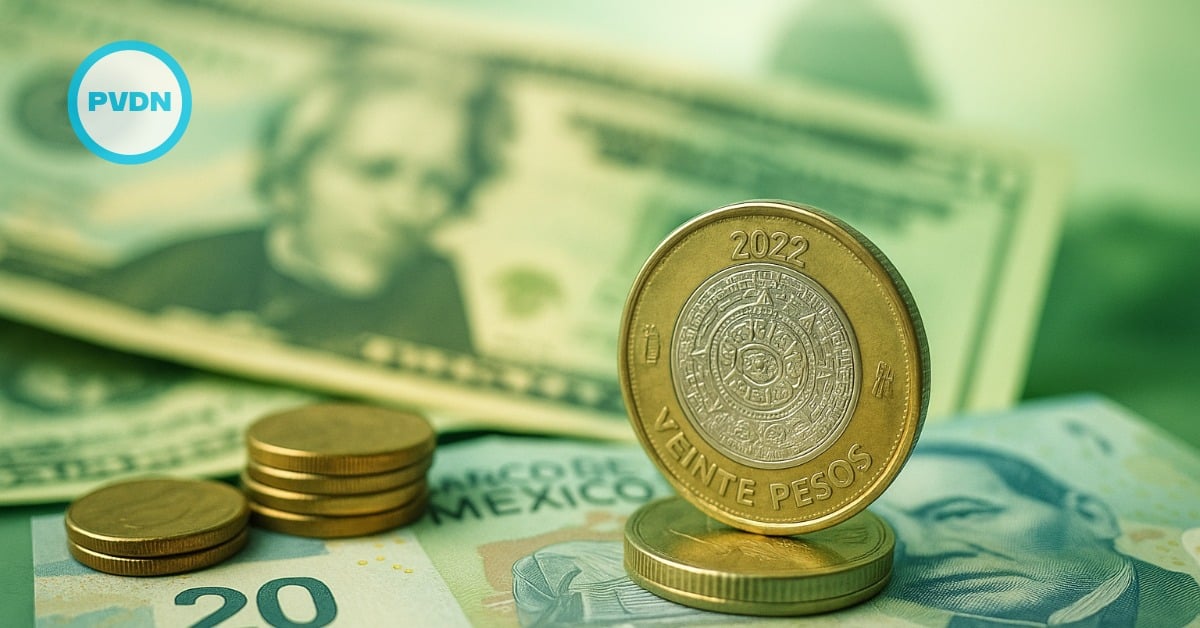
Mexico’s peso ended Jan. 2 near 17.91 per dollar, keeping the peso under 18 as thin trading and U.S. rate signals set the tone for 2026.
The year’s first trading day looked calm, but the close carried weight: the peso stayed under 18 per dollar again. That level has become a psychological line for anyone paying rent, utilities, or staff in Mexico while earning in dollars. Holiday-thin liquidity can exaggerate moves, and early U.S. signals are starting to reprice what 2026 could look like for rates. The bigger question now is whether this is a steady handoff from 2025’s strength—or the kind of quiet start that snaps back fast.
A calm start that still mattered
Mexico’s peso opened the year with a modest gain and finished the first official 2026 session below 18 per dollar, closing around 17.91 on the day’s official closing data. It was not a dramatic move, but it was a meaningful one because it extended a theme that dominated late 2025: the peso repeatedly finding buyers whenever the exchange rate drifted toward that 18 line.
The day’s trading range was narrow by normal standards, with the dollar briefly pushing up toward about 17.99 and then sliding to a stronger-peso low around 17.87 before settling near the stronger end of the range. In plain terms, it was a “quiet” session where the peso still managed to end stronger than where many people last saw it quoted.
That matters because quiet sessions are often when markets reveal what they want to believe. On a thin-liquidity day, traders tend to avoid big new bets. So when a currency still holds a key level, it can signal that a lot of positioning is already in place—and that it may take a real catalyst to break the pattern.
Why the peso held firm under 18
Two forces stood out in the background. The first was the holiday effect. With many desks lightly staffed, even routine flows can nudge prices more than usual. That can cut both ways, but it often rewards currencies that are already in favor because there is less resistance when the market drifts in the same direction.
The second was the rate story. Mexico has spent years benefiting from a wide interest-rate differential versus the U.S., which tends to support the peso when investors feel comfortable holding risk and earning carry. Even as Mexico’s central bank has moved into an easing cycle, the peso has continued to trade as a “high-yield, relatively liquid” emerging-market currency—especially when the market thinks U.S. rates may fall or at least stop rising.
That is why early-year attention is already turning to the next big signposts: the U.S. Federal Reserve’s late-January meeting and Mexico’s early-February policy decision. What matters most isn’t just what each central bank does, but the gap between them and the tone they set for the months ahead.
One more wrinkle from the session is worth noting: the broader dollar gauge was slightly higher by the close, yet the peso still finished stronger versus the dollar on the day. That kind of split can happen when the peso is trading more on its own story—positioning, local yields, and momentum—than on the dollar’s general direction.
What expats will actually feel from this move
If you live in Mexico and spend in pesos but earn in dollars, a stronger peso is the kind of shift you notice in small, recurring payments before you notice it anywhere else. Rent renewals, utilities, private health costs, school fees, and day-to-day services can feel a touch more expensive in dollar terms when the exchange rate stays under 18.
If you earn in pesos and spend in pesos, the move is mostly psychological—an indicator of stability and purchasing power—unless your life is tied to imported goods, foreign travel, or dollar-priced services. For anyone moving money across the border, the bigger story is not the headline close, but the spread between “market” pricing and what you actually get.
That spread can be wide. The interbank close may sit near 17.91, while consumer-facing references and cash exchange quotes can look different. For example, official reference rates used for certain purposes can print near 18 even on a day when the market trades under it. And the rate you see at a bank counter can be noticeably less friendly than the one you see in market headlines because the bank bakes its margin into the buy/sell price.
So the practical takeaway for expats is simple: the number on the news is a signal, not a receipt. Your real cost depends on where you exchange, how you send funds, and whether you’re converting cash, wiring, or using a card.
What to watch next
A sub-18 peso at the start of the year doesn’t guarantee anything about the next few weeks. Thin early-January markets can flip quickly once normal liquidity returns and the calendar fills with data. The most obvious drivers are U.S. rate expectations, global risk appetite, and Mexico’s own inflation and policy path.
If U.S. data pushes markets toward a “rates stay higher longer” view, the dollar can regain traction and test that 18 line again. If the market leans into cuts, the peso can stay supported—until traders decide the trade has become crowded and start taking profits.
For expats, the most useful mindset is not trying to “call the top or bottom,” but watching whether the exchange rate keeps closing below 18 once the market is fully back at work. If it does, the story becomes less about a holiday quirk and more about an early-2026 regime where the peso remains stubbornly strong.