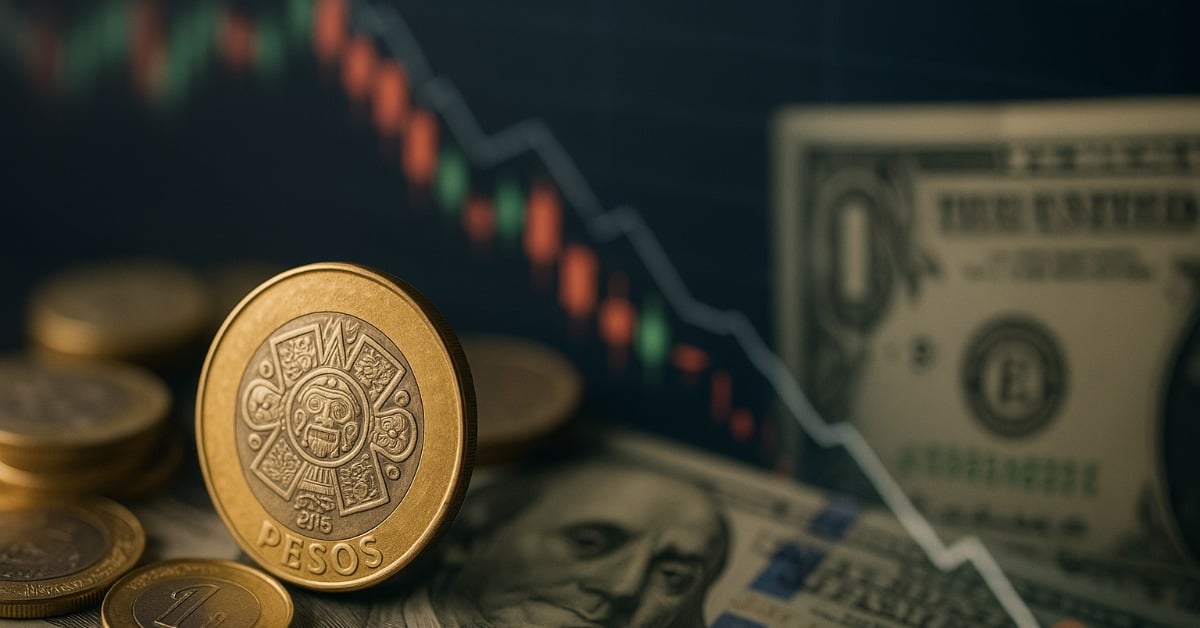
The peso moving past 18 per dollar is more than a market headline. It can shape inflation, transport costs, imports, and how quickly everyday prices respond to global shocks. The move came as Banxico cut interest rates and investors reacted to rising tensions in the Middle East, which have pushed energy markets higher. For readers who earn, save, spend, or invest in Mexico, the shift matters for different reasons, and not all of them are obvious at first glance.
Peso breaks a level markets watch
The peso weakened past 18 per dollar on Friday, crossing a line that many traders and analysts watch closely. In wholesale trading, the exchange rate reached 18.12 pesos per dollar, and during the session it touched 18.15, its weakest level since mid-December. The move came during a volatile day for markets, with investors reacting to the war in the Middle East and to a fresh cut in Mexico’s benchmark interest rate.
That combination matters because the peso had spent much of the past year as one of the more closely watched emerging-market currencies. It had been helped by relatively high interest rates, steady foreign interest in peso assets, and the broader appeal of Mexico during a period of supply-chain reshuffling. When a currency that had looked relatively firm suddenly loses ground, markets pay attention, even if the move itself is not yet a crisis.
Crossing 18 per dollar also carries symbolic weight. Exchange rates often become political and psychological markers in Mexico. Many people may not track bond yields or central bank language, but they notice when the peso breaks a round number. For households, businesses, and foreigners living in Mexico, that kind of threshold can quickly become shorthand for a broader question: is this a short-term wobble, or the start of a weaker trend?
Why the peso moved
The first driver was Banxico’s decision to cut its benchmark rate by 25 basis points to 6.75 percent, effective March 27. The central bank said international markets had shown greater volatility and less appetite for risk due to the conflict in the Middle East. It also acknowledged that the Mexican peso had depreciated slightly and that inflation had moved higher in early March, even as economic activity showed significant weakness at the start of the year.
Rate cuts can weigh on a currency for a simple reason. When rates fall, investors earn a little less from holding local assets denominated in that currency. Mexico still offers relatively high yields by developed-market standards, but a cut can reduce part of that advantage. If investors already feel nervous about global risk, a lower rate can make them less willing to stay in or add to peso positions.
The second driver was the broader global mood. Markets have become more cautious as the conflict in the Middle East stretches on, with oil prices climbing and investors seeking safer assets. When risk aversion rises, the US dollar often strengthens. That matters for Mexico because the peso, despite its resilience in calmer periods, remains an emerging-market currency that can weaken when global money flows into safer havens.
A third factor is inflation. Consumer inflation reached 4.63 percent in the first half of March, above Banxico’s 3 percent target and outside its tolerance range. That does not mean the peso fell only because inflation is high. But it does complicate the picture. A central bank cutting rates while inflation is rising creates a more delicate balance. Investors then have to decide whether weaker growth, higher prices, or global shocks will matter most in the weeks ahead.
Why oil and geopolitics matter in Mexico
Mexico produces oil, but that does not shield the country from the effects of higher global energy prices. In a modern economy, fuel shocks move through freight, food distribution, public transport, airline costs, industrial inputs, and imported goods. Higher oil prices can therefore put pressure on inflation even when a country has domestic energy production of its own.
That is one reason the current moment is tricky. The same geopolitical tension that pushes investors toward the dollar can also lift energy prices, creating another inflation risk for Mexico. If oil stays high for long enough, businesses often pass part of those costs on to consumers. Sometimes that happens quickly at the gas pump. Sometimes it happens more slowly through groceries, deliveries, building materials, and services.
For expats and foreign residents, the immediate effect can look different. If income arrives in dollars, a weaker peso can make rent, meals, transport, and daily spending feel cheaper in the short run. But that benefit can be partial and temporary. If the weaker peso lasts, imported items and fuel-linked costs can rise. That can filter into the prices everyone pays, including foreigners who spend locally and businesses that depend on imported products.
What a weaker peso means for daily life
A weaker peso does not affect everyone the same way. Companies that import machinery, electronics, medical supplies, or other dollar-priced goods may face higher costs. Businesses with thin margins may try to absorb part of that pressure, but not all of it. If the move persists, some of those higher costs usually make their way into retail prices.
Travel is another area where the exchange rate matters. Mexicans traveling abroad, paying for foreign services, or making purchases priced in dollars may feel the change sooner. So can families covering tuition, subscriptions, or debt linked to the US currency. On the other side, exporters and tourism businesses can sometimes benefit when Mexico becomes cheaper for foreign visitors paying with stronger currencies.
For inflation, the key question is not whether the peso moved on one day, but whether it stays weaker long enough to affect pricing decisions. Mexico has already seen inflation reaccelerate in March. Banxico itself warned that inflation risks remain tilted upward, with geopolitical conflict and peso depreciation among factors that could add pressure. That means the exchange rate is not just a market story. It is part of the wider cost-of-living story.
Is this a warning sign or a normal market move
For now, the move past 18 per dollar looks more like a warning sign than a turning point that has already been confirmed. Currencies can swing sharply during periods of geopolitical stress and then recover once markets calm down. The peso has also shown in the past that it can regain strength quickly when risk appetite returns and investors see Mexico as offering attractive yields and relative stability.
Still, this is a more fragile setup than a simple one-day market selloff. Growth looks weak. Inflation is elevated. The central bank has resumed easing. Oil prices are under pressure from war risk. Those factors do not guarantee a prolonged peso slide, but together they leave less room for complacency.
The next question is whether the move becomes persistent. If the conflict in the Middle East drags on, if oil prices remain high, or if investors start expecting more rate cuts from Banxico, the peso could remain under pressure. If global tensions ease and inflation settles, the currency could stabilize again. What matters now is not only that the peso crossed 18, but why it did, and what that says about the balance between growth, inflation, and external risk in Mexico.