More than 500 sea turtles have washed up dead at Playa Bagdad in 2025, prompting calls for federal tests and fishing-gear checks.
Playa Bagdad is the kind of beach that can feel endless. Wind, surf, and a wide band of sand at Mexico’s northeastern edge, in Matamoros, Tamaulipas, not far from the U.S. border. This week, that open space has taken on a different meaning.
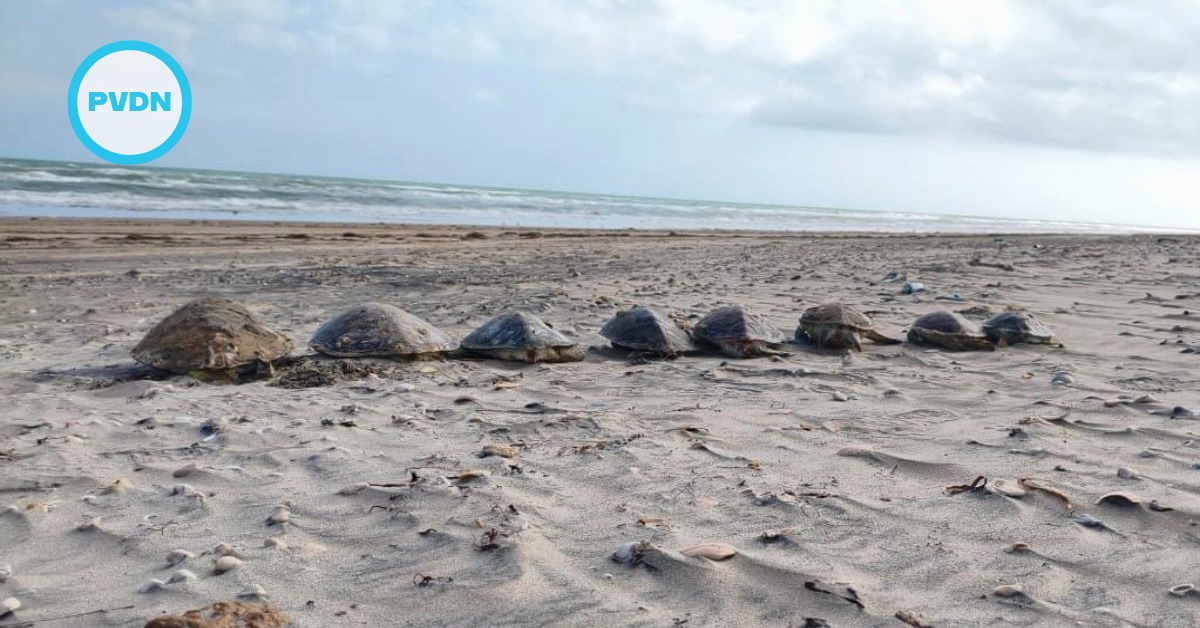
An environmental monitoring group working in the area says the number of sea turtles found dead there in 2025 has now passed 500. Even more unsettling is the pace. They reported 33 new strandings in the last week alone, a sharp break from earlier months, when the beach might see one or two dead turtles in a week.
The group says most of the turtles are juvenile green turtles. That detail matters because the story is not just about what is washing ashore, but what is missing from the water: young animals that should have decades ahead of them.
What the group is asking for now is simple, and overdue. They want federal agencies to show up, document what’s happening in a systematic way, and determine why a single stretch of coastline is seeing so many deaths.
Why juvenile green turtles raise the stakes
Green turtles live long lives and mature slowly. Losing juveniles is not like losing a single bad season of hatchlings. These are animals that already survived the gauntlet of the open ocean and made it to coastal feeding areas. When juveniles start dying in large numbers, it can hint at a problem that is immediate, local, and deadly.
There is also a frustrating contradiction at the heart of this. Conservation has worked in many places. Protections on nesting beaches and years of enforcement have helped some populations recover. But a recovery on paper does not protect a turtle from a net, a cold snap, or a polluted patch of water. Local mortality events can erase progress fast, especially when the cause is repeating or preventable.
Playa Bagdad is not a blank spot on the conservation map. Tamaulipas has been working in recent years to protect Kemp’s ridley turtles in the Matamoros area, including at Playa Bagdad and nearby El Mezquital. That makes this moment feel even more urgent. A beach with active conservation work should not become a dumping ground for unanswered deaths.
What could be killing the turtles
The group behind the alert has pointed to one possibility in particular: entanglement in fishing gear, especially gillnets. This is a well-known threat worldwide. Nets set in shallow coastal waters can be nearly invisible. Turtles that get trapped may drown quickly. In many cases, the animal that later washes ashore will not carry a neat explanation on its shell. That is why necropsies and careful documentation matter.
Fishing gear is not the only plausible factor, and the time of year adds another layer. In the Gulf, sudden winter cold snaps can trigger “cold-stunning,” a kind of hypothermic shock that affects sea turtles when water temperatures drop rapidly and stay low. In parts of the western Gulf, juvenile green turtles are known to be especially vulnerable during these events. A cold-stunned turtle may float, weaken, and die if it is not rescued in time. Strandings can surge in a short window, then fade just as fast.
Harmful algal blooms are another wild card. Red tides can produce toxins that affect marine life and have been associated with turtle strandings in other Gulf areas. Pollution and marine debris can also play a role, whether through ingestion, entanglement, or chronic stress that makes animals less resilient. Disease is part of the picture, too. Green turtles can suffer from fibropapillomatosis, a tumor-forming disease linked in some places to degraded habitats, though it does not explain every spike, and it does not point to one single culprit by default.
The honest answer right now is that several of these pressures can overlap. A weakened turtle is more likely to get caught. A stressed ecosystem is less forgiving. And a remote beach can hide a crisis for months before the numbers become too large to ignore.
What a real investigation looks like
A credible response starts with presence. That means trained teams walking the beach on a consistent schedule, recording each carcass with location data, estimating time since death, and noting obvious signs like net marks, propeller trauma, or advanced decomposition.
It also means collecting enough specimens for necropsies and lab work. Without that, every explanation stays stuck in the realm of “possible.” Necropsies can reveal drowning, blunt force injuries, infections, nutritional status, and stomach contents. Water sampling and toxin testing can help rule in or out bloom-related impacts. Weather and ocean data can help determine whether a cold-stunning event is plausible for the dates in question.
On the agency side, responsibilities are spread across different offices, which is exactly why coordination matters. Wildlife enforcement and environmental compliance sit in one lane, fisheries oversight in another, conservation management in another, and maritime operations in another. When those lanes do not merge, investigations stall and the beach keeps collecting bodies.
If fishing gear is implicated, the next steps are uncomfortable but necessary. It becomes a question of where, when, and how nets are being used, whether regulations are being followed, and whether temporary measures are needed while the cause is confirmed. That can include targeted outreach to fishing communities, gear checks, enforcement patrols, and practical solutions that reduce turtle deaths without pretending local livelihoods do not exist.
What this means for visitors and residents
Most expats will never go to Playa Bagdad. But the bigger issue is not limited to one beach. Strandings are one of the few ways the public can see what is happening offshore. They are a warning system.
If you come across a stranded turtle anywhere in Mexico, the instinct to “help” can backfire. A sick or cold-stunned turtle needs trained handling. A dead turtle can pose health risks and should be documented, not dragged. Keep pets away, avoid touching the animal, and report it to local authorities. PROFEPA accepts reports through its hotline, including 800 PROFEPA (7763372), and local emergency services can also route calls when wildlife incidents involve public safety.
For now, Playa Bagdad has a painful role. It is showing the cost of delay. Until investigators can say what is driving this die-off—nets, temperature, toxins, disease, or a mix—the only certainty is that the count will keep climbing with every tide.