Playa del Carmen’s Cabildo has moved Pride Month from symbolic recognition to city paperwork, approving full municipal fee subsidies for collective LGBTQ+ weddings and gender-identity recognition documents. The vote links June’s cultural agenda to public services that can carry legal weight, though questions remain about how the city will administer the subsidies and what costs, if any, may still fall outside municipal authority.
Cabildo approves Pride subsidies tied to legal paperwork
Playa del Carmen’s Cabildo approved 100% municipal fee subsidies for collective LGBTQ+ weddings and gender identity recognition documents, turning part of the city’s Pride Month agenda into a municipal services measure.
The agreement was approved during the 41st ordinary session of the Cabildo, chaired by Mayor Estefanía Mercado, as part of the city’s June activities for the Mes del Orgullo LGBTTTQA+. The measure covers municipal rights related to collective weddings in June and to gender identity recognition records through the end of December 2026, according to the Cabildo’s approval.
The decision does not create the underlying rights. Same-sex couples have been able to marry in Quintana Roo for years, and the state already has a legal process for gender identity recognition. What the Cabildo action changes is the municipal cost barrier for specific Pride Month services.
The city has used this tool before. In 2024, the municipal government said it would waive local fees for same-sex marriage paperwork and the municipal portion of gender identity changes during Pride activities, while noting that a state payment still applied at the time. The 2026 Cabildo material reviewed for this article did not specify whether any state-level payment remains outside the municipal subsidy.
Pride agenda expands beyond the march
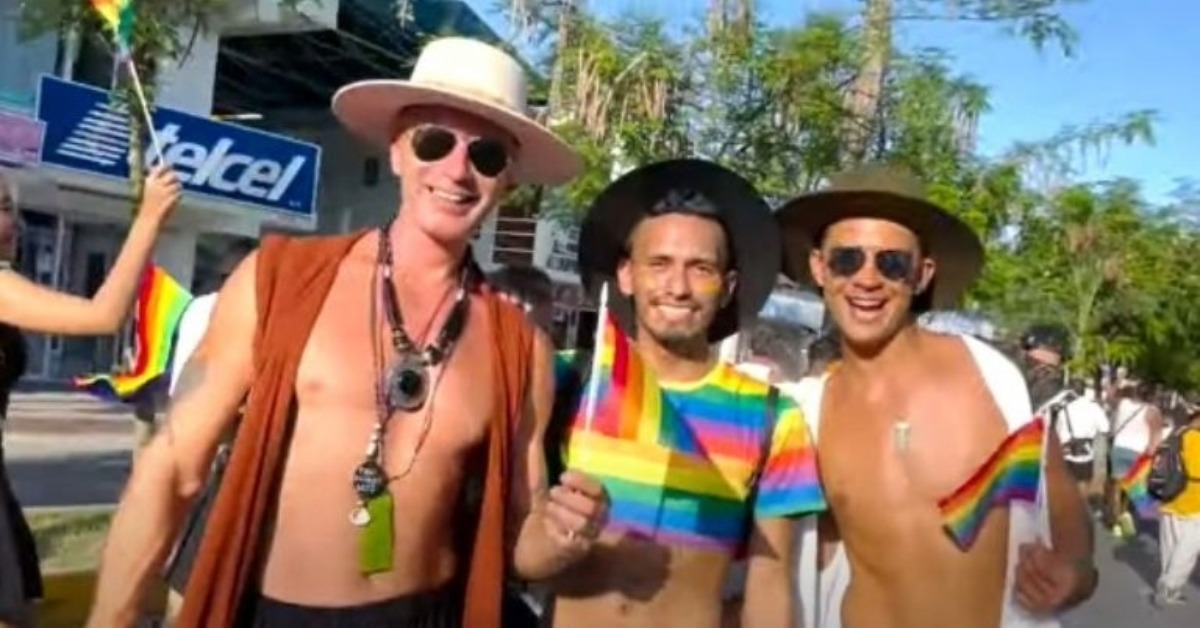
The vote comes as organizers prepare a broader Pride calendar in Playa del Carmen. The first Mes Cultural del Orgullo LGBTTTIQA+ Arte, Memoria y Resistencia Playa del Carmen 2026 is scheduled from June 1 to June 30, with close to 50 artistic and cultural events, according to the program announcement.
Silvio Hernández Hernández, identified as the person responsible for organizing the cultural month, said the program would include family-oriented activities meant to open space for discussion.
“The first cultural month will have almost 50 artistic and cultural activities for all of Playa del Carmen, and they will be 100 percent family friendly,” Hernández said in the announcement.
The agenda includes film, literature, entrepreneurship events, youth activities, and employment-related programming. Organizers also described the month as a way to explain the historical purpose of Pride, rather than merely to stage a march.
Hernández said the events are meant to help parents and young people understand the movement’s public meaning.
“We are interested in mom and dad and young people who have doubts about being able to go to these activities and talks to learn something, so that when I march in the parade, they know why I am marching,” he said.
A municipal action with limits
The subsidy is narrow but concrete. It applies to municipal fees for specific civil registry-related services. That makes implementation important.
The Cabildo account states that the gender identity recognition subsidy will run from the agreement’s approval through December 31, 2026. It also says the benefit will apply when the corresponding payment is made within the established deadlines. That language leaves the city with administrative details to manage, including appointment access, document intake, and clarity in how applicants are told which charges are waived.
Quintana Roo’s state government has previously described the gender identity procedure as requiring a request from a Mexican national over 18, with the person’s full name, birth-record data, requested gender, and, when applicable, the requested first name without surnames. That procedure is tied to state civil registry rules, not only municipal policy.
For Playa del Carmen, the local decision places Pride Month inside a larger test of whether inclusion policies reach public counters. A fee waiver can remove one obstacle, but it does not answer every access issue. Applicants still need clear instructions, predictable service, and civil registry staff who handle the process without added friction.
Part of a wider local rights agenda
The Cabildo approval follows several years of municipal Pride programming in Playa del Carmen. In 2025, the city presented an official Pride agenda with cultural, sports, artistic, and awareness activities. At that presentation, official mayoral representative Guillermo Brahms González said, “Playa del Carmen is an inclusive, free destination committed to equality,” according to the municipal government’s 2025 Pride announcement.
Deyanira Martínez, then identified as secretary of Social Justice and Citizen Participation, framed that agenda as more than a celebration.
“This agenda not only celebrates diversity, but it also reaffirms the struggle of many generations to be seen, respected, and valued,” Martínez said in the same municipal announcement.
The 2026 subsidies move that language into the fee schedule. The city is not only hosting Pride activities. It is using the Cabildo authority to reduce the cost of legal recognition in selected cases.
That shift is occurring as LGBTQ+ visibility in Mexico remains uneven across places and policy areas. Cancún moved its 2026 Pride calendar earlier due to World Cup scheduling, while national debates continue over whether corporate and government diversity language leads to safer conditions beyond June. Those tensions have also appeared in recent coverage of Cancún Pride 2026 and queer-friendly policies in Mexico.
For now, Playa del Carmen’s approved measure gives the city a measurable benchmark. The question becomes how many people use the subsidies, how smoothly the civil registry handles the paperwork, and whether the city reports those results after Pride Month ends.