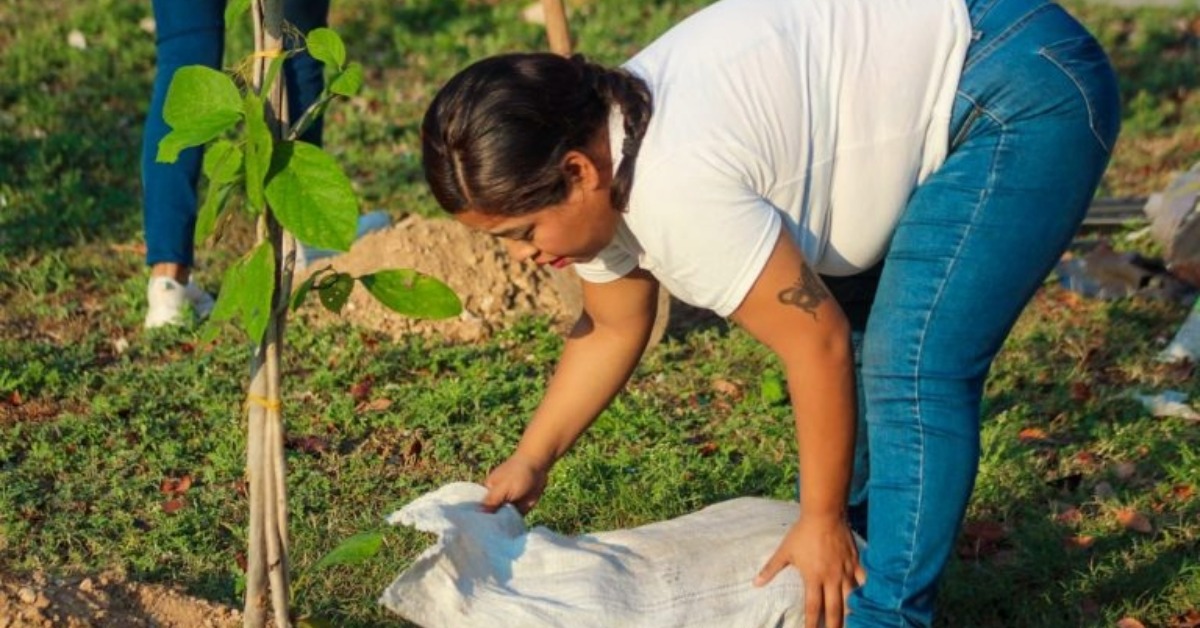
Authorities in Playa del Carmen have started reforesting the central median of Boulevard Playa del Carmen, one of the city’s most visible urban corridors.
The work is part of a municipal effort to improve the city’s appearance and to restore public green spaces. Officials said the project includes planting trees and ornamental species that can add shade, color, and structure to the boulevard.
The first stage includes species such as maculís rosa and ciricote. Both are associated with the region and are often used in southeastern Mexico because they can adapt to local conditions.
Municipal Environment Secretary Kandy Mendoza said the goal is to improve the boulevard while extending similar work to other major road medians. Once the current stage is completed, the city plans to continue reforestation work along Arco Vial.
Why this matters for residents and visitors
For residents, the project is a visible quality-of-life issue. Road medians are not parks, but they shape how a city looks and feels. In a hot coastal destination, trees can also help soften the urban environment.
For visitors and foreign residents, the boulevard is part of the daily view of Playa del Carmen beyond the beach. It connects the city’s image with the practical condition of its public spaces.
The project also reflects a larger question facing fast-growing Mexican tourism cities. As development expands, local governments are under pressure to maintain streets, protect green space, and make urban areas more livable.
That pressure is especially clear in Playa del Carmen, where tourism growth has brought jobs and investment, but also heavier traffic, construction, and demand for public services.
Native species and urban recovery
The selection of maculís rosa and ciricote gives the project a regional identity. Maculís rosa is known for its pink-to-purple flowers and is common in the tropical areas of southeastern Mexico.
Ciricote is also closely tied to the Yucatán Peninsula. It is valued for its flowers, fruit, and wood, and it is often seen in regional landscapes and home gardens.
Using regional species can better support urban biodiversity than relying solely on decorative plants. It can also reduce the risk of planting trees that struggle in local soil, heat, or seasonal rainfall.
The city has framed its broader tree-planting work as a means of restoring local ecosystems and improving air quality. Earlier this year, the municipal government announced monthly arborization days in parks and public spaces, with an emphasis on native species and community participation.
A boulevard tied to recent infrastructure work
The boulevard has also been part of the public conversation around infrastructure changes in Playa del Carmen.
During earlier work connected to the original Tren Maya route through the boulevard, several trees were removed. Some, including cedars, were transplanted to other parts of the city.
That history gives the current reforestation work added context. It is not only a beautification project. It is also part of a longer effort to repair and improve areas affected by major urban and transport changes.
The long-term test will be maintenance. Newly planted trees need watering, protection, and regular care. Without that follow-through, reforestation projects can lose impact after the first public planting.
What comes next
The city’s next step is to complete the boulevard work and then move to Arco Vial. That would expand the effort from one corridor to another important part of Playa del Carmen’s road network.
For the project to have lasting value, the city will need to keep the focus on tree survival, not only tree planting. Residents will also be watching whether the effort reaches neighborhoods beyond high-visibility corridors.
In a city built around tourism, public space carries economic and social weight. A greener boulevard may seem like a small change, but it points to a larger challenge: how Playa del Carmen manages growth while keeping the city livable.