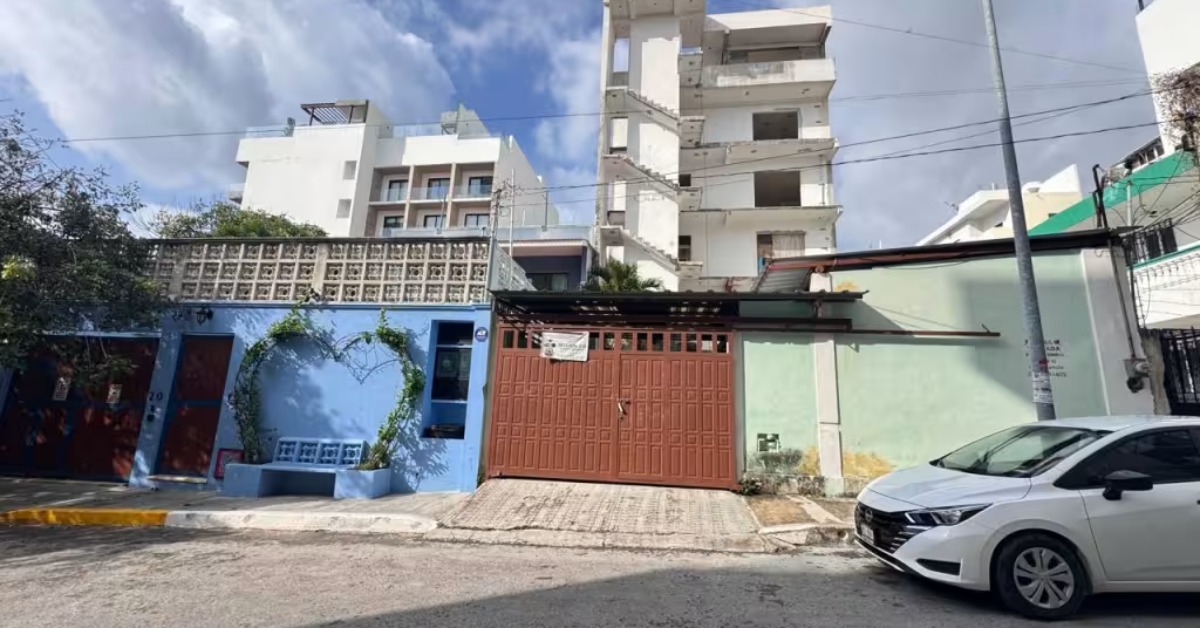
Playa del Carmen officials are reviewing cases involving buildings in the city’s downtown and tourist zone that allegedly did not comply with current height limits under the existing Urban Development Program, known in Spanish as the PDU.
The review comes as the city continues working on an updated planning document that could allow taller buildings in parts of the municipality. But officials say those proposed changes would not automatically erase penalties tied to projects that may have violated the still-in-force rules.
That point matters because Playa del Carmen is in the middle of a larger debate over growth, density, and enforcement. For years, the city has faced pressure from tourism, real estate demand, and a growing year-round population. That pressure has pushed construction higher, faster, and farther inland.
New rules would not erase old cases
The main issue is timing. A new PDU may change what can be built in the future, but it does not rewrite what was legal when a project was approved, inspected, or constructed.
City officials said the legal department is reviewing different cases because not all projects followed the same path. Some buildings may have exceeded the height rules without proper authorization. Others may have received permits during previous administrations, which makes the legal review more complicated.
The municipality’s position is that a future rule change should not be treated as a blanket pardon. Buildings that failed to comply with the current rules may still face fines or administrative procedures, depending on the facts of each case.
That distinction is important for property owners and investors. A building may be standing, marketed, and occupied, but that does not always mean every permit issue has been settled.
What the PDU means for residents
The PDU, or Programa de Desarrollo Urbano, is the local planning document that guides the city’s growth. It sets rules for land use, density, building height, mobility, infrastructure, and urban services.
For residents, the PDU is not just a technical document. It affects traffic, water pressure, drainage, shade, noise, parking, neighborhood character, and the pace of real estate development. In a city like Playa del Carmen, where tourism and housing demand often overlap, those rules can shape daily life.
The city’s updated PDU has gone through public consultation and review. Municipal officials have said the process included workshops, public hearings, and input from professional groups, business chambers, civil organizations, and residents.
The proposal includes taller buildings in certain areas, including downtown and the tourist corridor. Other parts of the city, especially toward the west, could see different height limits as officials try to manage growth beyond the coastal strip.
Why height rules are controversial
Height rules are a sensitive issue in Playa del Carmen because they sit at the center of two competing needs.
On one side, the city needs room to grow. A more vertical model can reduce sprawl, preserve some green areas, and make better use of existing infrastructure. It can also support more housing near jobs, schools, and public services.
On the other side, taller buildings can place more stress on streets, water systems, drainage, public safety, and parking. They can also change the scale of older neighborhoods, especially in the downtown area, where tourism, nightlife, and residential life already compete for space.
This is why enforcement matters. If older violations are allowed to disappear once new rules are approved, critics may see that as rewarding developers who moved ahead before the law changed.
The city appears to be trying to avoid that message. Officials are signaling that the updated PDU may guide future construction, while past cases still need legal review under the rules that applied at the time.
What happens next
The review does not mean every building under examination will be fined. It also does not mean every project was illegal. The city has said there are different situations, including cases where permits were issued by earlier administrations.
That leaves the municipality with a legal balancing act. It must review each file, determine which permits were granted, confirm which rules applied, and decide whether the penalties are still valid.
For foreign homeowners, renters, and buyers, the broader lesson is practical. In Playa del Carmen, due diligence should include more than price, location, and amenities. Buyers should also ask about land-use permits, construction licenses, occupancy documents, and whether the building has any pending municipal procedures.
The outcome of these cases could set an important precedent. If fines move forward, the city may strengthen its hand in future enforcement. If many cases are regularized without consequences, it could raise new questions about whether planning rules are being applied evenly.
Either way, the debate shows that Playa del Carmen’s growth is no longer only about attracting investment. It is also about whether the city can enforce the rules that make growth manageable.