Playa del Carmen is setting its hurricane-season plan before the Atlantic season opens June 1. The municipality says 49 temporary shelters have been verified, including spaces assigned for different stages of opening and two sites for pets. The plan also puts several agencies into a single response structure. The key dates now are the formal installation of the municipal hurricane committee and the start of a season that officials say could still bring risk, even if Atlantic activity is expected to be near or below average.
Playa del Carmen prepares shelters and hurricane response plan
Playa del Carmen is preparing 49 temporary shelters and an interagency hurricane response plan before the 2026 Atlantic hurricane season begins on June 1.
Municipal authorities said the plan includes coordination among local, state, and federal agencies. The work also requires participating institutions to report their available personnel, equipment, vehicles, and other emergency resources.
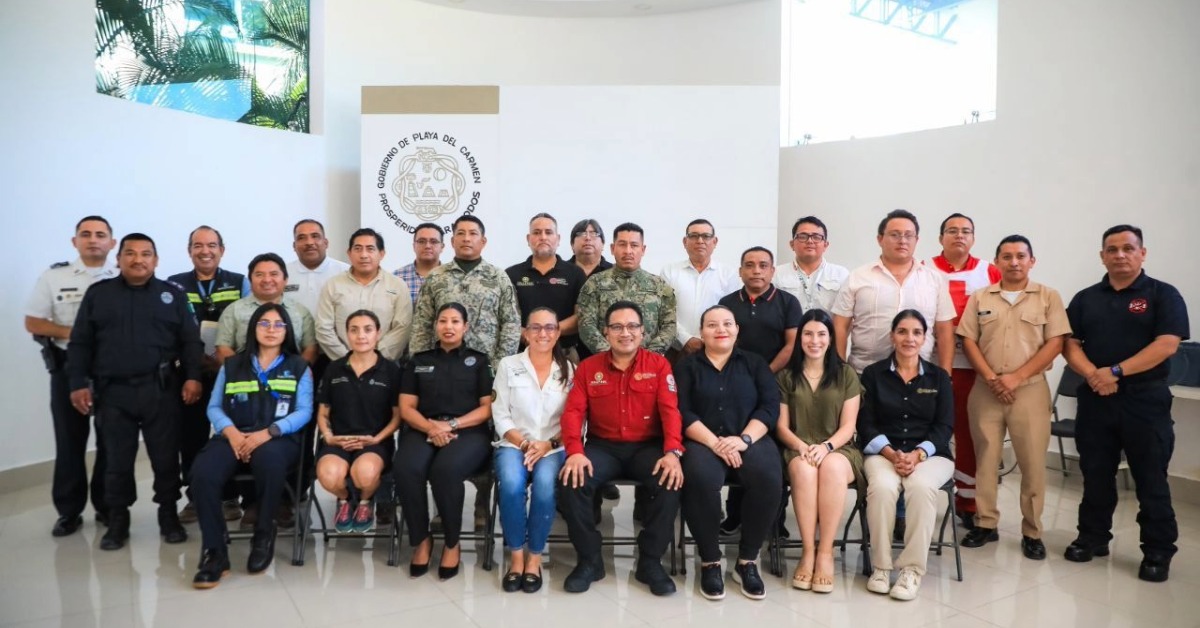
Darwin Covarrubias, secretary of Civil Protection, Risk Prevention and Firefighters, led a work meeting at the “María Petrona Uicab” hall in the new Municipal Palace. He attended on behalf of Mayor Estefanía Mercado.
The meeting was called to begin forming the operating subcommittees that would handle different parts of the response before, during, and after a storm.
Shelters divided by opening stage
The municipality said the 49 shelters have been verified and certified by specialists from the College of Architects and Engineers.
The shelter inventory includes 15 first-opening shelters, 24 second-opening shelters, and 10 third-opening shelters. Authorities also listed two spaces that are pet-friendly.
The city has not only focused on buildings. The response plan also includes the staffing and coordination needed to operate shelters if a storm affects the municipality.
Hurricane committee scheduled for June
The Municipal Specialized Committee on Hydrometeorological Phenomena 2026 is scheduled to be formally installed on June 3.
That installation is expected to take place two days after the state committee. The municipal committee will organize the local response structure for the season.
The planned subcommittees cover monitoring and alerts, tourism, temporary shelters, transportation and evacuation, health and humanitarian aid, supplies and logistics, volunteers, security and rescue, and damage assessment.
Authorities said the plan is meant to protect more than 330,000 residents and visitors in the municipality.
Atlantic forecast still leaves risk
Conagua’s 2026 outlook calls for 11 to 15 named systems in the Atlantic basin. Of those, seven or eight could become tropical storms, three to five could become Category 1 or 2 hurricanes, and one or two could become major hurricanes.
Federal forecasters have described the Atlantic season as near or below average. They also warned that a lower forecast does not eliminate the risk, since a single storm making landfall can still cause serious damage.
Conagua has also identified Quintana Roo as one of the Mexican states with the highest incidence of tropical cyclone impacts over the past 62 years.
The Atlantic hurricane season runs from June 1 through November 30.