Playa del Carmen has opened hurricane season with a new emergency committee, verified shelters, pet refuges, and a hotel-sector shelter network. Officials say the city has thousands of spaces mapped for storms, but the real test will come in how quickly alerts move, which shelters open first, and whether the city’s coordination plan holds up under pressure during the 2026 Atlantic season.
Committee opens with shelter numbers and one harder test
Playa del Carmen installed its Comité Municipal Especializado en Fenómenos Hidrometeorológicos 2026 on Wednesday. The move puts storm planning into a formal emergency structure as the Atlantic hurricane season begins.
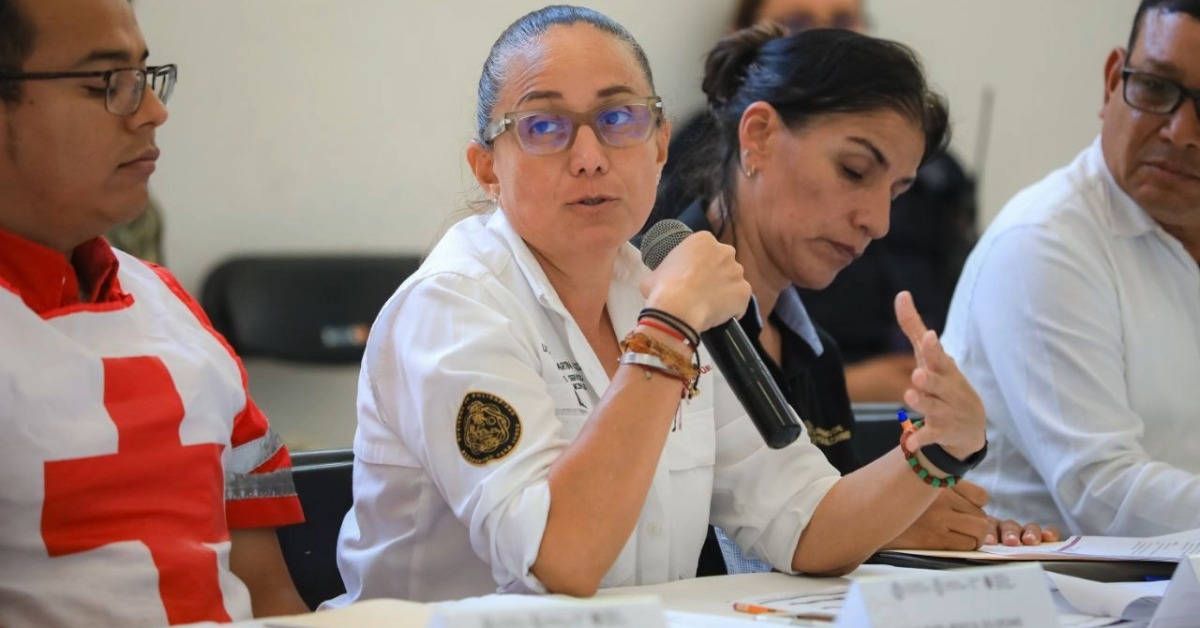
The session was held at the Leona Vicario auditorium in the new municipal palace. Civil, military, and federal authorities took part. The committee is meant to coordinate prevention, shelters, alerts, evacuation support, and emergency response. The Atlantic season runs from June 1 to November 30.
Luis Armando Herrera, secretary general of the Ayuntamiento, represented Mayor Estefanía Mercado. He said Playa del Carmen does not treat hurricanes as a distant threat. At the June 3 committee installation, he called prevention “our best tool.”
Shelters will open in stages
The strongest numbers came from Protección Civil. Darwin Covarrubias, the municipal secretary for Civil Protection, Risk Prevention and Firefighters, said Playa del Carmen has 49 temporary shelters. Their reported capacity is 5,875 people.
The city also has two pet shelters and 39 hotel-sector refuges. Those hotel spaces can hold more than 33,000 people, according to the figures presented at the committee meeting.
Playa del Carmen had already flagged those 49 shelters before the season opened. In its earlier municipal shelter-preparation plan, officials said the shelters had been verified and certified by specialists from the Colegio de Arquitectos e Ingenieros. Fifteen were listed for the first opening. Another 24 were marked for the second opening. Ten were marked for the third opening.
That staging is the pressure point behind the capacity figure. The number does not mean every shelter opens at once. It depends on risk zones, storm track, transport, staffing, and official alerts.
Covarrubias said during the May 19 planning meeting that “all agencies” needed clear assignments before any hydrometeorological impact. The same meeting set subcommittees for monitoring, tourism, shelters, transport, evacuation, health, logistics, volunteers, rescue, and damage review.
Hotels are part of the emergency map
The hotel sector is a separate part of the plan. Playa del Carmen’s storm exposure is not limited to homes and neighborhoods. A strong system can put local shelter demand and visitor shelter demand on the same clock.
A separate hotel-sector meeting this week reviewed temporary refuge registration and self-shelter rules inside lodging properties. The city also said hotel representatives were shown digital tools to identify refuges and access official information.
Those hotel spaces are large on paper. They still depend on each property to follow rules, keep supplies ready, and communicate clearly when an alert changes.
Forecasts are not landfall guarantees
At the committee meeting, Conagua representative Jorge Mex Meneses presented the 2026 climate outlook. He also discussed El Niño and La Niña. Both patterns can shape storm formation and rainfall.
The local presentation estimated 11 to 15 tropical systems in the Atlantic and Caribbean. That included up to five hurricanes and one or two major hurricanes.
The wider forecast picture is mixed. The 2026 Atlantic season opened with Mexico using an outlook near that range. NOAA’s May outlook gives a 55 percent chance of a below-normal Atlantic season, with 8 to 14 named storms and 3 to 6 hurricanes.
NOAA’s outlook is not a landfall forecast. It measures basin activity. It does not say whether a storm will turn toward Quintana Roo. National Weather Service Director Ken Graham put the risk in plain terms when he said, “It only takes one storm to make for a very bad season.”
Playa del Carmen also reported a municipal emergency force of 3,233 elements. The state’s civil protection coordinator, Guillermo Núñez, said Quintana Roo has 3,550 brigadistas, along with vehicles, drones, digital radios, and specialized equipment.
The committee said the city has added QR-code geolocation for shelters and an official messaging channel for preventive alerts. The next test is whether those tools give clear instructions before a storm is close enough to force rushed decisions.